The two most avid Jupiter watchers in the 'Eastern hemisphere' have simultaneously observed something hit Jupiter on June 3rd at 20:31 UTC, causing a short bright flash - but since then no dark stuff has been reported at the impact site as had been seen easily after the 1994 Shoemaker-Levy 9 impacts as well as the July 2009 impact.
Anthony Wesley in Australia observed the impact in realtime and got
a great video at 60 fps. He immediately
alerted the world, including
Cristopher Go in the Philippines who had been recording Jupiter blindly at the same time:
His video caught the same flash at the same time in the same location, and since he was in a very different place on Earth, the reality of the event is out of the question. (A
similar flash on Jupiter in 1983 lacks such confirmation, unfortunately.) As reported
in this forum,
this report and
on SpaceWeather, no traces whatsoever of the impact have since been seen; see also pics from
June 4 and
June 5 that show the site and follow further developments
through JALPO's collection.
As usual these days, reporting of this solar system event fell largely to astronomy websites and blogs, with the 'main-stream media' lagging behind (though getting some soundbites from bewildered experts): Here are some stories from
Sky & Telescope, the
Planetary Society Blog (
earlier, still
earlier), the
Cosmic Diary, the
Gish Bar Times (
earlier),
Random Thoughts,
AstroBob,
Comets & NEOs,
Cosmic Log,
Catching the Light,
Discovery,
Astronomy,
Ars Technica,
Nat'l Geographic,
Bad Astronomy,
New Scientist Blog,
Eureka,
Science Blogs,
KosmoLogs,
Astronomy Now,
Space.com,
News.com.au,
Science News and
BBC. And for historical context, the author of
this paper tells this blog that he still sees not one clear historical case of a Jupiter impact pre-1994. • Talking about Jupiter, the 'loss' of its SEB is still making headlines, e.g.
here,
here,
here,
here and
here. • Interesting data from last years
occultation of 45 Cap by Jupiter were presented at the
Planetentagung 2010, notably a
lightcurve from Hakos (Namibia) and a glorious
video from Calar Alto (Spain): The star went and came back multiple times over 1/2 hour while 'scanning' Jupiter's atmosphere!
• Numerous events involving Saturn's moons were
observed by B. Gährken, including transits of Titan (from Australia). Also a
May 24 pic of Saturn, rings still narrow. • Two results from the opposition of Mars 2010:
a map and the
best pictures by another observer. • Venus on
June 3rd. • The
Moon occulting Venus was observed
in the Philippines (
more,
more,
more,
more and
more) and
Hongkong at night and
India (
video;
low-res pic) and
Greece (
more,
more,
more and
more) in daytime, while a close daytime apparition was seen
from Germany and
the ISS (
dito). More pics from the 16th
are here, plus further evening views of Venus & the Moon from
May 17 in Namibia, May 16 in
the U.S. (
more),
the U.K. (
more,
more,
more,
more,
more,
more),
India (
wider,
very wide,
dito,
wider,
dito,
dito,
dito and an
animation) and
Australia and May 15 from
the U.S. (
earlier,
more,
more,
more),
the U.K. (
earlier,
other site) and
India. Meanwhile
this handy calculator gives you more planet occultations by the Moon! And we have
weather stats for the 2010 Transit of Venus.
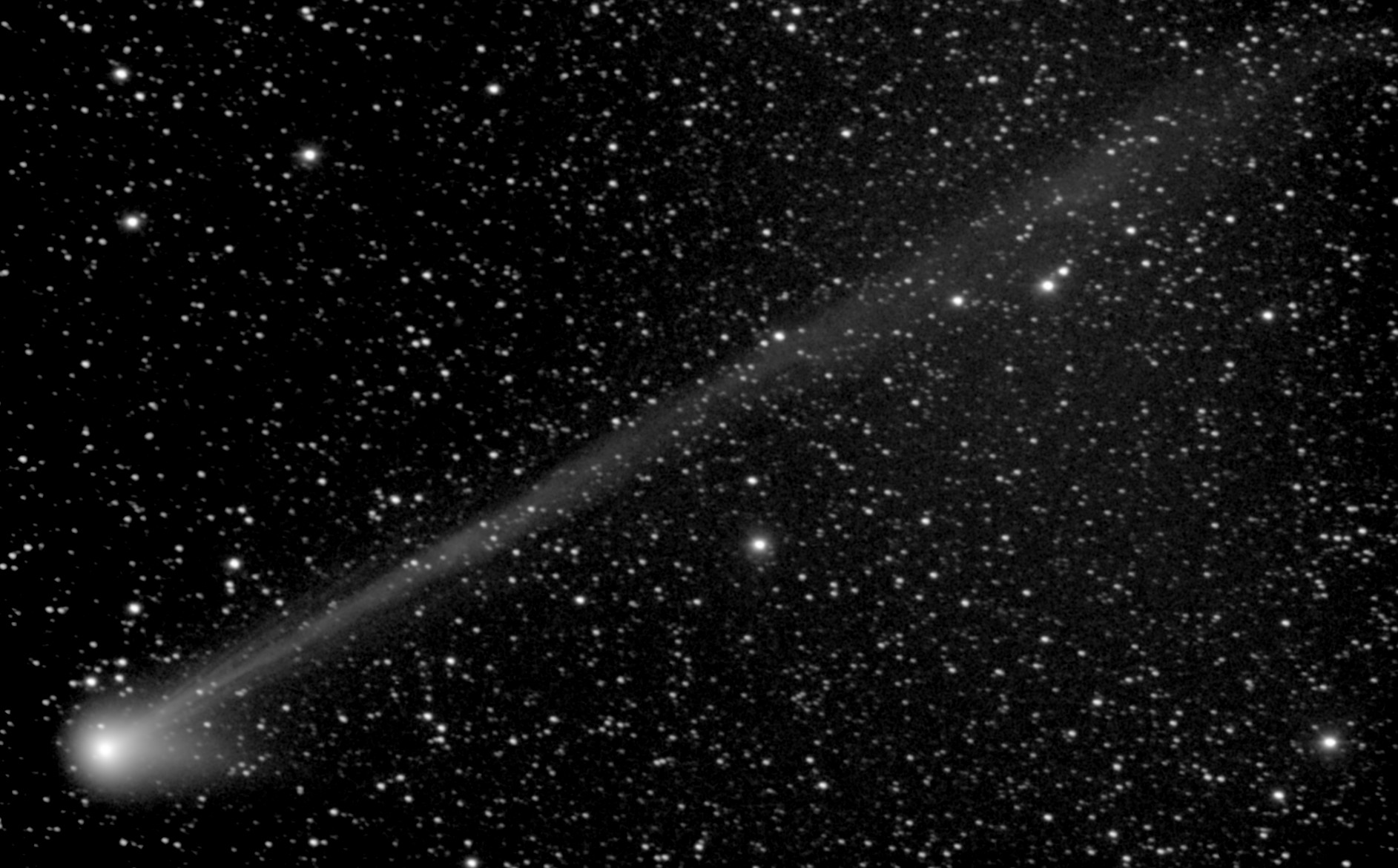
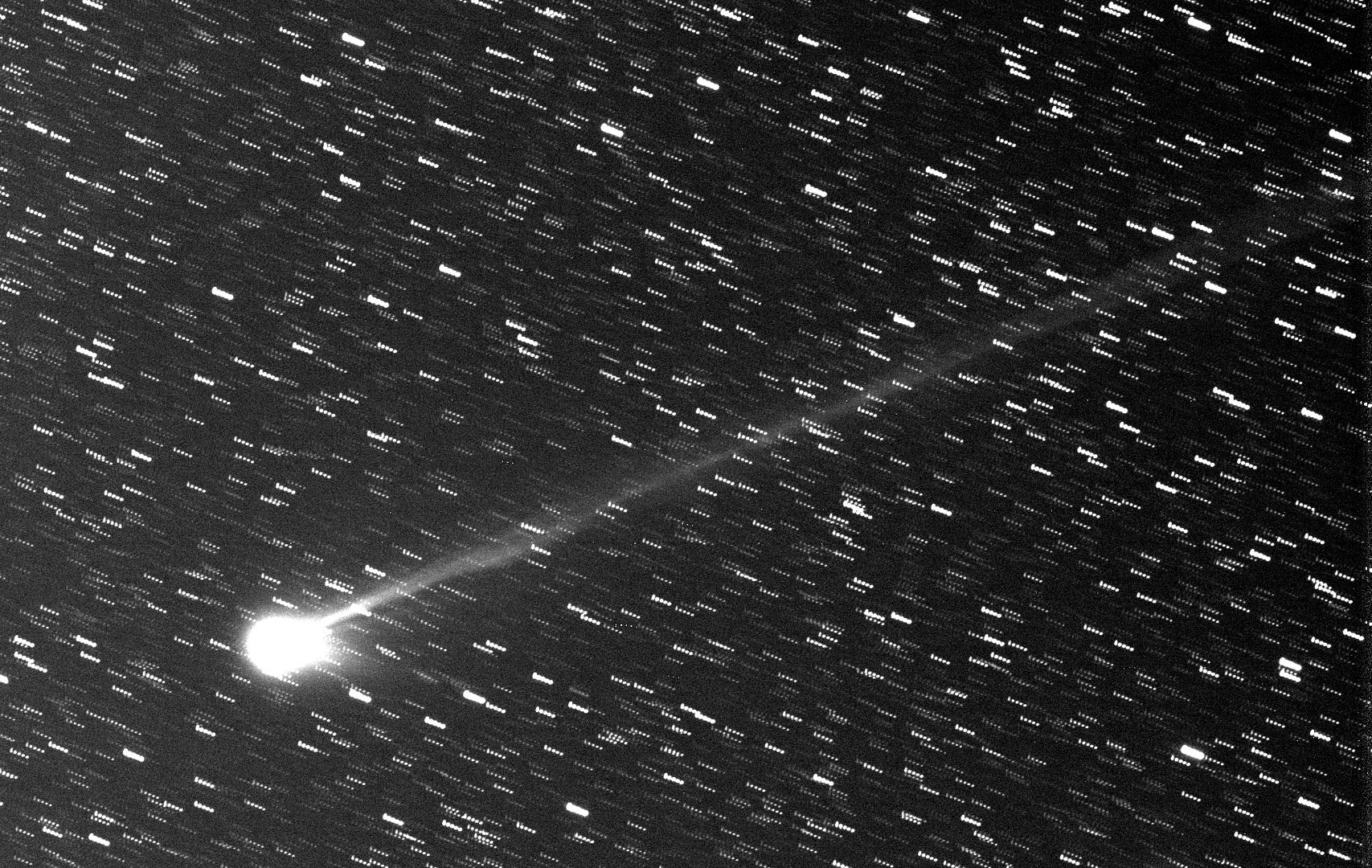
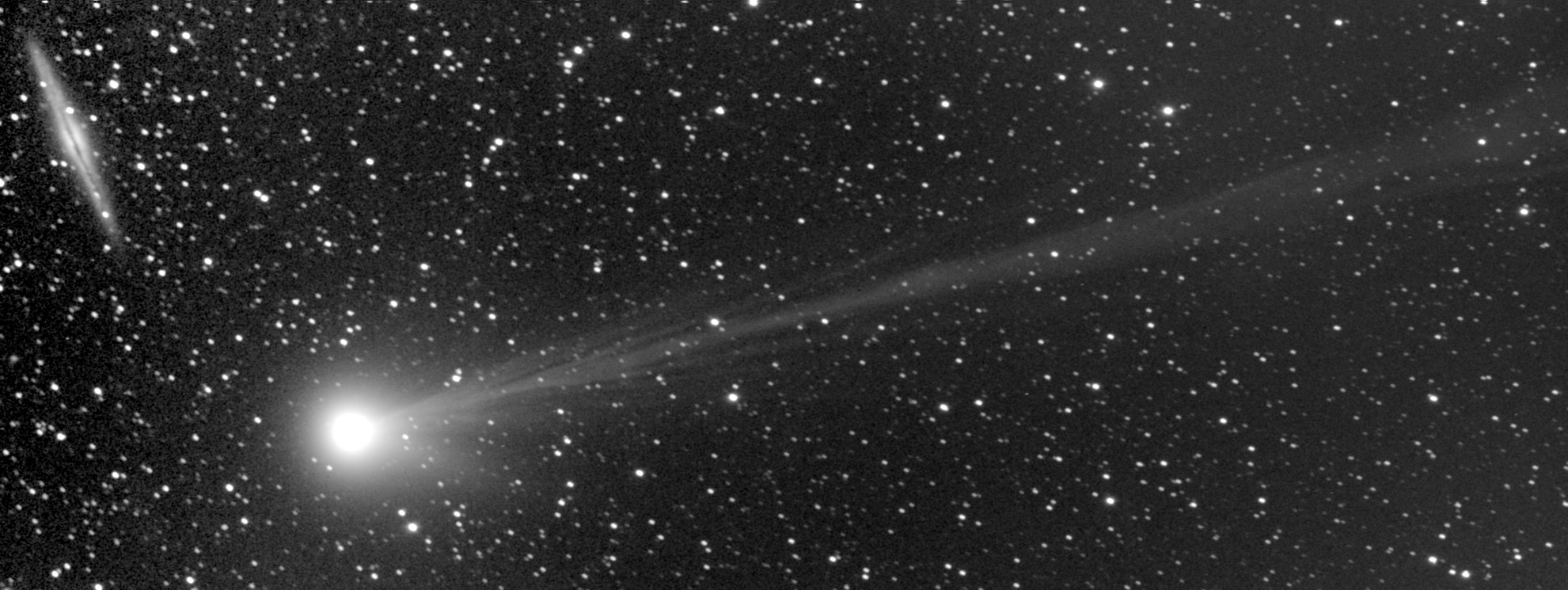
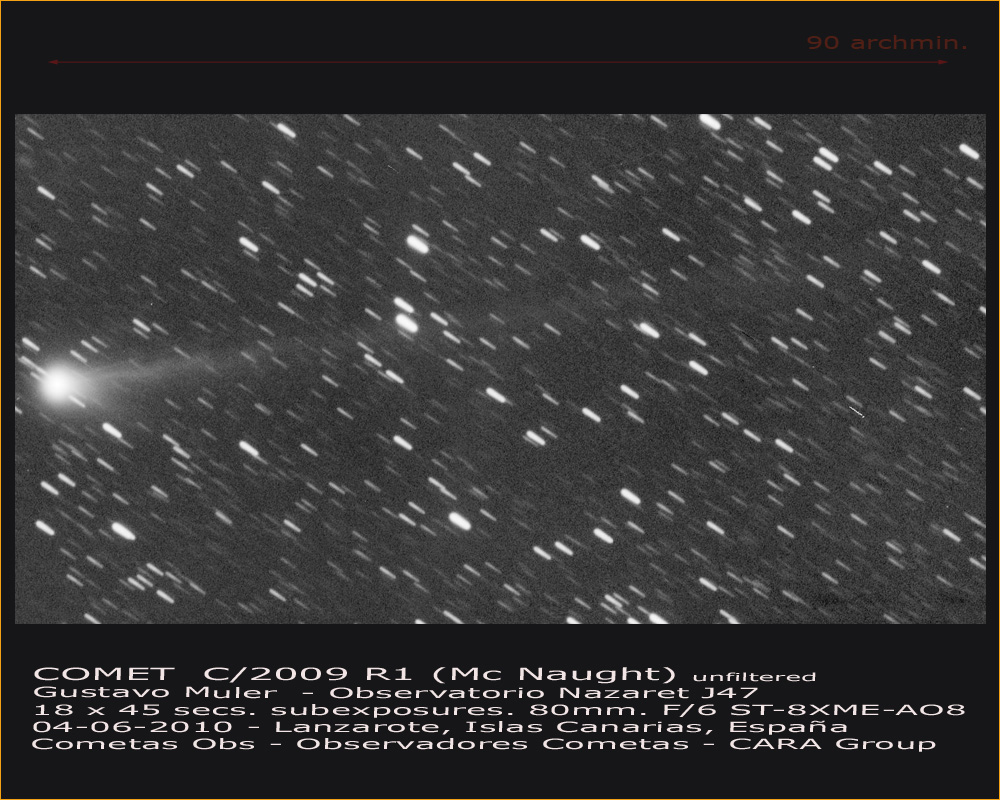
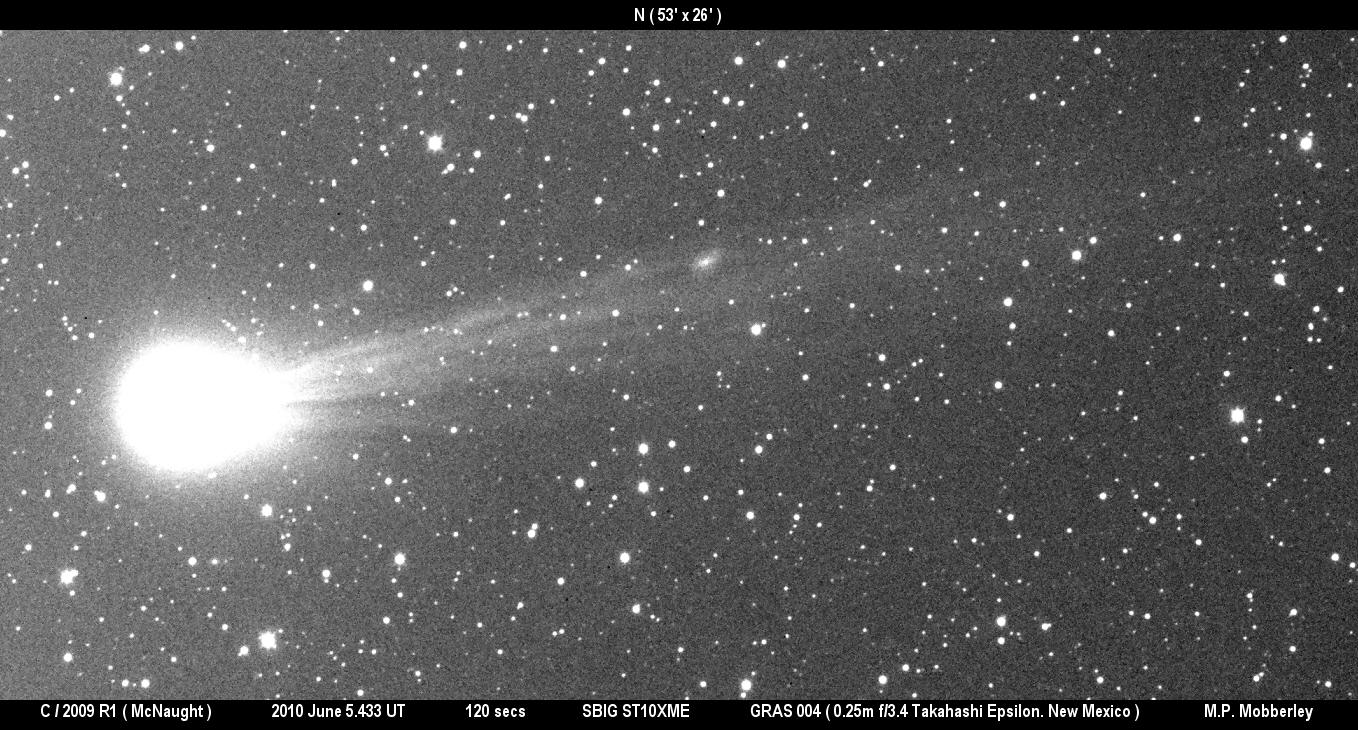
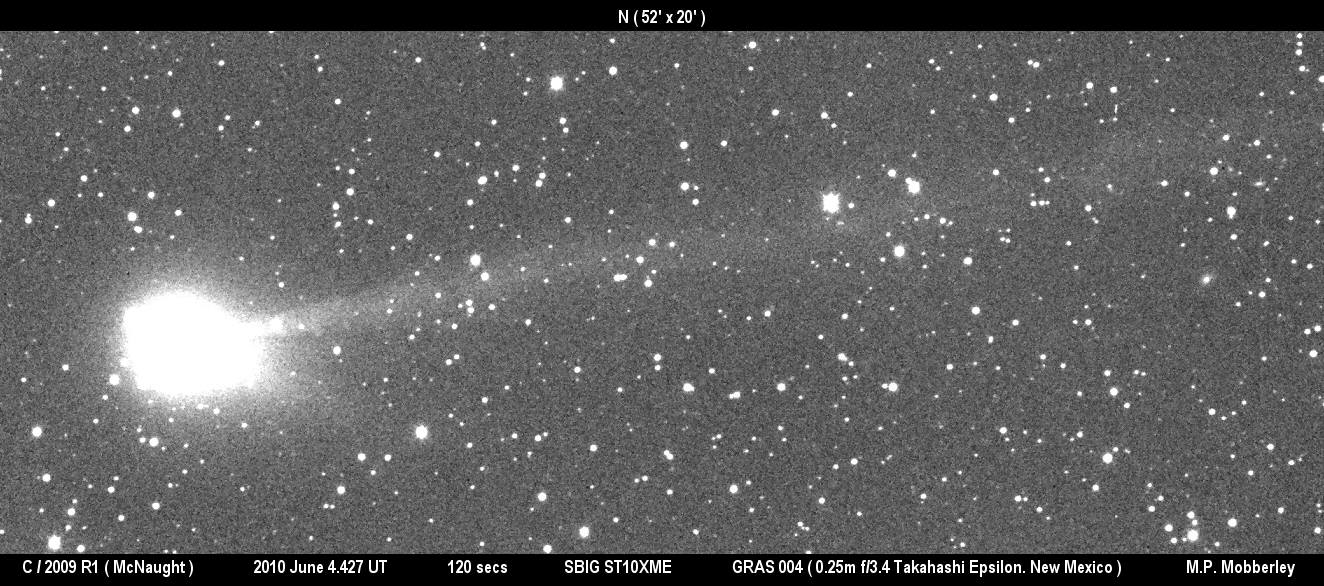
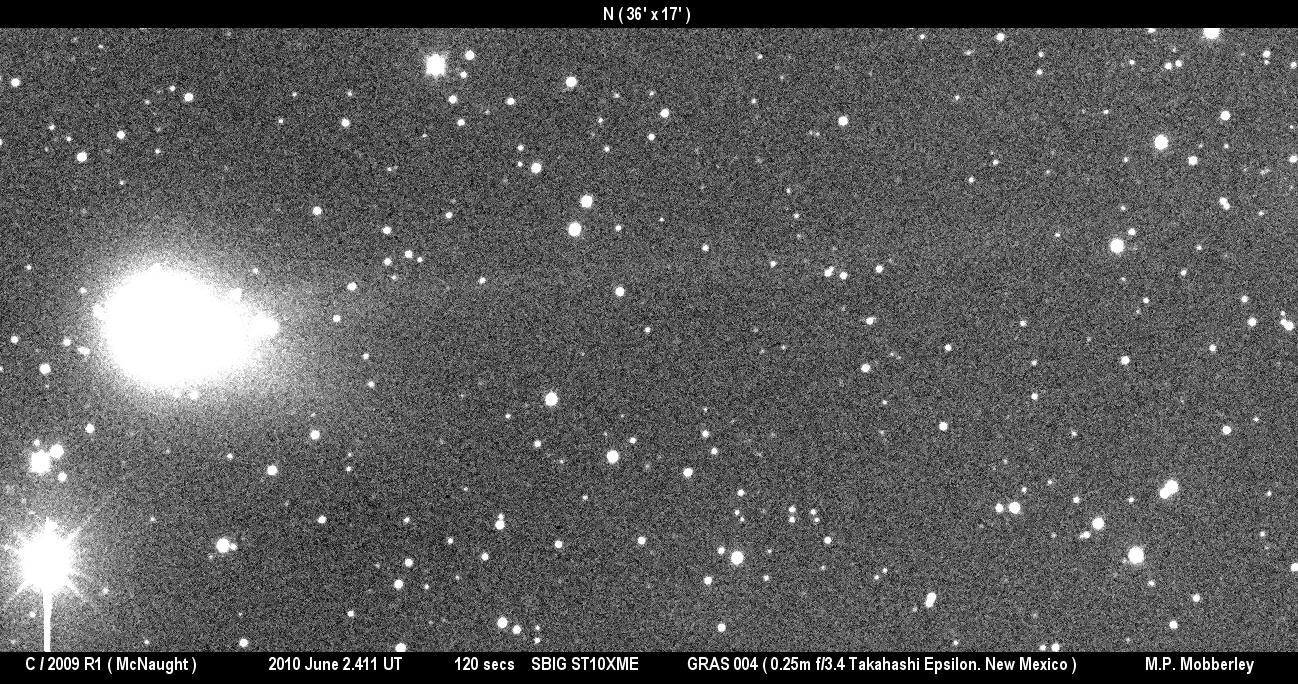
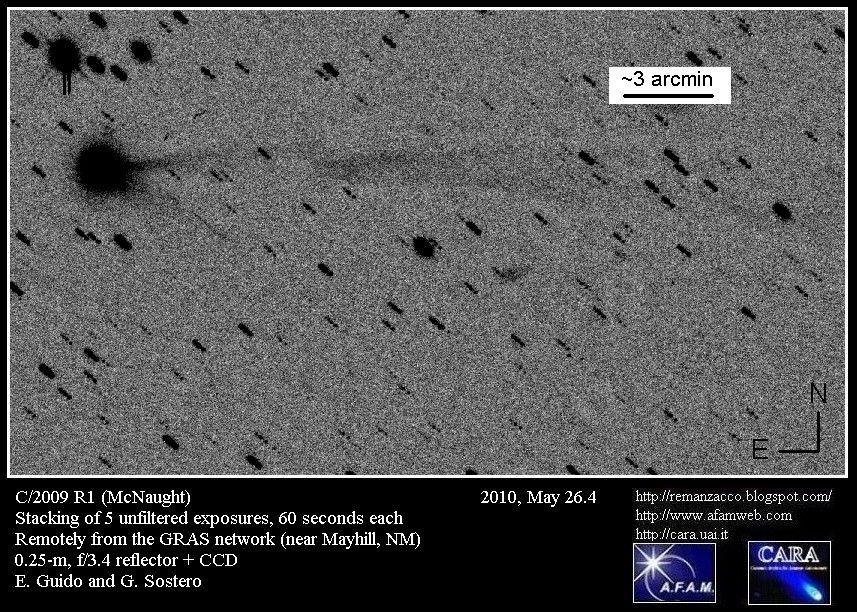
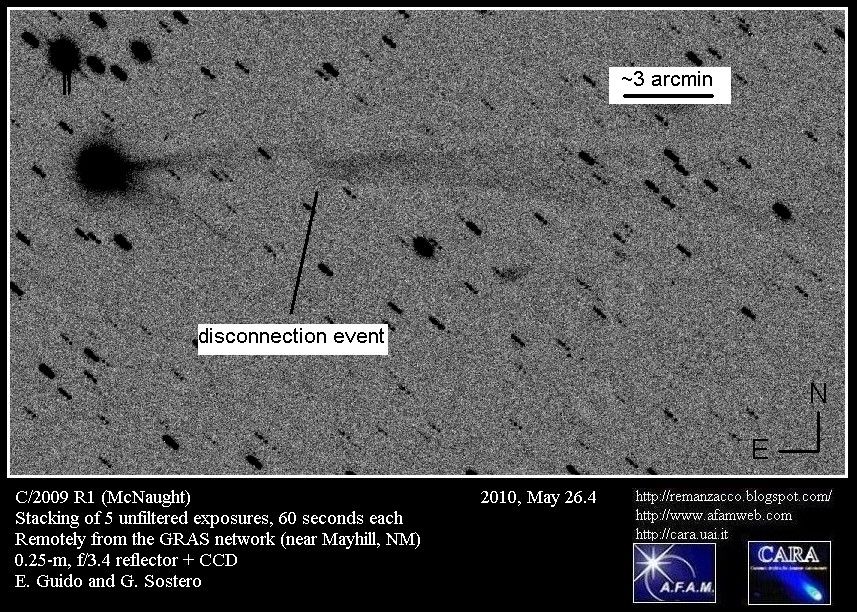
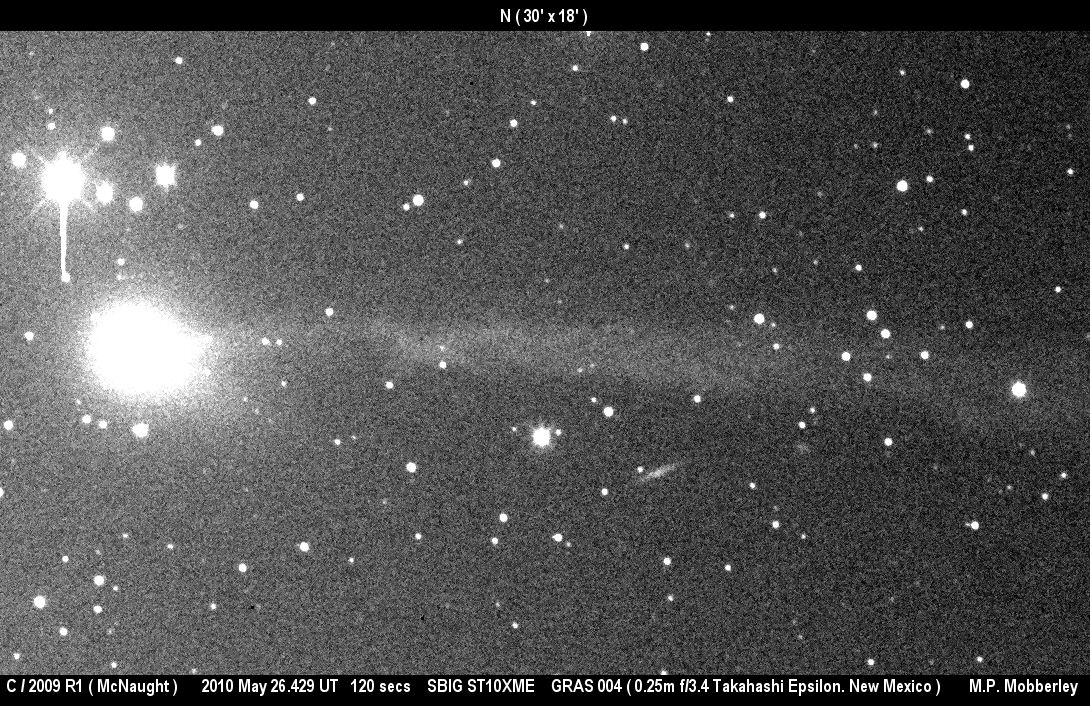
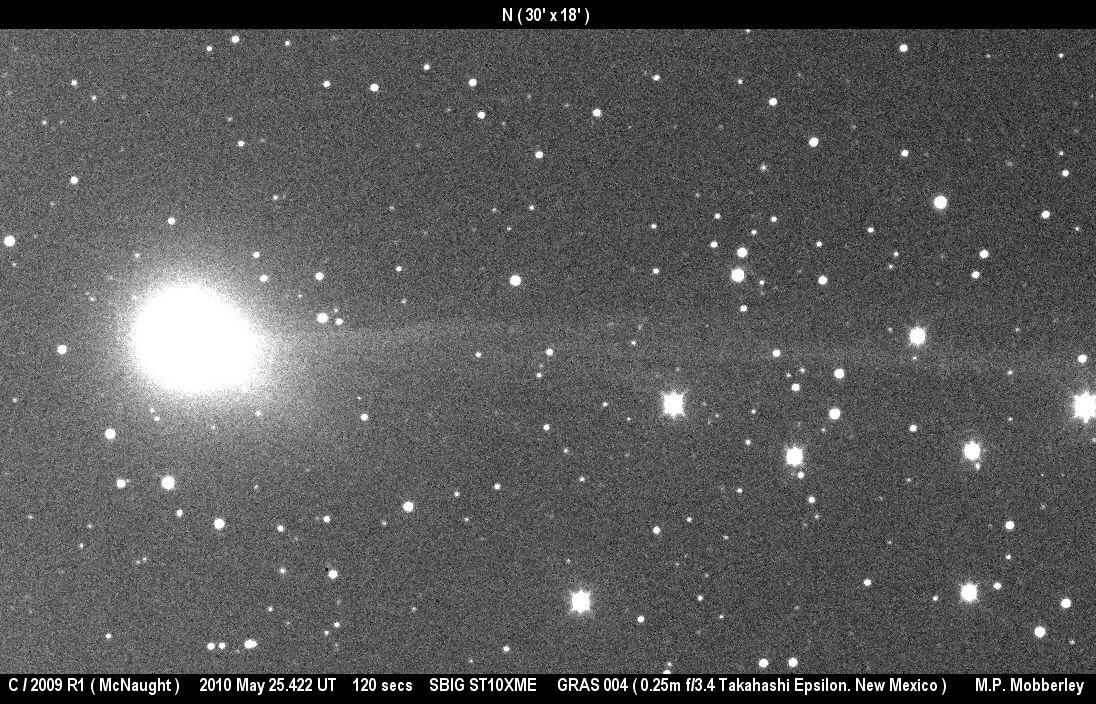
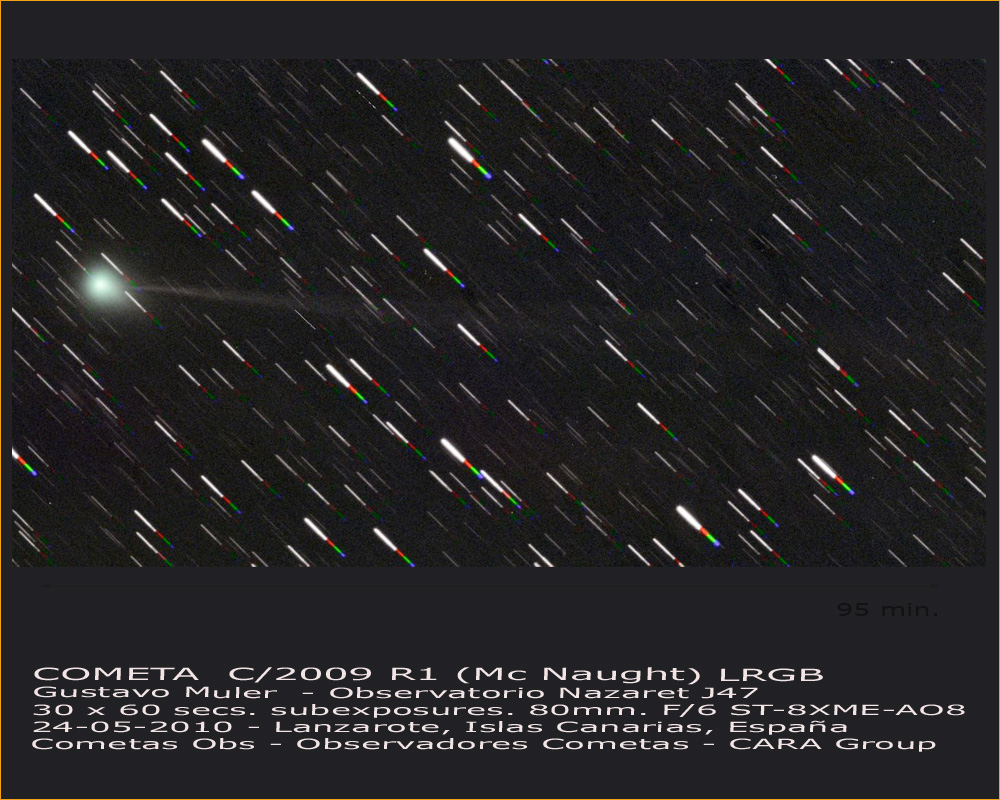
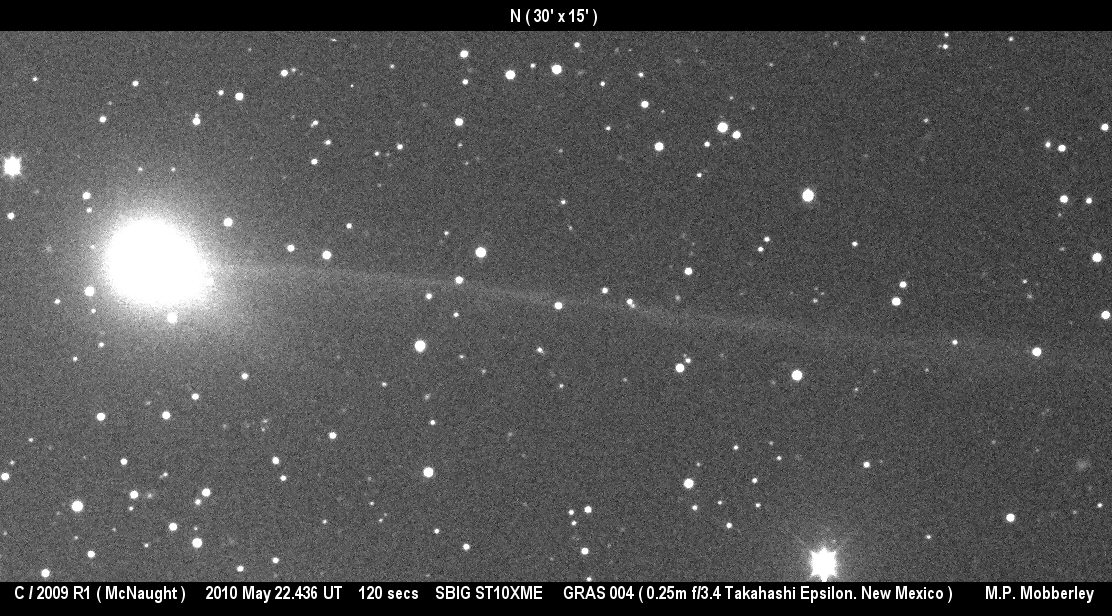
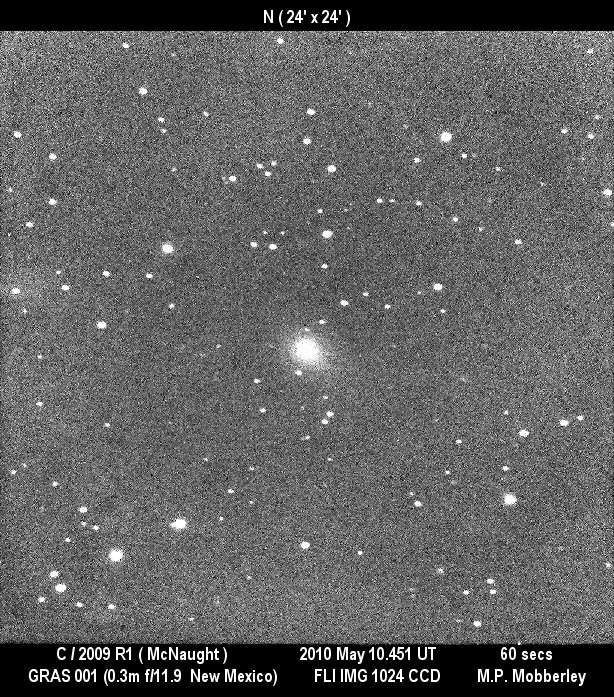
The McNaught show is underway as the comet C/2009 R1 - see previews
here,
here,
hier,
hier and
hier - has now brightened to ~6th mag and has a nice structured plasma tail: You can find growing picture collections
here,
here and
here as well as selected pictures of
June 5 (
more,
more,
more and
more),
June 4 (
more and
more),
June 3 (
more and
more),
June 2,
May 31,
May 30 (
more),
May 29,
May 26 (
annotated,
animation,
more),
May 25 (
more),
May 24,
May 23 and
May 22 (
more,
more,
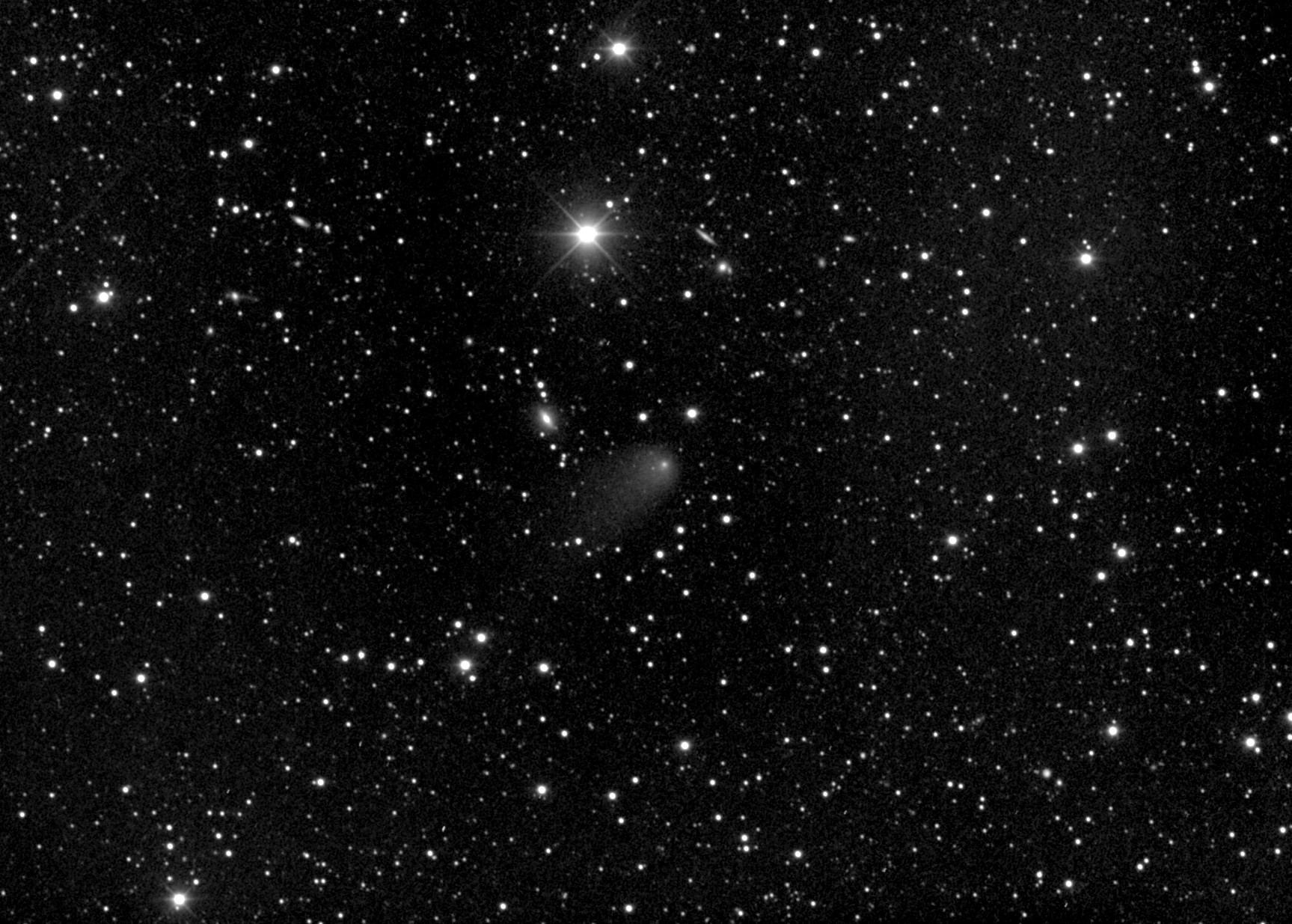
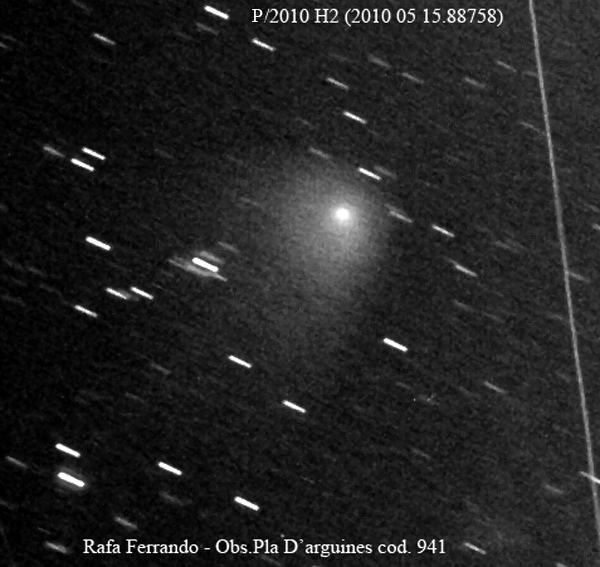
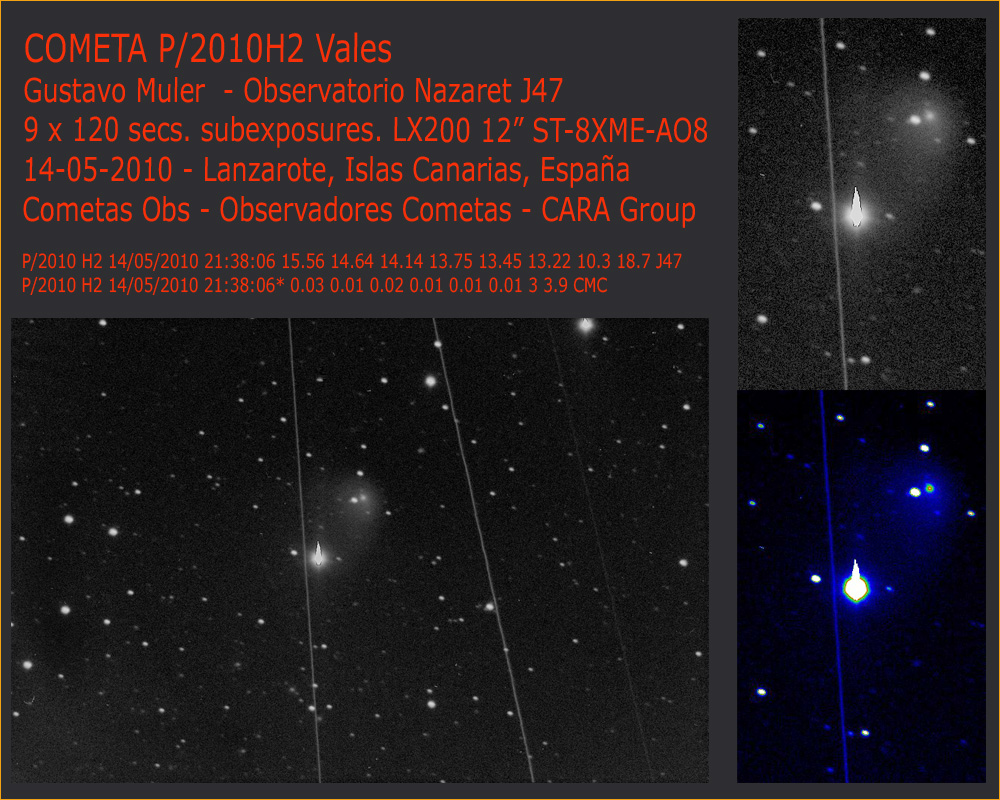
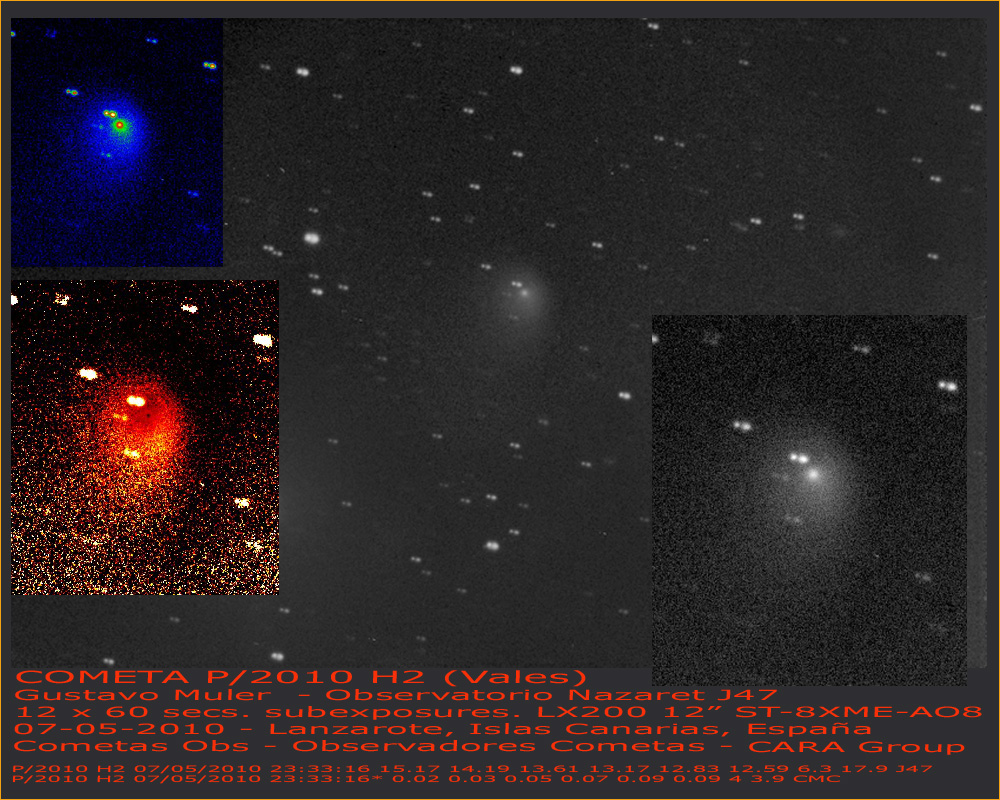
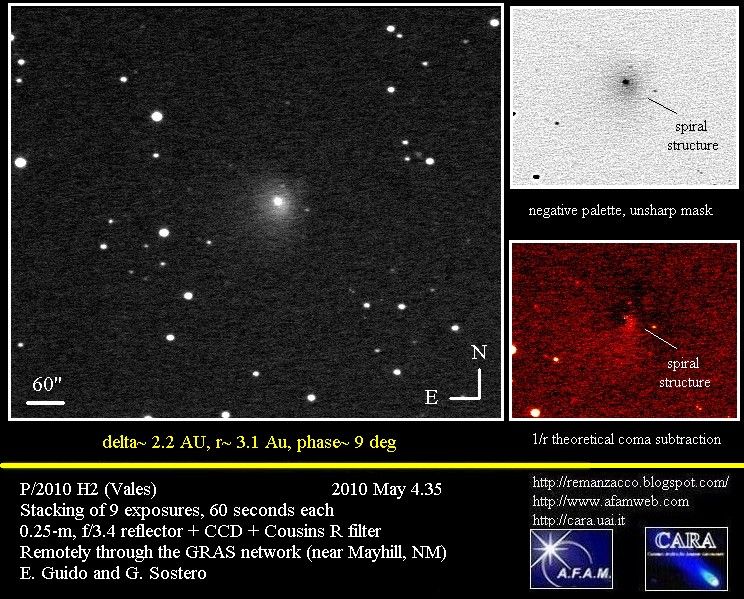
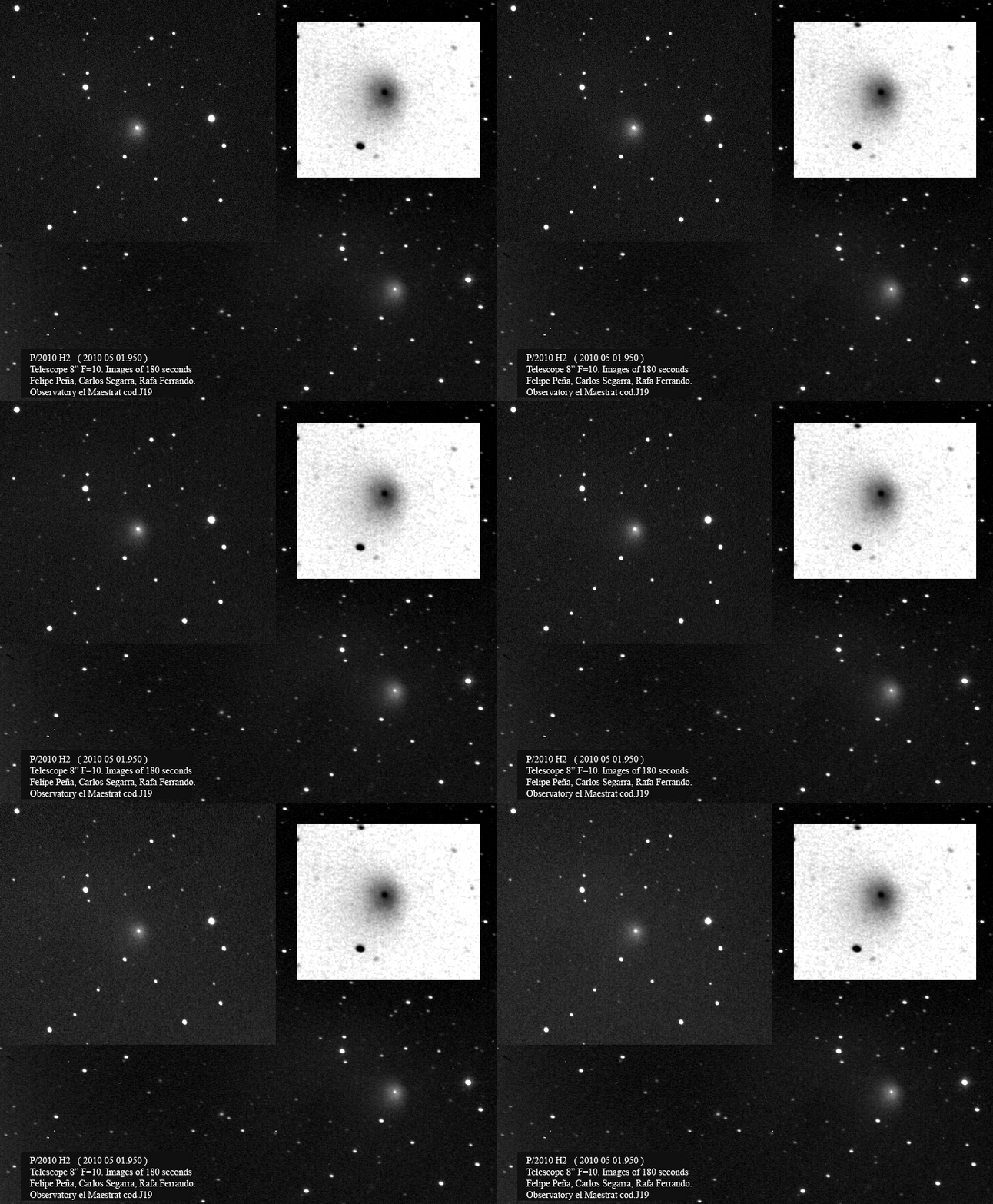
more). • For C/2010 H2 (Vales) we have
another analysis and pics of
June 5,
June 2,
June 1 (
more),
May 22,
May 16 (
more),
May 15 and
May 14. Also
a paper on the outburst of Holmes. • Wild 2 on
May 18. • Joint STEREO & SOHO observations of a
comet hitting the Sun (
more,
more,
mehr). • Talking about the Sun, thoughts on
its irradiance and
effects as well as
recent behavior, also summarized
here.
In other news There seems to be the - predicted -
mid-eclipse brightening of
Epsilon Aurigae, we have a
supernova impostor and the real
SN 2010dn in NGC 3184 (the discovery photo by Koichi Itagaki w/60 cm) as well as a
transit of TrES-3b. • "Asteroid" 2010 KQ is
probably man-made (
more,
earlier,
more,
earlier,
more,
mas and
more). • A report on the fast
fly-by of 2010 KO10, a possible
impact-role in Antarctica, a
meteorite recovery in Oregon, a
twisted meteor (probably only the camera was shaking) and a
meteor story in an old poem (
more,
more and
more) • Plus a
visit to Arecibo - and
astrophotography from Puerto Rico.
• The
first NLCs (a
preview), subtle
volcanic dust effects on the Sun (also
nighttime tracking w/Calypso, the
need for a space-based laser,
volcano science,
measuring flights and the
need for limits). • A
veeery old newsreel on amateur astronomer
Percy Wilkins. • How to build
your own planetarium. • A
sky show over
Australia -
great video! - after the
Falcon 9 launch. • Amateur imaging of
KH 11 satellites (with
some doubts re. image processing), the
X-37B (see also
here ["Amateurastronomen ..."] y
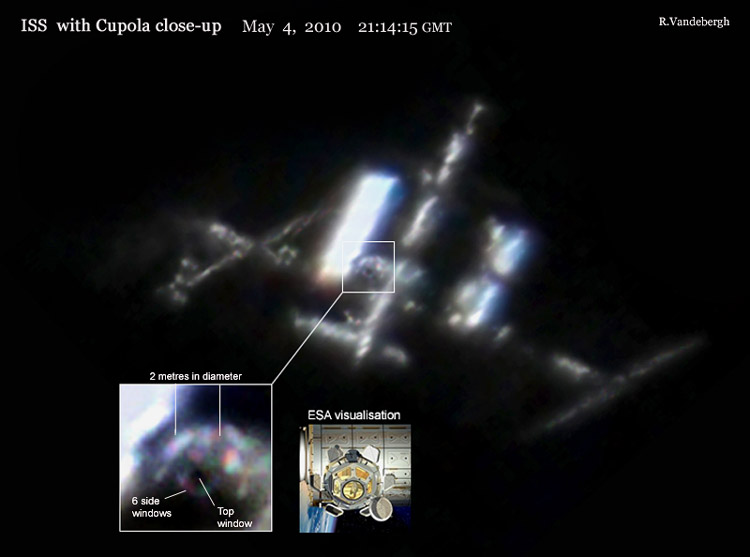
aqui) and the ISS on
May 16 and
May 22 (
more) by
T. Legault and
May 23 (
hi-res) as well as
in daytime.
• Finally some highlights of this month (see also
here,
here,
here,
hier und
hier):
- June 6: Mars close to Regulus, should feel equally bright although Regulus is 3x10^6 times farther away.
- June 8: Uranus only 28' from Jupiter, first of 3 conjunctions 2010/11
- June 11: Venus in one line with Castor and Pollux
- June 19: Dwarf planet (1) Ceres in opposition, reaching 7.1 mag.
- June 20: Comet McNaught - see above - close to Capella (and possible some NLCs as well). Also Venus in/near the Beehive cluster
- June 26: Partial lunar eclipse in the Pacific area, max. magnitude 0.53
Also noteworthy are two spaceflight events which are 'unavoidable' thanks to celestial mechanics: On June 13 Hayabusa will return to Earth (the third of four trajectory corrections
was just successful, with Australia now in the crosshairs), and on June 27 EPOXI will fly by Earth (a necessary
trajectory correction was successful, too) enroute to comet Hartley 2.