Solar activity is now really taking off, and the monthly sunspot number values are up sharply in the NOAA diagram here - but since cycle #24 took off so late (as did important precursor events) the prognosis is still for a rather shallow maximum around 2013. There was a lot to see in recent days (and this forum alone is overflowing with images): On April 23 AR 1195 was so big that it appears inadvertendly in this simple sunset picture by yours truly! Also various hi-res H-Alpha scenes and AR 1193 in hi-res on April 20, the white light Sun on April 17, more sunset spots on April 15, a great prominence animation of April 10 and R.A.S. press releases on a coronal mass ejection on March 20, the big solar flare of Feb. 15 (also discussed here and here), the birth of a sunspot, analysis of SDO data and the solar eruption process (also discussed here); at the meeting where these came from the chance of a new Maunder minimum was also discussed. There is also a weird paper on how bacteria in India enjoyed the 2010 annular eclipse, while the webzine TOTALITY! #10 has some 40 pages on the 2010 total eclipse, including a report by yours truly.
In other solar system news here's Saturn on April 17 and April 16 and the - again very big - full moon of April 17 rising and setting. The tables here are helpful in finding future perigee and apogee full moons. • A paper and another one on carbon monoxide in Pluto's atmosphere, also discussed here, here, here, here, hier, hier and hier. • Of the 2011 GP95 NEA fly-by a newer and an older video - and another interesting case coming up on June 2! • Regarding comets, a mini-video of 249P in STEREO's FOV, ideas on Main Belt Comets and the poor show so far by comet Elenin (which also got an article and a FAQ debunking related BS). This blogger also became aware of this 2007 report from the ISS where sensational comet McNaught was apparently only seen "by chance": This is a scandal, plain and simple!
Beyond the solar system recurrent nova T Pyxidis has now settled around 7th mag. after brightening steadily and may yet reach 6th mag.! There are also some spectra - and IR photometry of Eps Aurigae. • The STEREO spacecraft has found a lot of new variable stars, also hailed in this and this press release. • Back on Earth three more great timelapse videos: from Tenerife (mentioned here; the light pollution is quite obvious), Mauna Kea (night of April 23 - great mountain shadow triangle and lens flares, also hailed here) and the continental U.S. (with a moving dolly). • What the AIM satellite found out about noctilucent clouds. • The ISS, imaged from Witten passing high on April 24 (parallel shot from Bonn) and rising vertically on April 23 by yours truly. • The NanoSail D is still up and seen occasionally (see also the Cosmic Mirror #341 header), sometimes pretty bright - and the reentry may not come before July. • And a long table of Easter dates: While having E Sunday on the 2nd-latest date (April 24 as this year) is twice is frequent as hitting the very last day, the two 24 Apr dates framing 2011 are in 2095 and were in 1859, the two 25 Apr dates are in 2038 and 1943, resp. - small number statistics.
Monday, April 25, 2011


Friday, April 15, 2011
50-meter asteroid close to Earth now - with 2 mag. brightness changes
As this posting goes online, 50-meter NEA 2011 GP59 is closest to Earth at 530,000 km, one week after its discovery by an amateur-run sky survey in Spain. This is (or rather was; the optimal visibility was yesterday, with 13 mag. as compared to 14 mag. now) the best NEA Earth visit in several years, and the object has been observed a lot in the past days: Of particular interest were strong brightness fluctuations every four minutes, due to the - probably non-trivial - rotation of the elongated body.
• This is a NEA visit worth of some headlines, but most aren't as small ones come close all the time. The November visit of big 2005 YU55 is a different case, of course. • An asteroid on a long-lived horseshoe orbit 'around' Earth has been identified (another and another press release; some coverage here, here, here and hier. • A story on shady meteorite deals [alt.] has been attacked. • And yet another U.S. fireball that may have dropped.
Comet C/2011 C1 (McNaught) looks like a tiny Hartley 2, making it interesting for photographers: April 10 [alt.], April 5 and April 3 pictures. • The expectations for comet C/2010 X1 (Elenin) are still not clear (another and another story, a light curve with Russian debate - and it won't destroy Earth ...). • New comet C/2011 G1 (McNaught), more on the funny Holmes paper (more and more), a page with light curves and a paper on main-belt comets.
Tonight from 19 to 21 UTC photograph the Moon and the Aristarchus region in particular which was the location of a famous Transient Lunar Phenomenon in Oct. 1963. (And if you check the ground-to-air of Apollo 11 at 076:57:07 and 077:12:51 you see that an alleged Aristarchus TLP even played a little role in the famous mission and also featured in sect. 7:17 of the astronauts' debriefing.)
Great - literally! - Moon mosaics of April 10 (also 2 details by someone else), April 9 and April 8, the young crescent of April 4 from Germany (more) and Portugal, plus the waning crescent of March 3 from Cairns. • The Jovian moons in SOHO's view (animated; STEREO had a better view in the past). • And Saturn on April 3 and - hold your breath! - March 28!
More action on the Sun on April 11/12 (CME video), April 11 (H-Alpha edge), April 10 (hi-res mosaic; also a detail; the fish was gone soon :-), April 6 (prominence video); also various April prominences, a March SDO timelapse movie and March 21 H-Alpha hi-res views. Plus the general rise in solar activity, and the little ice age. • Lots of solar eclipse stories in the Feb. 2011 Practical Astronomy, a great totality earthshine from 2008 - and total eclipses of the next 50 years in one map.
T Pyxidis is in outburst, the first time since 1966 (more, more and mehr). • The brightness of Eps Aur is rising steeply now (also the 8th newsletter). • Also stories on SN 2011az and the Z Cam campaign by the AAVSO. • And an article on a Deep Sky meeting in Linz.
A collection of great aurora pictures from the AuroraMAX camera system (discussed here), an aurora timelapse from an airplane (discussed here) and yet another aurora video. • Without aurorae night timelapse clips from India and South Dakota. • And the analysis of the Iceland volcano ash [Deutsch] over Europe a year ago.
• This is a NEA visit worth of some headlines, but most aren't as small ones come close all the time. The November visit of big 2005 YU55 is a different case, of course. • An asteroid on a long-lived horseshoe orbit 'around' Earth has been identified (another and another press release; some coverage here, here, here and hier. • A story on shady meteorite deals [alt.] has been attacked. • And yet another U.S. fireball that may have dropped.
Comet C/2011 C1 (McNaught) looks like a tiny Hartley 2, making it interesting for photographers: April 10 [alt.], April 5 and April 3 pictures. • The expectations for comet C/2010 X1 (Elenin) are still not clear (another and another story, a light curve with Russian debate - and it won't destroy Earth ...). • New comet C/2011 G1 (McNaught), more on the funny Holmes paper (more and more), a page with light curves and a paper on main-belt comets.

Tonight from 19 to 21 UTC photograph the Moon and the Aristarchus region in particular which was the location of a famous Transient Lunar Phenomenon in Oct. 1963. (And if you check the ground-to-air of Apollo 11 at 076:57:07 and 077:12:51 you see that an alleged Aristarchus TLP even played a little role in the famous mission and also featured in sect. 7:17 of the astronauts' debriefing.)
Great - literally! - Moon mosaics of April 10 (also 2 details by someone else), April 9 and April 8, the young crescent of April 4 from Germany (more) and Portugal, plus the waning crescent of March 3 from Cairns. • The Jovian moons in SOHO's view (animated; STEREO had a better view in the past). • And Saturn on April 3 and - hold your breath! - March 28!


More action on the Sun on April 11/12 (CME video), April 11 (H-Alpha edge), April 10 (hi-res mosaic; also a detail; the fish was gone soon :-), April 6 (prominence video); also various April prominences, a March SDO timelapse movie and March 21 H-Alpha hi-res views. Plus the general rise in solar activity, and the little ice age. • Lots of solar eclipse stories in the Feb. 2011 Practical Astronomy, a great totality earthshine from 2008 - and total eclipses of the next 50 years in one map.


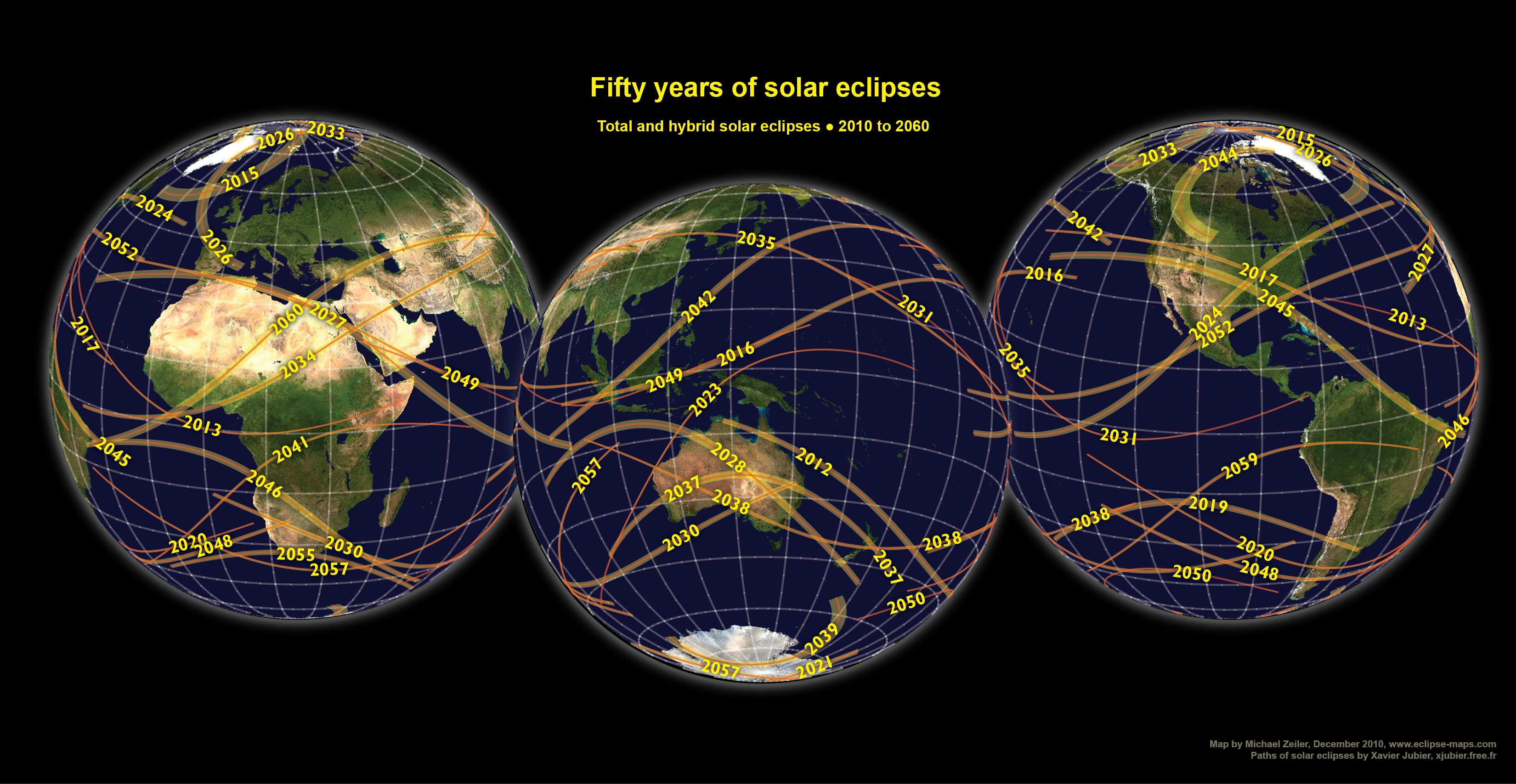
T Pyxidis is in outburst, the first time since 1966 (more, more and mehr). • The brightness of Eps Aur is rising steeply now (also the 8th newsletter). • Also stories on SN 2011az and the Z Cam campaign by the AAVSO. • And an article on a Deep Sky meeting in Linz.
A collection of great aurora pictures from the AuroraMAX camera system (discussed here), an aurora timelapse from an airplane (discussed here) and yet another aurora video. • Without aurorae night timelapse clips from India and South Dakota. • And the analysis of the Iceland volcano ash [Deutsch] over Europe a year ago.
Sunday, April 3, 2011
Saturn reaches opposition, brightness of rings may surge
About 24 hours from now - around 0:00 UTC on April 4 - Saturn reaches the opposition point to the Sun: several effects conspire now to brighten the rings, and some observers claim the phenomenon is already detectable. Some recent amateur observations of March 30, 25, 23, 22, 21/22 (with spokes), 21 and 20, plus a mid-March Hubble image with more storm detail. • Other sky sky highlights in April include Uranus' crossing of the celestial equator - but this is purely academic as the planet cannot be observed right now. And the visibility of all planets except Saturn is very poor to non-existent this month. There is another opportunity to observe a pretty young lunar crescent on April 4 for Northern hemispherians, however.
A look back at Mercury (and Jupiter) low at dusk on March 23 (Germany), March 22 (AZ and Austria), March 19 (Germany: Cologne and herten and March 16 (Sweden), plus a note on Jupiter's SEB return. • Lots of fine pictures of the March 19 perigee full moon are linked here, some collections included.
In small bodies news an analysis of Elenin (still mildly optimistic for fall) and a March 25 picture, some jets of 29P in outburst, new comet C/2011 F1 (LINEAR), a funny paper on the Holmes outburst, a serious paper on the Scheila outburst, a bolide on March 23 (more), a claim of more fireballs in Northern spring and a call for observations regarding a possible Southern stream.
From the Sun a nice March 27 H-Alpha mosaic, SDO action on March 24, various March pics, a claim that maxima are always double and a good solar April fools joke (more space-related jokes of note here, here, here, here, here, here, here, here, hier, here and here :-). • Some light intensity data from the 2009 TSE in India and a contemporary documentary (part 2 with the actual event) about TSE expeditions in 1973.
Elsewhere in the Universe the brightening of Epsilon Aurigae has begun. • A deeep image of the Virgo cluster. • Excellent aurora videos from Norway have turned up on Vimeo here, here (background) and here, also great stills from Norway again and Finland (another trip report, a big panorama and an allsky series). • A fine green flash and another one through a tree. • And finally the ISS in front of the Sun in new images here (with spots), here and here.
A look back at Mercury (and Jupiter) low at dusk on March 23 (Germany), March 22 (AZ and Austria), March 19 (Germany: Cologne and herten and March 16 (Sweden), plus a note on Jupiter's SEB return. • Lots of fine pictures of the March 19 perigee full moon are linked here, some collections included.

In small bodies news an analysis of Elenin (still mildly optimistic for fall) and a March 25 picture, some jets of 29P in outburst, new comet C/2011 F1 (LINEAR), a funny paper on the Holmes outburst, a serious paper on the Scheila outburst, a bolide on March 23 (more), a claim of more fireballs in Northern spring and a call for observations regarding a possible Southern stream.


From the Sun a nice March 27 H-Alpha mosaic, SDO action on March 24, various March pics, a claim that maxima are always double and a good solar April fools joke (more space-related jokes of note here, here, here, here, here, here, here, here, hier, here and here :-). • Some light intensity data from the 2009 TSE in India and a contemporary documentary (part 2 with the actual event) about TSE expeditions in 1973.

Elsewhere in the Universe the brightening of Epsilon Aurigae has begun. • A deeep image of the Virgo cluster. • Excellent aurora videos from Norway have turned up on Vimeo here, here (background) and here, also great stills from Norway again and Finland (another trip report, a big panorama and an allsky series). • A fine green flash and another one through a tree. • And finally the ISS in front of the Sun in new images here (with spots), here and here.

Thursday, March 17, 2011
If you know your full moon you will note it is bigger than often on March 19!
As about everyone will have heard by now, the full moon of March 19 coincides with perigee and has thus the largest angular diameter in years. So will you note that fact by looking at it without optical help? Many bloggers, stories and even a NASA video tell you that you cannot and will notice a particular size of the March 19 full moon only because you either knew about it or because the moon illusion close to the horizon helps. But this is simply not true! Obviously these people have never tried for themselves - but this blogger did, inadvertendly and without knowing anything about its distance, when he watched the Feb. 17 full moon high in the sky and noted its unusual angular size. Then checking the ephemeris, the reason was obvious: perigee was close and the (topocentric) distance only 359,000 km! The full moon of March 19 will look exactly like that to the eye, so prepare for a beautiful show - and use it to e.g. try to see as much surface detail as possible with the naked eye. And if weather is bad, don't worry: The April full moon will be as close again as in February. So enjoy the show and forget about ridiculous articles like this or this, claiming links to natural distasters: even NASA responded; more rebuttals are here, here, here and here.
The Sun made more headlines in the past 10 days, e.g. with a fine Aurora on March 10 in Northern areas following a flare late on March 9 (more, more, more and more), lots of sunspots in white light on March 8 and action also on March 7 (wavelength crossfade animation, fast CME, lotta flares). There were again general articles on solar activity and even an OpEd by science advisors - with the strange claim that "the severity of future [solar] storms could be much greater than those experienced in recent decades". And the SDO saw a partial eclipse by the Earth; the fuzzy limb is caused by the latter's atmosphere. • Planet-wise some amateur pictures of the continuing huge storm on Saturn of March 14, March 12 and Feb. 23 (also animated) and Cassini close-ups of March 13 and Feb. 25/26. The return of Jupiter's SEB continues, and the planet met the Moon on March 7 (more and more) - when an amazing mosaic of the crescent was obtained by a Russian astrophotography wizard. The evening visibility of Mercury (close to Jupiter), seen on March 16, March 15 (more, more and more), March 14 (more, more), March 13 (more and more), March 11 and March 7/8; many more and still more pictures.
In other news excitement is building for a large asteroid's Earth visit in November while harmless Apophis is observed again after a gap, themes for features on Lutetia have been approved and the spectra of the meteorites from asteroid 2008 TC3 resemble certain dust around stars. Also a fireball in Canada and a distant picture of Hartley 2. • The long eclipse of Epsilon Aurigae should end now! • A cool video & picture series of green flash of the setting Sun. • And finally the space shuttle Discovery crossing the Sun on March 7 (more) and the ISS and Discovery crossing the Moon the same day. Plus an impressive (this blogger saw it in binoculars: like a little comet dust tail!) water dump by Discovery on March 8 as an animation and still (more plus story); the phenomenon can also be seen in this wide-field animation and this still; it may also cause the fuzziness of the trail here. And finally some ISS/Discovery trail pairs and a very long exposure, some hi-res views and many more linked from this article by yours truly.
The Sun made more headlines in the past 10 days, e.g. with a fine Aurora on March 10 in Northern areas following a flare late on March 9 (more, more, more and more), lots of sunspots in white light on March 8 and action also on March 7 (wavelength crossfade animation, fast CME, lotta flares). There were again general articles on solar activity and even an OpEd by science advisors - with the strange claim that "the severity of future [solar] storms could be much greater than those experienced in recent decades". And the SDO saw a partial eclipse by the Earth; the fuzzy limb is caused by the latter's atmosphere. • Planet-wise some amateur pictures of the continuing huge storm on Saturn of March 14, March 12 and Feb. 23 (also animated) and Cassini close-ups of March 13 and Feb. 25/26. The return of Jupiter's SEB continues, and the planet met the Moon on March 7 (more and more) - when an amazing mosaic of the crescent was obtained by a Russian astrophotography wizard. The evening visibility of Mercury (close to Jupiter), seen on March 16, March 15 (more, more and more), March 14 (more, more), March 13 (more and more), March 11 and March 7/8; many more and still more pictures.


In other news excitement is building for a large asteroid's Earth visit in November while harmless Apophis is observed again after a gap, themes for features on Lutetia have been approved and the spectra of the meteorites from asteroid 2008 TC3 resemble certain dust around stars. Also a fireball in Canada and a distant picture of Hartley 2. • The long eclipse of Epsilon Aurigae should end now! • A cool video & picture series of green flash of the setting Sun. • And finally the space shuttle Discovery crossing the Sun on March 7 (more) and the ISS and Discovery crossing the Moon the same day. Plus an impressive (this blogger saw it in binoculars: like a little comet dust tail!) water dump by Discovery on March 8 as an animation and still (more plus story); the phenomenon can also be seen in this wide-field animation and this still; it may also cause the fuzziness of the trail here. And finally some ISS/Discovery trail pairs and a very long exposure, some hi-res views and many more linked from this article by yours truly.


Monday, March 7, 2011
Mercury evening show - aided by Jupiter - sky highlight in March
The best evening visibility of Mercury - for the Northern hemisphere, in 2011 - has just begun: The planet is still very close to the Sun but also very bright. In the coming days it'll fade but increase its elongation from the Sun (until the 23rd) - and on March 15 it will be only 2° from Jupiter which will help locate the elusive planet (which will receive its first artificial orbiter with MESSENGER on the 18th, by the way). This is clearly the main event of March 2011; for more see this, this and this story. • There were already nice constellations in recent days: the Moon & Jupiter on March 7 (Germany; U.K., Moon close-up)and March 6 (U.K.; more, Moon close-up, Austria, Moon close-up, Germany, Moon close-up, more), Jupiter close-up on March 5 and Moon & Venus on March 1 from the Philippines, India (more), Germany, the Canary Islands (daytime), the U.S. plus more. Also Saturn on Feb. 23 (movie).
In other news Comet Hartley 2 is still around but tiny, Elenin is still there, as are many other comets. • A meteor network, yet another obit for the Dryas impact claim, 19 NEAs in one night with PanSTARRS and more NEA studies. • The Sun in white light on March 7 and March 5, in Calcium light with a plane on Feb. 27, and a huge prominence on Feb. 24 (more, more, more). • Also a quick paper on the 1st X flare of the cycle, some ideas about weak cycle 23 (more, more, more, more, more, more, more, more, more, more, more and mehr) and numerous space weather stories here, here, here, here, here, hier and hier. And this is just what's flooding the net after a little action on the Sun ...
• Talking about the Sun, the SDO saw a funny partial eclipse on March 4 (more, more, more and more), there is a story on a little known Japanese eclipse flight during the last total eclipse in July 2010 in an Air Tahiti Nui magazine on PDF pages 33-34, and the weather analysis for the next total eclipse in Nov. 2012 in Oz has been updated. • The last flight of Discovery STS-133 has been amply documented by astrophotographers like Legault; other work is linked from this article. Also hot pics of Discovery and the ISS after undocking this evening from Germany (more and more) and one orbit later from the U.K. • Only sporadic observations of NanoSail are being reported, such as occasional flare pics and vids. • The AAVSO has received observation # 20 mio. (more). • And Leif Robinson has died (more).


In other news Comet Hartley 2 is still around but tiny, Elenin is still there, as are many other comets. • A meteor network, yet another obit for the Dryas impact claim, 19 NEAs in one night with PanSTARRS and more NEA studies. • The Sun in white light on March 7 and March 5, in Calcium light with a plane on Feb. 27, and a huge prominence on Feb. 24 (more, more, more). • Also a quick paper on the 1st X flare of the cycle, some ideas about weak cycle 23 (more, more, more, more, more, more, more, more, more, more, more and mehr) and numerous space weather stories here, here, here, here, here, hier and hier. And this is just what's flooding the net after a little action on the Sun ...


• Talking about the Sun, the SDO saw a funny partial eclipse on March 4 (more, more, more and more), there is a story on a little known Japanese eclipse flight during the last total eclipse in July 2010 in an Air Tahiti Nui magazine on PDF pages 33-34, and the weather analysis for the next total eclipse in Nov. 2012 in Oz has been updated. • The last flight of Discovery STS-133 has been amply documented by astrophotographers like Legault; other work is linked from this article. Also hot pics of Discovery and the ISS after undocking this evening from Germany (more and more) and one orbit later from the U.K. • Only sporadic observations of NanoSail are being reported, such as occasional flare pics and vids. • The AAVSO has received observation # 20 mio. (more). • And Leif Robinson has died (more).

Saturday, February 19, 2011
Mighty flares, few aurorae (yet) - and lots of media confusion
It had to happen, after this long solar minimum: The moment activity picks up - with several M flares and even one with X-class in mid-February - the media go overboard with excitement, science institutions jump on the wagon to tout their related work, and it's up to sober bloggers to put it all into perspective ... Events in reverse oder: • There was an M flare on Feb. 18, and the sunspot groups 1161 and 1162 are causing waves of ionization in our ionosphere and should be watched carefully.
• The X-class flare on Feb. 15 (more and more) from AR 1158 was first thought to be capable of causing great effects (like in this report ...), but it didn't happen and predictions remain difficult, as e.g. this analysis points out (earlier) - more coverage here, here, here, here (earlier), here, here, here (earlier), here, here, here, hier and hier. • The M flare on Feb. 13 was covered e.g. here, here and here - and at the time was not the biggest of cycle. • Regarding solar activity also stories on the worldwide CALLISTO network and the role of IBEX as a monitor.
In other news a movie of a lunar flash (more details) recorded on Feb. 11, a pessimistic Elenin analysis (recent observations point to only +6 mag. at max.) and fireballs in Philadelphia (more) and Chicago (more). • Amateur analysis of Haumea and its lightcurve. • And a speculative paper on "a jovian mass solar companion in the Oort cloud" makes headlines (more, more, many more, mehr and mehr), so that eventually NASA had to comment on the (non-)issue ...
Sunday, February 13, 2011
Closest non-impacting object in our asteroid catalog came by, changed direction by 60°
Asteroid 2011 CQ1 made a record close Earth approach on February 4th, 14 hours after its discovery. It passed to within 0.85 Earth radii (5480 km) of the Earth's surface: This 'flying sofa', only about one meter in diameter, is the closest non-impacting object in our asteroid catalog to date. Prior to the Earth close approach, this object was in a so-called Apollo-class orbit that was mostly outside the Earth's orbit. Following the close approach, the Earth's gravitational attraction modified the object's orbit to an Aten-class orbit where the asteroid spends almost all of its time inside the Earth's orbit. The close Earth approach changed the asteroid's flight path by about 60°. There are nearly a billion objects of this size and larger in near-Earth space and one would expect one to strike Earth's atmosphere every few weeks on average where they airburst; only rarely do even a few small fragments reach the ground.
In other small bodies news a paper describes the outcome of NEOWISE, the (full) mission of the WISE observatory. • Asteroid transits over planet disks are more frequent than one might think. • Rob McNaught's 58th comet has been discovered, also pics of a small comet near a galaxy and of Hartley 2 near M 50 (more). • A paper on human perception may be of relevance for visual meteor observers. • A nice fireball over Italy, also discussed here. • Debate over the first impact crater in China and the meaning of the Kamil structure for impact physics. • Regarding larger bodies, the storm on Saturn on Feb. 6 and Feb. 5 (plus a progress report, rather old Keck pics of the SEB revival on Jupiter and Jupiter & the Moon on Feb. 6.
In solar research we celebrate one year of the SDO in orbit. • Results on CME ripple structures and particle acceleration near Earth. • The two STEREO s/c are now seeing the entire Sun, als also hailed here, here, here, here, here, here, here, here, here, here, here and hier. • How LOFAR saw the solar eclipse on Jan. 4 in radio. • A new sequence for SN 2011B. • A bright outburst of star (with a crazy name) and an outburst of Z Cam. • New insights into Eps Aur. • Amateur imaging of a z=6 object. • Some images of NanoSail D (also here and here), plus the flare geometry. • And finally, returning to SDO's launch a year ago, a new kind of halo effect triggered by its rocket.
Monday, January 31, 2011
The hunt is on for NanoSail D: some sightings, no major flares yet
The initial report of little solar sail NanoSail D's release from the FASTSAT were wrong ("Keinerlei Kontakt ..."), but a month later the nanosatellite spontaneously ejected after all and deployed its sail as planned, with the battery draining a few hours later ("Dem Nanosail ...), also as planned. Now an inert satellite experiment it's up to amateur astronomers to track its behavior and there are even prizes waiting ("Fotowettbewerb ...") for the best images submitted here. Links to successful sightings & pictures can already be found here (in the header): some trail images with no obvious large flares from Iridium-style specular reflections (although this one from Finland seems flaring) and visual reports, usually between +6 and +7 mag. It's all a question of attitude, and future surprises are possible. The satellite should reenter between late March and May; visibility predictions are offered e.g. by Heavens Above; hit "Next" repeatedly for future viewing windows. • Observing the ISS transit the Sun in the Philippines. • NLC space image sequence and brightening trend claim. • A nice solar Omega (more), the Moon in 3D and on 5 subsequent days.
A supernova of 12.9 mag. can be seen right now in NGC 2655: photometry, images, visual impression! • There is a Nova Sgr 2011 at 11 mag. • FS Aur had a little outburst: alert, observations, context. • A poster with new CHARA pics of Eps Aur from the 217th AAS Meeting, a long human interest story on the lead observer, a paper on the campaign and the star's status. • On Feb. 6 we will see the whole Sun as the STEREO s/c span a 180° angle, a coronal hole may cause aurorae in early Feb., new insights from THEMIS, a double eruption on Jan. 28, a kinky CME on Jan. 13, better TSI measurements (alt., more) and nice Big Bear images. • From the Partial Solar Eclipse a hot MeteoSat movie, more fine images here, here, here, here (bottom), here and here, another gallery, an animation, a video, TV reports from WDR (w/yours truly), SWR and Rosenheim24 and a summary. Also the 2010 TSE as a partial from Tahiti and the Dec. TLE from Scotland and in another collection.
A fireball over Southern Germany was nicely imaged and led to a meteorite hunt; reports from other fireballs here and here (more). • Details on the Draconids this year. • Comet 29P is in outburst again: pictures here, here and here. • Elenin is still faint (more). • A new comet C/2011 A3 (Gibbs) (more). • Pics of Hartley 2 (and DS objects) from Jan. 30, Jan. 28, Jan. 26 and other dates, the SOHO 'comet storm' (over) and the 30th BAA comet magazine (PDF). • The Scheila outburst seems over, many observed a star occultation by (144) Vibilia and will try to see one by TNO Quaoar early on Feb. 2. • Hi-res images of Mercury 2008-10. • Venus & the Moon on Jan. 30 (more). • Jupiter in mid-January - and the 2009 impact explained (more, more, more). • Saturn (and its mighty storm) in amateur pics of Jan. 31, Jan. 29, Jan. 28, Jan. 26 (more), Jan. 17 and earlier and on Cassini pics of Jan. 21, Jan. 15 and Dec. 24 - Saturn's march towards opposition in April is also the lonely highlight of February (mehr, mehr und mehr).


A supernova of 12.9 mag. can be seen right now in NGC 2655: photometry, images, visual impression! • There is a Nova Sgr 2011 at 11 mag. • FS Aur had a little outburst: alert, observations, context. • A poster with new CHARA pics of Eps Aur from the 217th AAS Meeting, a long human interest story on the lead observer, a paper on the campaign and the star's status. • On Feb. 6 we will see the whole Sun as the STEREO s/c span a 180° angle, a coronal hole may cause aurorae in early Feb., new insights from THEMIS, a double eruption on Jan. 28, a kinky CME on Jan. 13, better TSI measurements (alt., more) and nice Big Bear images. • From the Partial Solar Eclipse a hot MeteoSat movie, more fine images here, here, here, here (bottom), here and here, another gallery, an animation, a video, TV reports from WDR (w/yours truly), SWR and Rosenheim24 and a summary. Also the 2010 TSE as a partial from Tahiti and the Dec. TLE from Scotland and in another collection.

A fireball over Southern Germany was nicely imaged and led to a meteorite hunt; reports from other fireballs here and here (more). • Details on the Draconids this year. • Comet 29P is in outburst again: pictures here, here and here. • Elenin is still faint (more). • A new comet C/2011 A3 (Gibbs) (more). • Pics of Hartley 2 (and DS objects) from Jan. 30, Jan. 28, Jan. 26 and other dates, the SOHO 'comet storm' (over) and the 30th BAA comet magazine (PDF). • The Scheila outburst seems over, many observed a star occultation by (144) Vibilia and will try to see one by TNO Quaoar early on Feb. 2. • Hi-res images of Mercury 2008-10. • Venus & the Moon on Jan. 30 (more). • Jupiter in mid-January - and the 2009 impact explained (more, more, more). • Saturn (and its mighty storm) in amateur pics of Jan. 31, Jan. 29, Jan. 28, Jan. 26 (more), Jan. 17 and earlier and on Cassini pics of Jan. 21, Jan. 15 and Dec. 24 - Saturn's march towards opposition in April is also the lonely highlight of February (mehr, mehr und mehr).


Sunday, January 9, 2011
Deep partial solar eclipse yields countless spectacular images
The partial solar eclipse of 4 January 2011 - which just missed being annular but was seen as a ring from space in Low Earth Orbit - may be one of the best-observed in history as it included densely-populated Europe. While many had to struggle with clouds, those often added to the beauty, plus the Sun could be caught in eclipse at sunrise in some European countries. The overall result is an unfathomable wealth of pictures in all kinds of places on the web: Here is a huge & growing link collection while fine images by indiduals and wire services alike have been collected e.g. here, here, here, here, here, here, hier, hier, hier, hier and here and news stories can be found here, here, here, here, hier, hier, hier, hier, hier, hier and hier (and for the record a lot of maps, graphics and previews of webcasts). Now to many individual photo galleries and reports:
In Germany yours truly chased the eclipse to Aachen with a TV crew; more pictures from the region are linked from there. Also selected pictures from Emmerich, Bochum, Oberhausen, Cologne, Bonn, Stuttgart, Rosenheim, Kaufering, Irschenberg, Munich (more, more), the Black Forest (more, more), Waiblingen, Wetzlar, Bentheim, Heidelberg, Pforzheim, Weimar, , Jena and Saxony (more, more, more and more). We also have pictures taken with a PST, photometry of clouds (more, more and a cloud picture series) and more reports from Germany here (a lot!), here, here, here, here, here and here. And from a train from Germany to Austria!
From other countries a lot of reports from Austria (more, more [more], more, more, more, more, more, more, more, more, more, more, more, more, more, more, more, more, more and more), from Switzerland (more), the Netherlands (lots more in this gallery, e.g. this, this, this, this and this sunrise shot), from Belgium (more), Spain (an 'Omega' sunrise; see here and here; more), Gran Canaria, the UK (more, more, more, more, more and more), Denmark, France, Italy, Sweden (more and more), Greece, Hungary, Romania, Israel, Egypt, Oman (with the ISS spoiling the view; discussed e.g. here and hier), Russia (more, more and more) and India (more and more). Oh, and from Finland a radio(!) picture.
And after the eclipse the Moon came back into the evening sky - and was well observed around the world one day later (more), 2 days later, 3 days later (more), 4 days later and 5 days later i.e. this evening (more) - also a collage of the 3, 4 and 5 days old Moon. • Talking about the Sun there's again excitement about a potential route to solve the coronal heating mystery, this time via spicules: press releases and stories here, here, here, here, here, here, here, here, here, here, here and here. • Also the SDO is studying the inner corona, and the Calafate eclipse from last July is shown here on page 12.
In other news comet P/2010 V1 next to a globular cluster today and on Jan. 5, Hartley 2 on Jan. 1 - and early thoughts about Elenin this fall. • Asteroid/comet Scheila on Jan. 1; more stories here and here. • A call for photometry of three Vestoids (and new insights into Vesta itself). • Jupiter on Jan. 2 and Dec. 23 - and the SEB revival in one image covering Nov. 8 til Dec. 30. • Jupiter and Uranus on Jan. 3, just now joined by the Moon. • The storm on Saturn observed frequently by A. Wesley. • Moon, Venus & Mercury on Jan. 1. • And finally an animation of a persistent train of a 2011 Quadrantid; more on their peak (which didn't quite reach ZHR=100, it seems) here, here and here.
In Germany yours truly chased the eclipse to Aachen with a TV crew; more pictures from the region are linked from there. Also selected pictures from Emmerich, Bochum, Oberhausen, Cologne, Bonn, Stuttgart, Rosenheim, Kaufering, Irschenberg, Munich (more, more), the Black Forest (more, more), Waiblingen, Wetzlar, Bentheim, Heidelberg, Pforzheim, Weimar, , Jena and Saxony (more, more, more and more). We also have pictures taken with a PST, photometry of clouds (more, more and a cloud picture series) and more reports from Germany here (a lot!), here, here, here, here, here and here. And from a train from Germany to Austria!

From other countries a lot of reports from Austria (more, more [more], more, more, more, more, more, more, more, more, more, more, more, more, more, more, more, more, more and more), from Switzerland (more), the Netherlands (lots more in this gallery, e.g. this, this, this, this and this sunrise shot), from Belgium (more), Spain (an 'Omega' sunrise; see here and here; more), Gran Canaria, the UK (more, more, more, more, more and more), Denmark, France, Italy, Sweden (more and more), Greece, Hungary, Romania, Israel, Egypt, Oman (with the ISS spoiling the view; discussed e.g. here and hier), Russia (more, more and more) and India (more and more). Oh, and from Finland a radio(!) picture.


And after the eclipse the Moon came back into the evening sky - and was well observed around the world one day later (more), 2 days later, 3 days later (more), 4 days later and 5 days later i.e. this evening (more) - also a collage of the 3, 4 and 5 days old Moon. • Talking about the Sun there's again excitement about a potential route to solve the coronal heating mystery, this time via spicules: press releases and stories here, here, here, here, here, here, here, here, here, here, here and here. • Also the SDO is studying the inner corona, and the Calafate eclipse from last July is shown here on page 12.


In other news comet P/2010 V1 next to a globular cluster today and on Jan. 5, Hartley 2 on Jan. 1 - and early thoughts about Elenin this fall. • Asteroid/comet Scheila on Jan. 1; more stories here and here. • A call for photometry of three Vestoids (and new insights into Vesta itself). • Jupiter on Jan. 2 and Dec. 23 - and the SEB revival in one image covering Nov. 8 til Dec. 30. • Jupiter and Uranus on Jan. 3, just now joined by the Moon. • The storm on Saturn observed frequently by A. Wesley. • Moon, Venus & Mercury on Jan. 1. • And finally an animation of a persistent train of a 2011 Quadrantid; more on their peak (which didn't quite reach ZHR=100, it seems) here, here and here.


Friday, December 31, 2010
Deep partial solar eclipse & Quadrantid peak & Uranus @ Jupiter all coincide on 4 January 2011
This monthly preview is easy: Everything of interest happens within a few hours on Tuesday, January 4, 2011! • For the third time Jupiter and Uranus meet within 1/2° (some list the closest approach for Jan. 2, though). • The Quadrantid meteors peak around 1:10 UTC when the ZHR might briefly surpass 100 (more previews here, here, here, here and hier). Of all the major showers of 2011 this is the only one without severe lunar interference! • A few hours later a deep partial eclipse of the Sun can be seen in Europe and around: more, more, mehr, mehr, mehr and mehr. As usual there is an official health warning, once again blown out of proportion in the media ("watch only on the web!") - a very bad move for public education. Anyway, webcasts - from Spain - are announced here, here and here. The year 2011 is particularly rich in eclipses (more, also a specific U.K. outlook); more on the coming months and January in particular. Also a look ahead in physics - and several looks back, in case anyone cares ...
The total eclipse of the Moon preceding the PSE was already covered - with maaany links - hier and hier. Also thoughts on its brightness, a SQM graph, some individual reports here (with a fast movie), here, here, here and hier, further selected pictures from Germany, Tenerife, Costa Rica (story), Nicaragua (story), the U.S., Canada and the Philippines. Plus a picture collection (much more), all-sky pics with bolides during totality, a video from Cumbria, the stabilized version of the famous great animation (by Castleman), a more jerky animation and HD stills of the eclipse over the shuttle. Some media reports are here, here, here, here, hier and hier, story collections hier, hier and hier, and report on how Chang'e 2 coped with the shadow. And finally the "rare solstice eclipse" misunderstandings are still around (just look at the bizarre comments here when I pointed out that for most it wasn't one anyway - and that the next case is only one Meton away), and there was even more bullsh*t and weirdness around as can be seen hier and here, here and here ...
Elsewhere in the solar system we finally have Cassini close-ups of the huge Saturn storm (false-color versions here and here): more coverage and amateur pics of Dec. 25, Dec. 24 and Dec. 23; many more great views are here as is the development from Dec. 5...19. • Meanwhile the SEB revival on Jupiter continues, plus a gorgeous rotation video of Sep. 12 (from this material). • Moon & Venus on the morning of Dec. 31 from Germany and India and the constellation on Dec. 29 from Austria. • The complications of solar storm forecasting. • The coma of asteroid Sheila after its weird outburst is still there as pics from Dec. 29 (more) and Dec. 27 show - but short exposures can miss the show!
• SOHO has found its 2000th comet (more, more, more, more and mehr). • The orbit (another one) for new comet Elenin may make it bright come next fall. • Comet Hartley 2 on Dec. 29, Dec. 27 and Dec. 26. • Some reports and pictures (including a glorious composite!) from the Geminids. • A subterranean impact crater in New York. • More analysis of the 2008 TC3 meteorites here, here, here and here. • More cool pictures from the Himalayas. • Hi-res views of the ISS in front of the Moon and the Sun. • And finally some freebies: You can have 26 pages of the premiere issue of the new IOTA journal (with lots of stellar occultation conference reports), 155 pages of a kind of textbook on astrophotography and 70 pages of a Minor Planet bulletin as big PDFs, all for free. Happy new year!
The total eclipse of the Moon preceding the PSE was already covered - with maaany links - hier and hier. Also thoughts on its brightness, a SQM graph, some individual reports here (with a fast movie), here, here, here and hier, further selected pictures from Germany, Tenerife, Costa Rica (story), Nicaragua (story), the U.S., Canada and the Philippines. Plus a picture collection (much more), all-sky pics with bolides during totality, a video from Cumbria, the stabilized version of the famous great animation (by Castleman), a more jerky animation and HD stills of the eclipse over the shuttle. Some media reports are here, here, here, here, hier and hier, story collections hier, hier and hier, and report on how Chang'e 2 coped with the shadow. And finally the "rare solstice eclipse" misunderstandings are still around (just look at the bizarre comments here when I pointed out that for most it wasn't one anyway - and that the next case is only one Meton away), and there was even more bullsh*t and weirdness around as can be seen hier and here, here and here ...
Elsewhere in the solar system we finally have Cassini close-ups of the huge Saturn storm (false-color versions here and here): more coverage and amateur pics of Dec. 25, Dec. 24 and Dec. 23; many more great views are here as is the development from Dec. 5...19. • Meanwhile the SEB revival on Jupiter continues, plus a gorgeous rotation video of Sep. 12 (from this material). • Moon & Venus on the morning of Dec. 31 from Germany and India and the constellation on Dec. 29 from Austria. • The complications of solar storm forecasting. • The coma of asteroid Sheila after its weird outburst is still there as pics from Dec. 29 (more) and Dec. 27 show - but short exposures can miss the show!


• SOHO has found its 2000th comet (more, more, more, more and mehr). • The orbit (another one) for new comet Elenin may make it bright come next fall. • Comet Hartley 2 on Dec. 29, Dec. 27 and Dec. 26. • Some reports and pictures (including a glorious composite!) from the Geminids. • A subterranean impact crater in New York. • More analysis of the 2008 TC3 meteorites here, here, here and here. • More cool pictures from the Himalayas. • Hi-res views of the ISS in front of the Moon and the Sun. • And finally some freebies: You can have 26 pages of the premiere issue of the new IOTA journal (with lots of stellar occultation conference reports), 155 pages of a kind of textbook on astrophotography and 70 pages of a Minor Planet bulletin as big PDFs, all for free. Happy new year!


Sunday, December 19, 2010
An asteroid playing comet, fine Geminids and not a "solstice lunar eclipse"
For 104 years the body carring the name (596) Scheila behaved like a perfect main belt asteroid - but now it's suddenly become a weird comet! This short report in German summarizes early developments and links to all that was known at the time, such as this, this and this report. Since then we have more reports from Dec. 18 (more) and Dec. 17, photo collections here, here and here and pictures of Dec. 17 (and 16 and 13; more), Dec. 16 (more), Dec. 15 (more) and Dec. 13 - it looks like the coma is fading already. • A new 'Russian' comet, C/2010 X1 (Elenin): a TV report and a Dec. 11 image. • Other recent comet pictures: 204P and 43P (both with nice tails), P/2010 V1 (earlier; not that impressive) - and Hartley 2, still a green blob amonst a lot of deep sky objects. • Organic material in the meteorites from asteroid 2010 TC3 (more and more) and 2004's comet Machholz (mehr).
The Geminids of 2010 have peaked on Dec. 14 with a ZHR a bit above 100 (just as predicted): pictures, collections and videos here, here, here, here, here, here, here, here and here. • More about that British bolide thing (with a little dashboard-cam video). • Contrary to numerous stories, the Dec. 21 total lunar eclipse (more, more, more, more) does not happen on the same (calendar) day in general as the solstice which occurs some 15 hours later: From this immediately follows that both events happen on subsequent days for 2/3 of the planet, e.g. most of Europe but also Hawaii. • Further images of the big white storm on Saturn of Dec. 14 and Dec. 13 (more) and reports of Dec. 16 and Dec. 12. • Marvellous Jupiter images (before the SEB revival) from Barbados!
A lot is happening on the Sun, though not in white light: amateur dopplergrams from Dec. 6., more and more early Dec. pics, studies of a global eruption on Aug. 1 with "sympathetic flares" (more, more), the roles of the SDO and SORCE satellites in solar studies, a storm prediction that failed, ESA's helioviewer software, and the pulsating aurora. • Finally an AGU press conference reported preliminary results on city light pollution enhancing air pollution (more, more and more) - which led to a reaction from IDA in which the study leader isn't interested, though, as he said in Q&A.


The Geminids of 2010 have peaked on Dec. 14 with a ZHR a bit above 100 (just as predicted): pictures, collections and videos here, here, here, here, here, here, here, here and here. • More about that British bolide thing (with a little dashboard-cam video). • Contrary to numerous stories, the Dec. 21 total lunar eclipse (more, more, more, more) does not happen on the same (calendar) day in general as the solstice which occurs some 15 hours later: From this immediately follows that both events happen on subsequent days for 2/3 of the planet, e.g. most of Europe but also Hawaii. • Further images of the big white storm on Saturn of Dec. 14 and Dec. 13 (more) and reports of Dec. 16 and Dec. 12. • Marvellous Jupiter images (before the SEB revival) from Barbados!

A lot is happening on the Sun, though not in white light: amateur dopplergrams from Dec. 6., more and more early Dec. pics, studies of a global eruption on Aug. 1 with "sympathetic flares" (more, more), the roles of the SDO and SORCE satellites in solar studies, a storm prediction that failed, ESA's helioviewer software, and the pulsating aurora. • Finally an AGU press conference reported preliminary results on city light pollution enhancing air pollution (more, more and more) - which led to a reaction from IDA in which the study leader isn't interested, though, as he said in Q&A.
Subscribe to:
Posts (Atom)