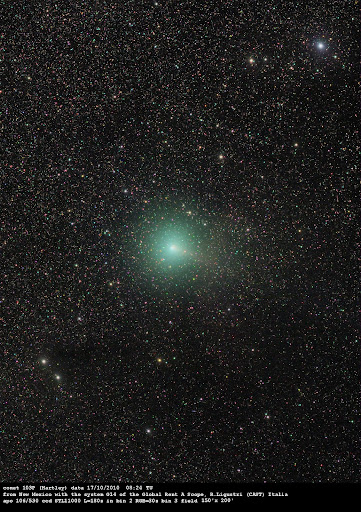
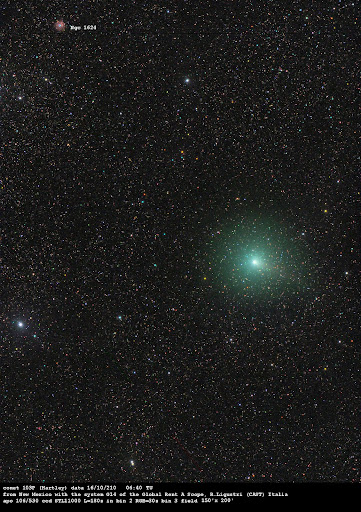
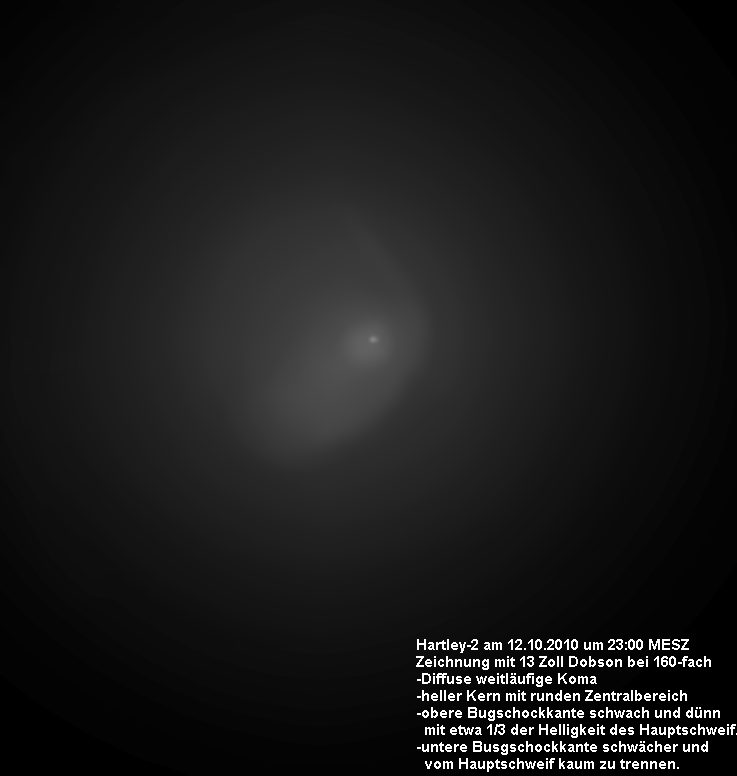
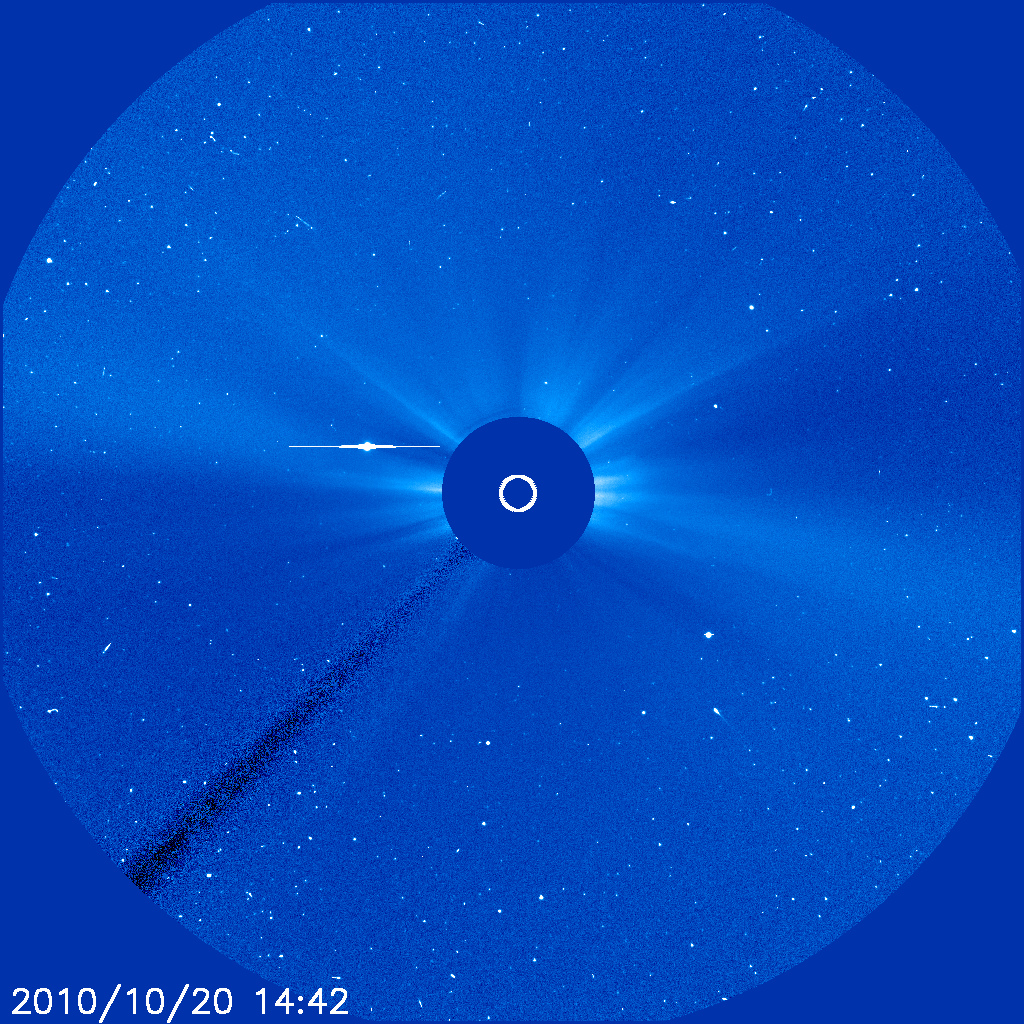
All that's been said about the difficult viewing conditions for 103P/Hartley (2) despite its fine overall brightness still holds true two weeks later, now that the Moon is gone and it's observable again high in dark skies after midnight (in the N hemisphere): The comet - information collections here, here, here, here and here (esp. on the space mission) - is as hard as ever when the sky isn't great, also observed here and here. Selected pictures of today (note the growing tail; also a wide view with a nebula), Oct. 30, Oct. 26, Oct. 23, Oct. 22 (more, more), Oct. 20 (no tracking!), Oct. 19 (also an Oct. 13 ... 19 collage), Oct. 18 (near Eps Aur; more, more), Oct. 17 (more and esp. deep), Oct. 16 (more, processed) and Oct. 15 (animation). Also an Oct. 12 drawing (context), an Oct. 8 super-wide view (context, more) and a September Subaru image and development sequence (small and medium).
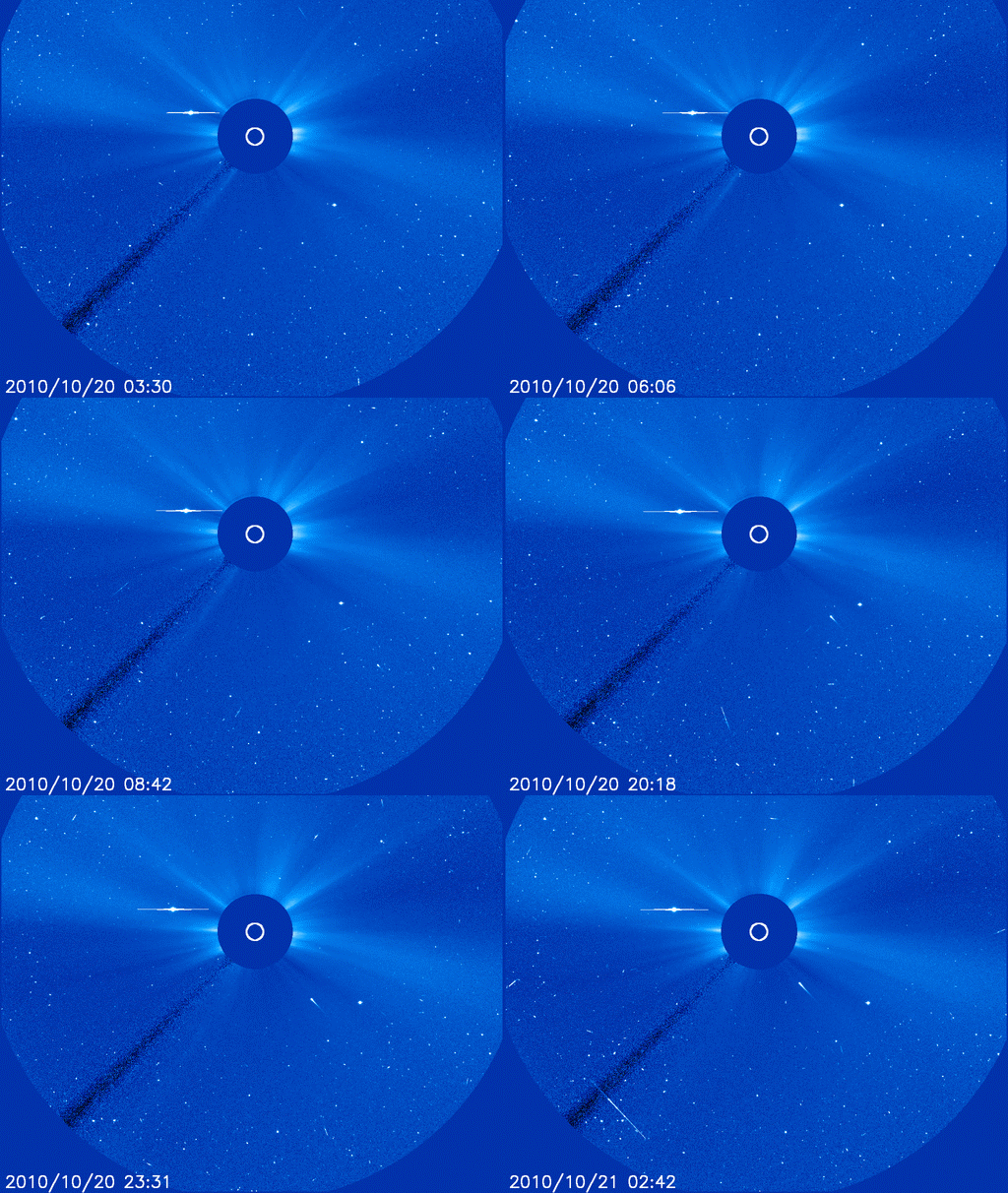
In other small-bodies news there was a bright sungrazing comet (more, more, earlier, LASCO C3 video and still, plus the context). • Some strange is happening with comet Tempel 2 (context), there is a new comet Hill, and PanSTARRs has found its 1st comet. • The rules to be a "discoverer" have changed again, and there is a new place for comet observations. • Fine bolide videos here and here - and the possibility of meteors from comet Mellish. • The close passage of minor planet 2003 UV11 (more, mehr & mehr) was documented e.g. here, here, hier and hier (more), with earlier observations here and here (more).
In other news interesting views of Venus on Oct. 31 near inferior conjunction (also its sky track; more), a lot of Saturn moon events in 2009/10 and - older - adaptive optics views of Uranus and esp. Neptune with the Hale telescope. • Sunspot 1117 was substantial, an old butterfly diagram has been reconstructed, new insights into aurora physics, the solar storm watch in action and ways to observe the Sun. • The 1st Irish supernova, the results of the U Sco campaign, the ISS on the Moon, a great timelapse collection and a huge all-sky with the gegenschein et al. (an earlier such view). • Finally there isn't anything special expected in November (mehr), so we rather look forward to the meteor showers and other highlights (mehr) of 2011.
Monday, November 1, 2010


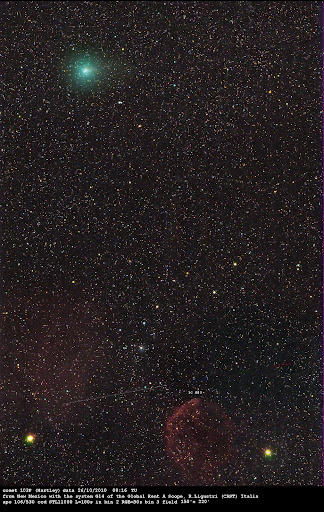

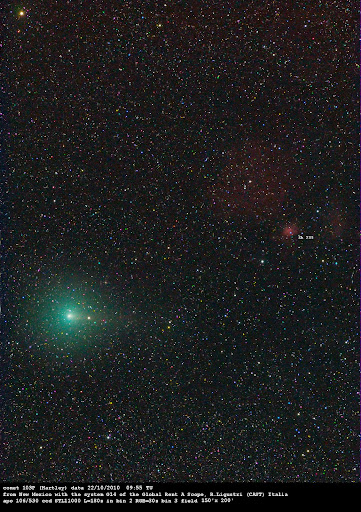
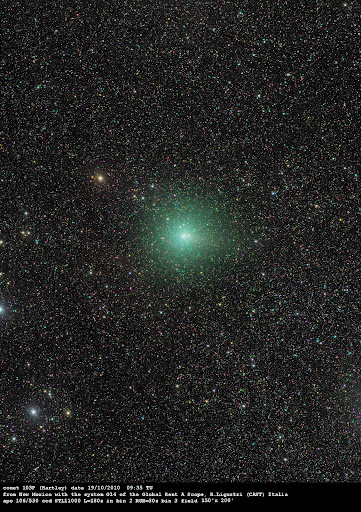

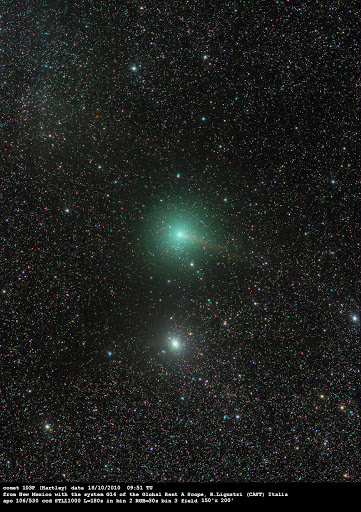






Friday, October 15, 2010
Hartley's huge coma - over 1° - means visibility dramatic function of sky quality
Its brightness is now beginning with a "5", but how well comet 103P/Hartley 2 (more general info here, here, here, here, hier and here) can be seen in the sky is extremely dependent on the brightness of the sky background - because the huge coma is spreading the light widely. Some see nothing at all, others a bit, and still others report naked-eye sightings, all at the same time. A detailled analysis (earlier; more) shows that peak brightness is already near, so an improvement in Hartley's visibility, esp. with the return of the Moon, seems unlikely. The comet has been a subject of studies e.g. at Lowell Obs., and from space, of course: EPOXI is coming closer (blog; animation), and Hubble as well as WISE have observed it.
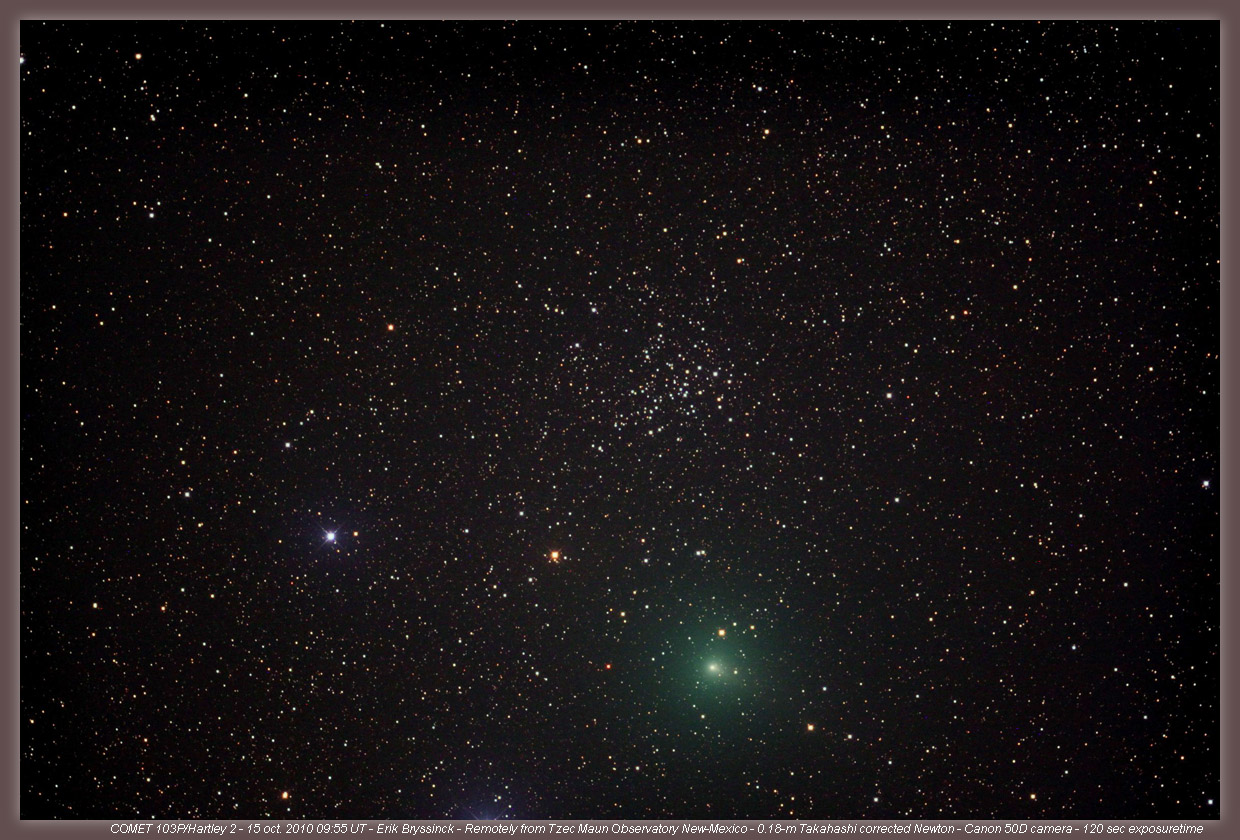
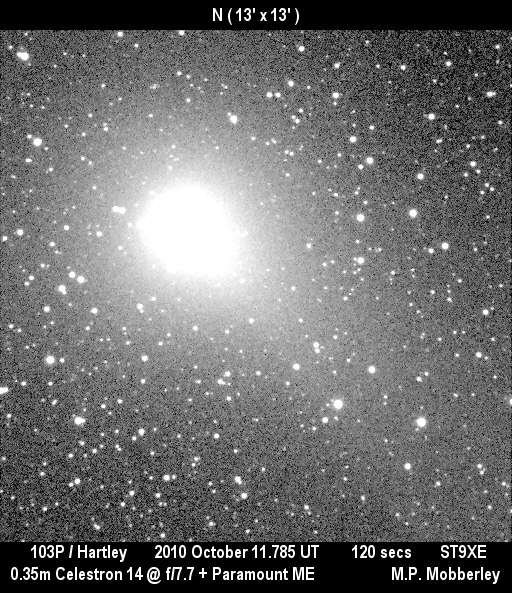
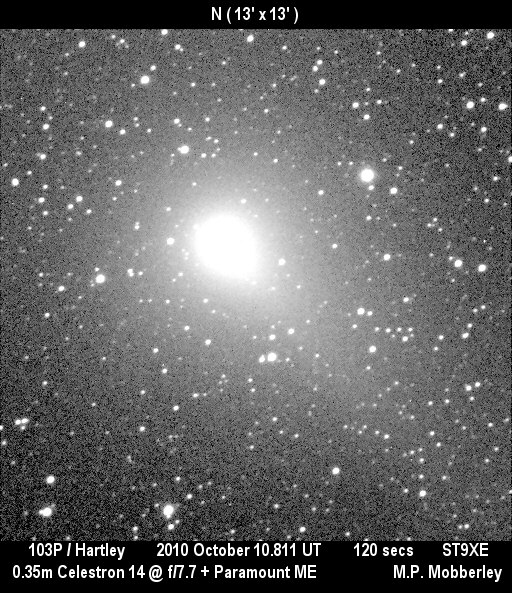
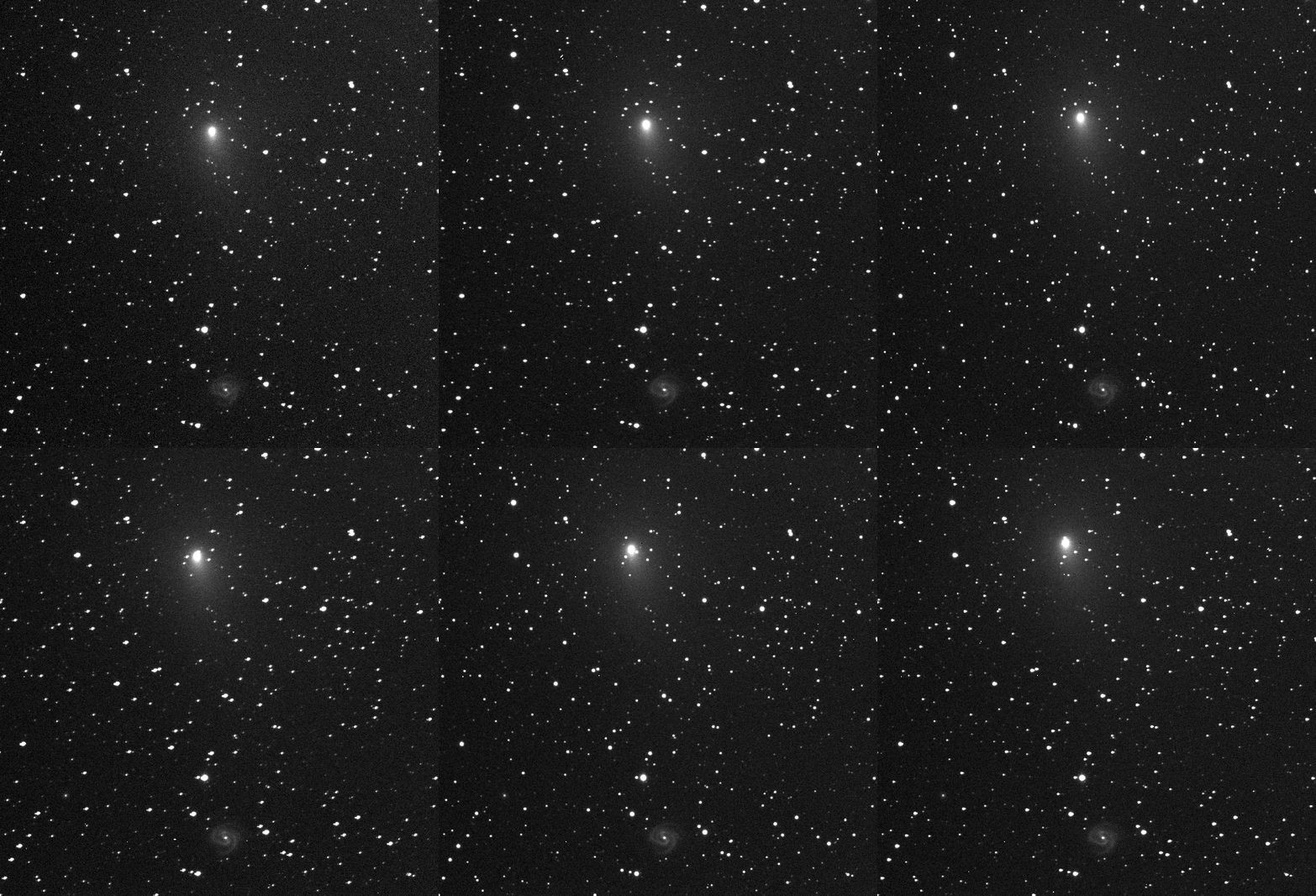
For the experienced amateur photographer Hartley 2 has been a fine show as well: selected pictures of Oct. 13-15 (mosaic), Oct. 15 (other field of view), Oct. 14., Oct. 13, Oct. 12 (more), Oct. 11 (more, more), Oct. 10 (more, more, more, more, more, more), Oct. 9 (more, more, more, wide view [explained hier and hier], more), Oct. 8 (C/A to double cluster; more, more, more, more, more, wide view), Oct. 7 (more, more, more), Oct. 6 (more), Oct. 5 (more), Oct. 4 (more, more), Oct. 3, Oct. 1-2 (collage), Oct. 2 (more, more, more), Oct. 1 (more, more, more, more, more), Sep. 30 (more), Sep. 29 (more, more, animation), Sep. 28, Sep. 26 and Sep. 20 (more), plus more pix. • There's also the new comet P/2010 T1 (McNaught).
In other small body news a prediction for a Draconids outburst in 2011 (also covered here and hier), though rather uncertain and drenched in moonlight anyway. • Reports of fireballs in New Mexico (more) and Germany. • A paper, press trelease and story about activity in Geminids-parent Phaethon which may be a "rock comet". • A paper and another one (also here), numerous press releases such as here, here, here, here, here, here, here, here and here and articles like this, this, this, this, dieser and more argue for an asteroid collision as the cause of P/2010 A2's tail. As I comment here the Spanish faction stands by its alternate explanation reported here earlier. • More about the Kamil crater discovery.
It's now 20 years since the 1st automatic NEO discovery with Spacewatch, and the technology is pretty mature now - e.g. at the La Sagra Sky Survey run entirely by amateurs which just bagged another comet. And somewhat controversial PanSTARRS has also found its first PHA (more, mehr). • Meanwhile another space rock of 5-10 meters has whizzed by Earth, 2010 TD54: video clips (also here; earlier), a demonstration how it came closer, a light curve unveiling rapid rotation and more video. • A video of a star occultation by Isis on Sep. 20 - and it's been 30 years since a major event with Kleopatra.
News from the Sun include data taken during the January annular eclipse in India, weird shadow band effects (it seems) projected on to clouds during the July total eclipse in the Pacific (one more story) and cool pics from September. • SOHO's EIT in in semi-retirement, replaced largely by the SDO - which had a partial lunar eclipse as well as an encounter w/Earth (more). • There was an aurora on Oct. 11, also seen here, here and here. Activity had been very low during the past minimum. A new aurora camera, explained here and here. • New insights in to the physics of flares (which we don't need to fear) and solar storms, while forecasting activity is hard. • And a rather weird paper on the Sun's spectrum, perhaps wrong but making headlines e.g. here, here, here, here, here and here, while the 'hockey stick' lives and the past N summer was hot ...
In other solar system news some great images from Pic du Midi with striking resolution. • More on Jupiter's record-close opposition - with Uranus nearby - here, here and here, plus a collage showing both in motion, questions and one success re. naked-eye visibility of the Galilean moons, some Jupiter images, also of Sep. 29, Sep. 22 (IR rotation movie, als a visible panel) and Sep. 13 plus more. Also the role of amateurs in monitoring Jupiter and the Harvest Moon nearby which looked like this (and later like this and this). • Mars 2010 rotating. • The ISS in transit of Venus (also shown here), Venus as a crescent and the ISS transiting a sunspot and the H-Alpha Sun. • Elsewhere some news from Eps Aur. • And regarding what's up in October, other than Hartley 2 and Jupiter with Uranus little from the solar system can be seen easily, as previews here, hier, hier, hier and hier show - the Orionids are lost in moonlight.
For the experienced amateur photographer Hartley 2 has been a fine show as well: selected pictures of Oct. 13-15 (mosaic), Oct. 15 (other field of view), Oct. 14., Oct. 13, Oct. 12 (more), Oct. 11 (more, more), Oct. 10 (more, more, more, more, more, more), Oct. 9 (more, more, more, wide view [explained hier and hier], more), Oct. 8 (C/A to double cluster; more, more, more, more, more, wide view), Oct. 7 (more, more, more), Oct. 6 (more), Oct. 5 (more), Oct. 4 (more, more), Oct. 3, Oct. 1-2 (collage), Oct. 2 (more, more, more), Oct. 1 (more, more, more, more, more), Sep. 30 (more), Sep. 29 (more, more, animation), Sep. 28, Sep. 26 and Sep. 20 (more), plus more pix. • There's also the new comet P/2010 T1 (McNaught).






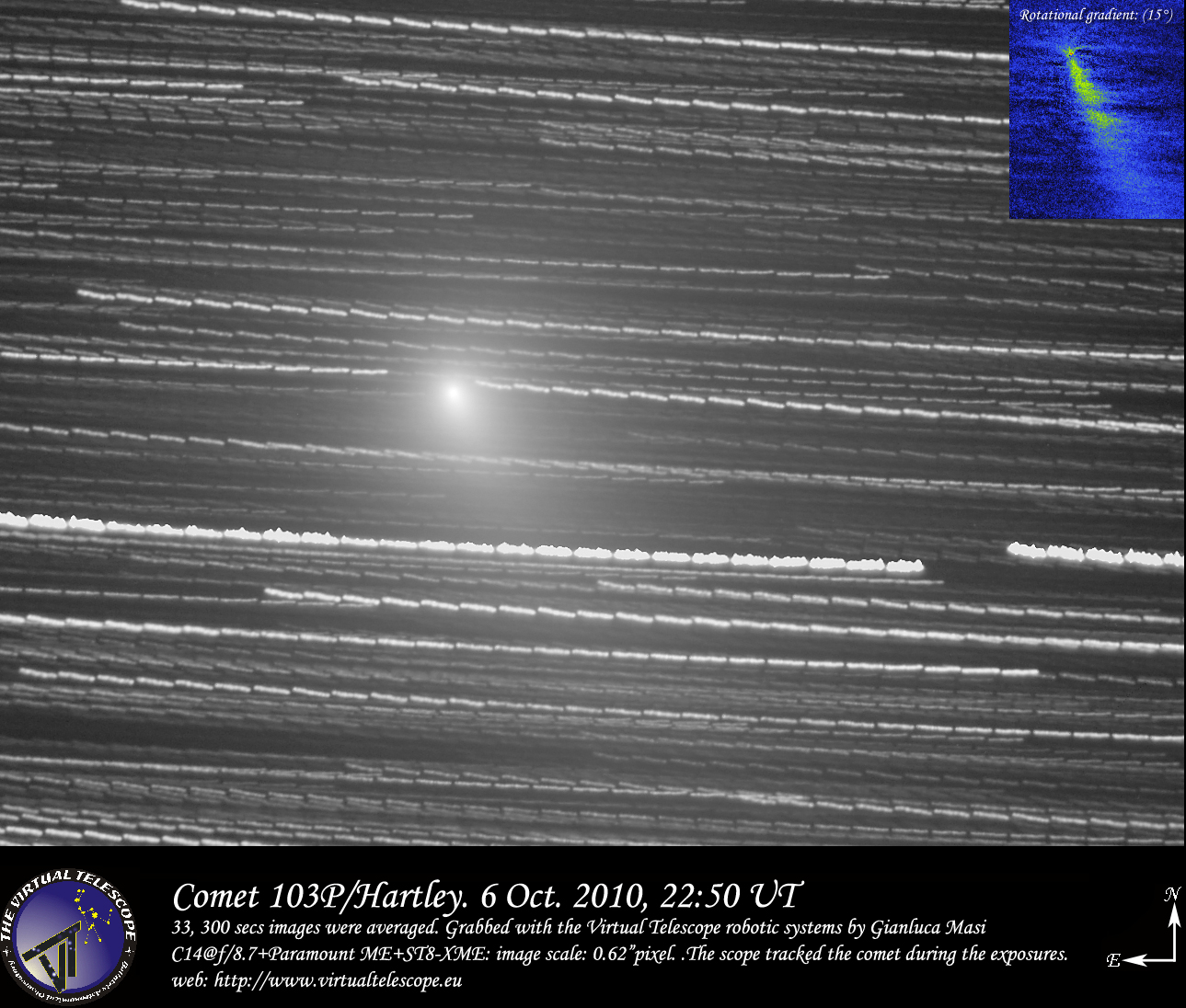

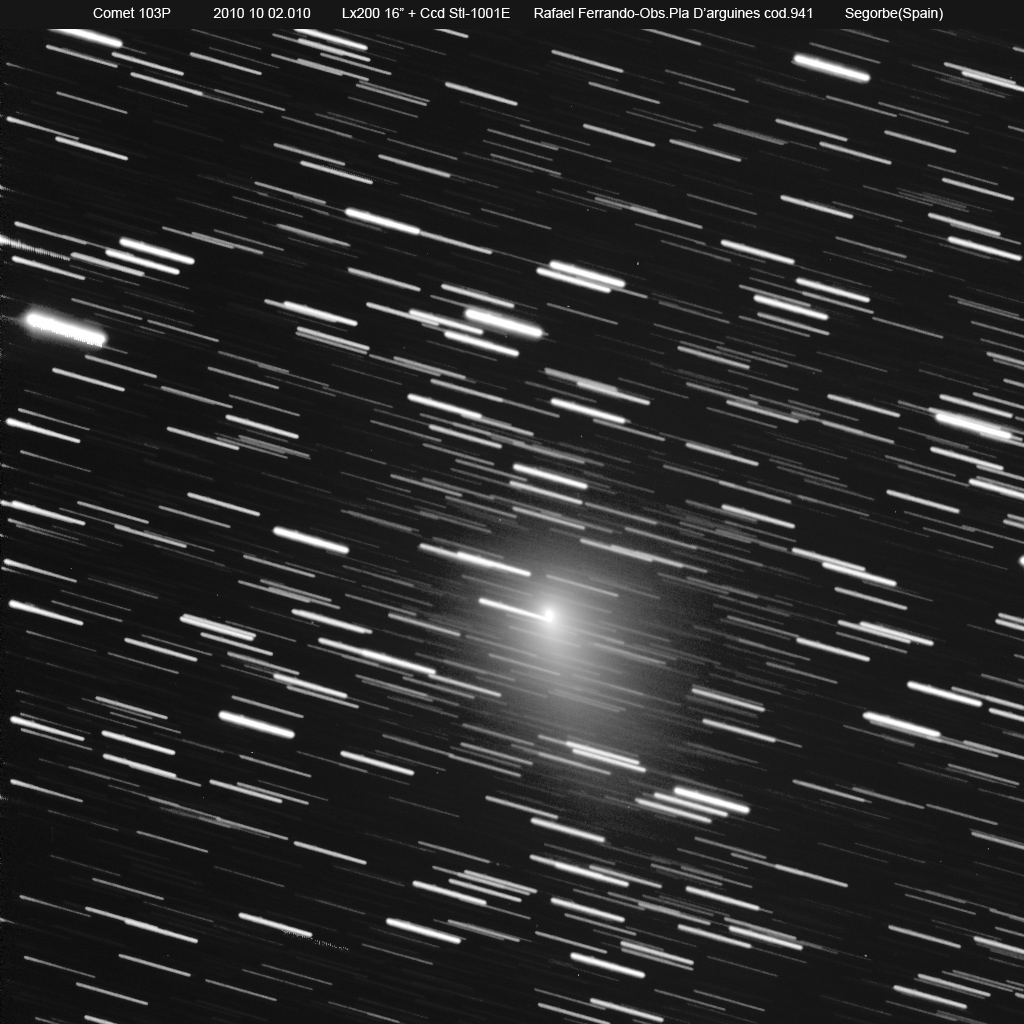
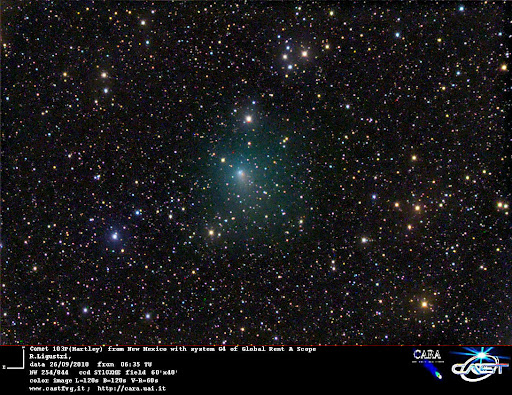
In other small body news a prediction for a Draconids outburst in 2011 (also covered here and hier), though rather uncertain and drenched in moonlight anyway. • Reports of fireballs in New Mexico (more) and Germany. • A paper, press trelease and story about activity in Geminids-parent Phaethon which may be a "rock comet". • A paper and another one (also here), numerous press releases such as here, here, here, here, here, here, here, here and here and articles like this, this, this, this, dieser and more argue for an asteroid collision as the cause of P/2010 A2's tail. As I comment here the Spanish faction stands by its alternate explanation reported here earlier. • More about the Kamil crater discovery.
It's now 20 years since the 1st automatic NEO discovery with Spacewatch, and the technology is pretty mature now - e.g. at the La Sagra Sky Survey run entirely by amateurs which just bagged another comet. And somewhat controversial PanSTARRS has also found its first PHA (more, mehr). • Meanwhile another space rock of 5-10 meters has whizzed by Earth, 2010 TD54: video clips (also here; earlier), a demonstration how it came closer, a light curve unveiling rapid rotation and more video. • A video of a star occultation by Isis on Sep. 20 - and it's been 30 years since a major event with Kleopatra.

News from the Sun include data taken during the January annular eclipse in India, weird shadow band effects (it seems) projected on to clouds during the July total eclipse in the Pacific (one more story) and cool pics from September. • SOHO's EIT in in semi-retirement, replaced largely by the SDO - which had a partial lunar eclipse as well as an encounter w/Earth (more). • There was an aurora on Oct. 11, also seen here, here and here. Activity had been very low during the past minimum. A new aurora camera, explained here and here. • New insights in to the physics of flares (which we don't need to fear) and solar storms, while forecasting activity is hard. • And a rather weird paper on the Sun's spectrum, perhaps wrong but making headlines e.g. here, here, here, here, here and here, while the 'hockey stick' lives and the past N summer was hot ...
In other solar system news some great images from Pic du Midi with striking resolution. • More on Jupiter's record-close opposition - with Uranus nearby - here, here and here, plus a collage showing both in motion, questions and one success re. naked-eye visibility of the Galilean moons, some Jupiter images, also of Sep. 29, Sep. 22 (IR rotation movie, als a visible panel) and Sep. 13 plus more. Also the role of amateurs in monitoring Jupiter and the Harvest Moon nearby which looked like this (and later like this and this). • Mars 2010 rotating. • The ISS in transit of Venus (also shown here), Venus as a crescent and the ISS transiting a sunspot and the H-Alpha Sun. • Elsewhere some news from Eps Aur. • And regarding what's up in October, other than Hartley 2 and Jupiter with Uranus little from the solar system can be seen easily, as previews here, hier, hier, hier and hier show - the Orionids are lost in moonlight.

Sunday, September 19, 2010
Substantial sunspot group arrives, preceded by two nice eruption shows
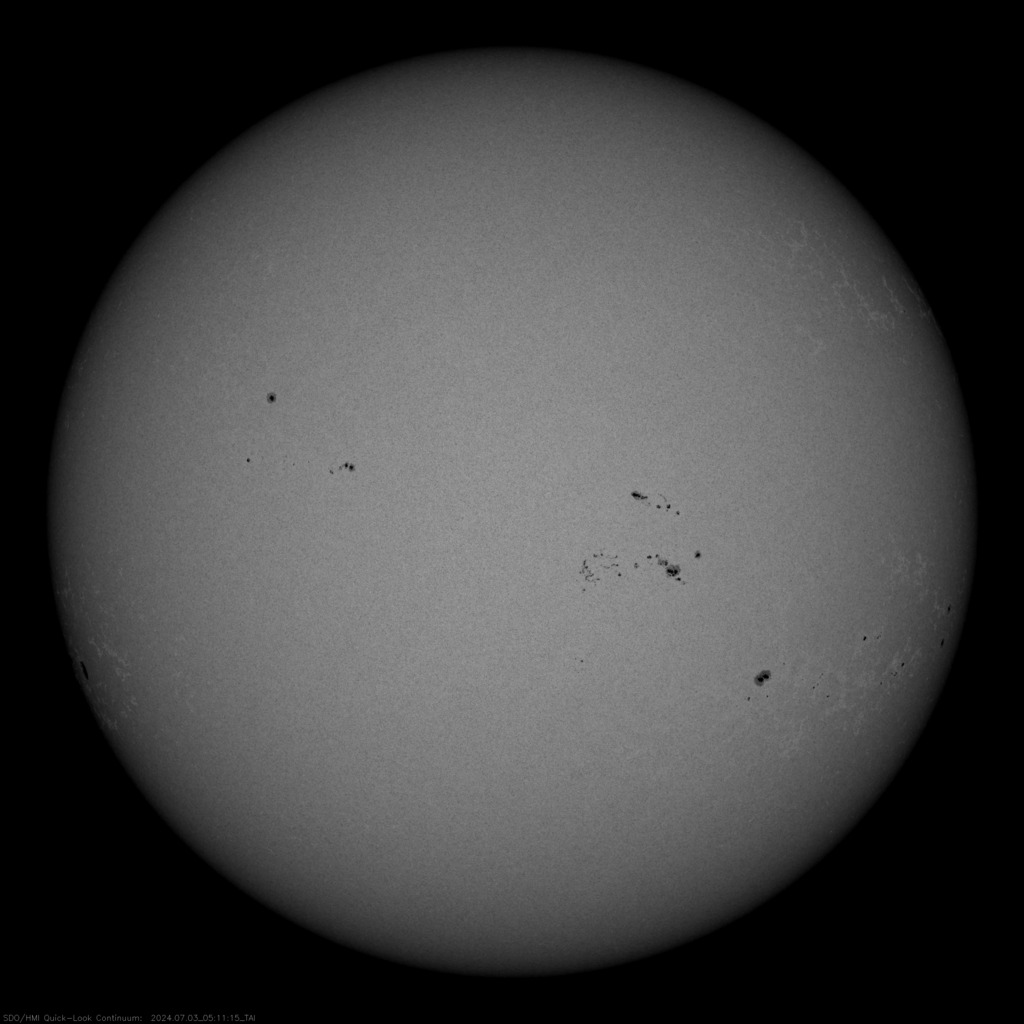
Since a few days a conspicious sunspot group, AR 1108, is rotating onto the disk, as can be followed best via near-live white-light images from SDO's HMI instrument but also amateur equipment as here on Sep. 19 (more), Sep. 18 (more) and Sep. 17. Earlier there were spectacular eruptions on Sep. 15 (timesteps one and two) and on Sep. 8 (movie, more, more, later, coverage here and hier, plus the group responsible earlier on the disk). • There is some indication that sunspots are losing contrast over time (covered also here and here), more on the state of the cycle, the continued lack of an effect on climate - and a preview of the deep partial eclipse next January. • Meanwhile Epsilon Aurigae in still in deep eclipse near the middle of the long event.
The closest approach of Jupiter since 1963 is making news here, here, here, here and here; some pictures of Sep. 7/8, Sep. 4 (more) and Aug. 25 (infrared); Uranus is very close to it as seen in images of Sep. 17, Sep. 5 and Aug. 28; also Uranus' moons on Sep. 6. • Jupiter is an excellent target for amateur science, esp. impact monitoring: There are new papers on the June 2010 flash [alt.] and the 2009 aftermath, discussed by ESO, NASA, JPL, NASA HQ, Gemini and Sandia Releases, Science@NASA and stories here, here, here and hier. • There was a Venus occultation by the Moon on Sep. 11 in Southern Africa, also seen here and here; in Spain, Germany (more), India and Australia (earlier) there was only a conjunction. Also Venus, Mars and the Moon in dark skies on Sep. 11 and Sep. 10.
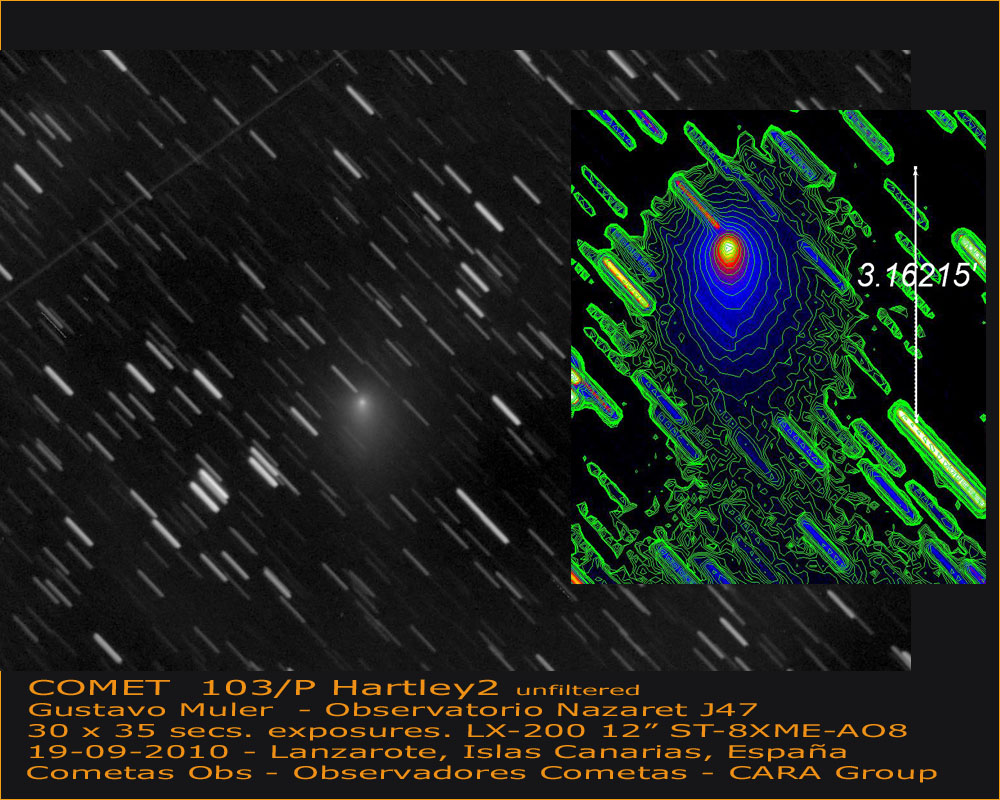
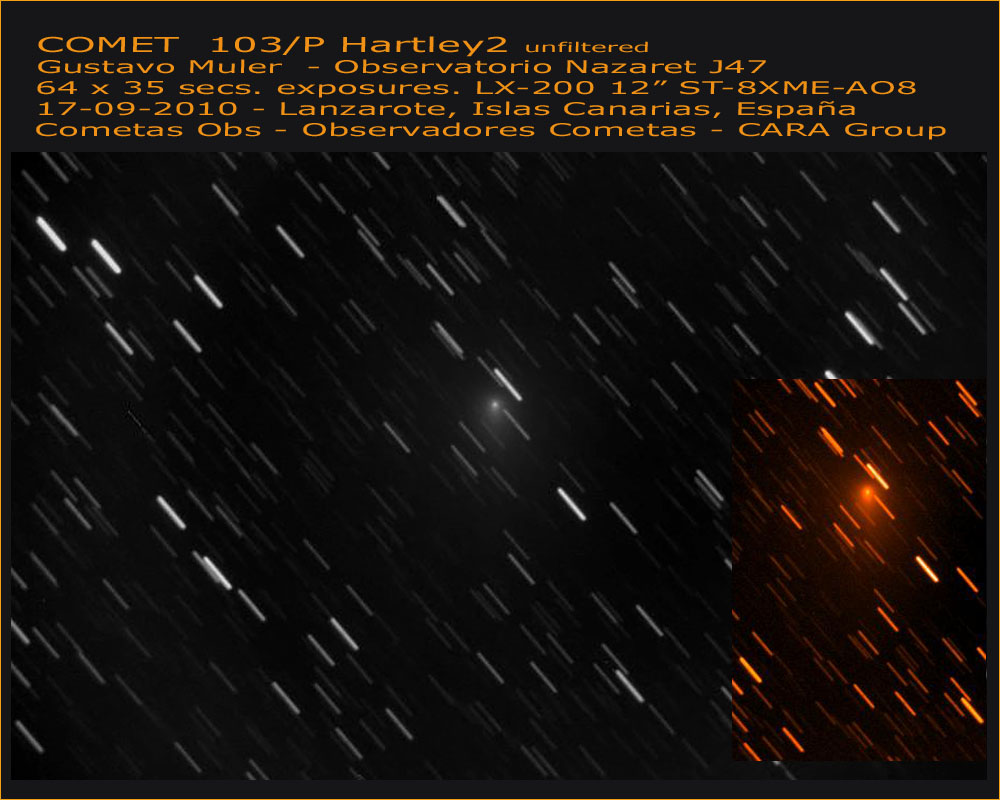
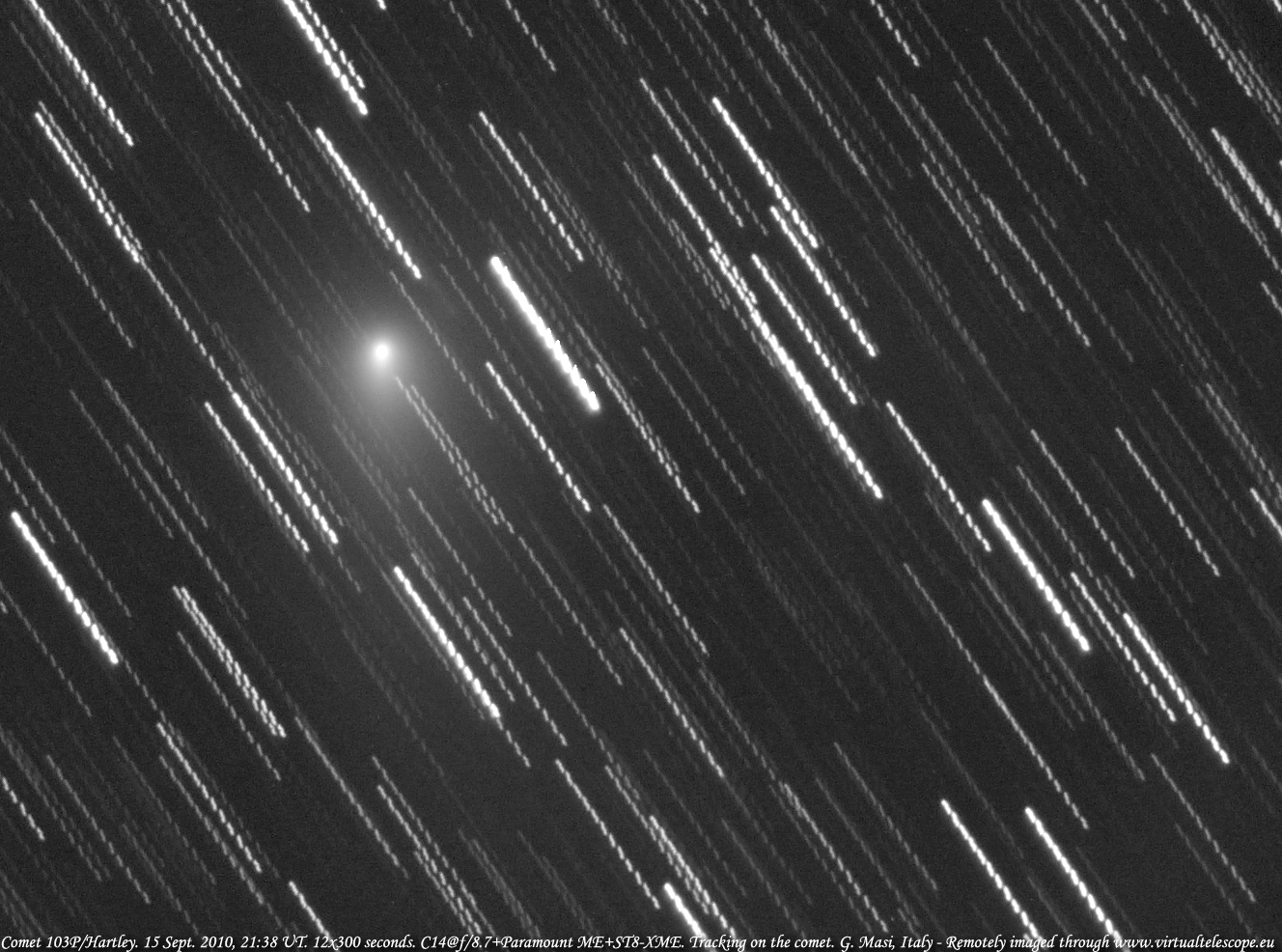
The race is on between Deep Impact and amateurs worldwide to capture the best views of comet 103P/Hartley (2) as the approaching spacecraft from the EPOXI mission is now sending images as well: a blog, the status, the pictures, the 2nd one, the 1st one and discussion here, here, here and here. Some general info on the brightening comet here, here, here and hier, some images, also from Lowell Obs., and selected amateur shots of Sep. 19 (more), Sep. 18 (more), Sep. 17, Sep. 16, Sep. 15, Sep. 11-13, Sep. 13, Sep. 12 (more), Sep. 11 (more, more and an animation), Sep. 8, Sep. 7, Sep. 6 (more, more), Sep. 5 (more, more, more) and Sep. 4 (more, more). • Even more interesting, though, is 10P/Tempel as seen on Sep. 16 (also Sep. 17 and Sep. 18 [more]), 236P/LINEAR has a little tail, and there is yet another La Sagra comet discovery, seen here on Sep. 18.
Two tiny asteroids - or space rocks perhaps? - came moderately close on the same day, Sep. 8: images of 2010 RF12 (more, more, more, more and more) and 2010 RX30, the respective MPECs 49 and 50 and various announcements and articles here, here, here, here, here, here, here, here, here (earlier), here, here, here (lousiest headline; see also the even worse URL!), hier, hier and hier - and there are discoveries all the time! • Did one crash in Colombia? Inconclusive reporting here (earlier, still earlier, even earlier), here, here and aqui - and yet more stories ...
Finally something to look at - the Astronomy Photographer of the Year winners of 2010, celebrated e.g. here, here, here, here, here and here. • And while we're at it, these extreme star trails and these Perseids drawings are also worth noting. • A closing note: While the preparations for and progress and aftermath of the International Year of Astronomy have been amply documented in a parallel blog (in German but covering the whole world, with most links to English sources), it's worth noting that both the international and the German final reports have come out this month and are freely available, the former also summarized here. There'll be a lot of obvious - and not so obvious - legacy of the IYA 2009, promised ...




The closest approach of Jupiter since 1963 is making news here, here, here, here and here; some pictures of Sep. 7/8, Sep. 4 (more) and Aug. 25 (infrared); Uranus is very close to it as seen in images of Sep. 17, Sep. 5 and Aug. 28; also Uranus' moons on Sep. 6. • Jupiter is an excellent target for amateur science, esp. impact monitoring: There are new papers on the June 2010 flash [alt.] and the 2009 aftermath, discussed by ESO, NASA, JPL, NASA HQ, Gemini and Sandia Releases, Science@NASA and stories here, here, here and hier. • There was a Venus occultation by the Moon on Sep. 11 in Southern Africa, also seen here and here; in Spain, Germany (more), India and Australia (earlier) there was only a conjunction. Also Venus, Mars and the Moon in dark skies on Sep. 11 and Sep. 10.
The race is on between Deep Impact and amateurs worldwide to capture the best views of comet 103P/Hartley (2) as the approaching spacecraft from the EPOXI mission is now sending images as well: a blog, the status, the pictures, the 2nd one, the 1st one and discussion here, here, here and here. Some general info on the brightening comet here, here, here and hier, some images, also from Lowell Obs., and selected amateur shots of Sep. 19 (more), Sep. 18 (more), Sep. 17, Sep. 16, Sep. 15, Sep. 11-13, Sep. 13, Sep. 12 (more), Sep. 11 (more, more and an animation), Sep. 8, Sep. 7, Sep. 6 (more, more), Sep. 5 (more, more, more) and Sep. 4 (more, more). • Even more interesting, though, is 10P/Tempel as seen on Sep. 16 (also Sep. 17 and Sep. 18 [more]), 236P/LINEAR has a little tail, and there is yet another La Sagra comet discovery, seen here on Sep. 18.

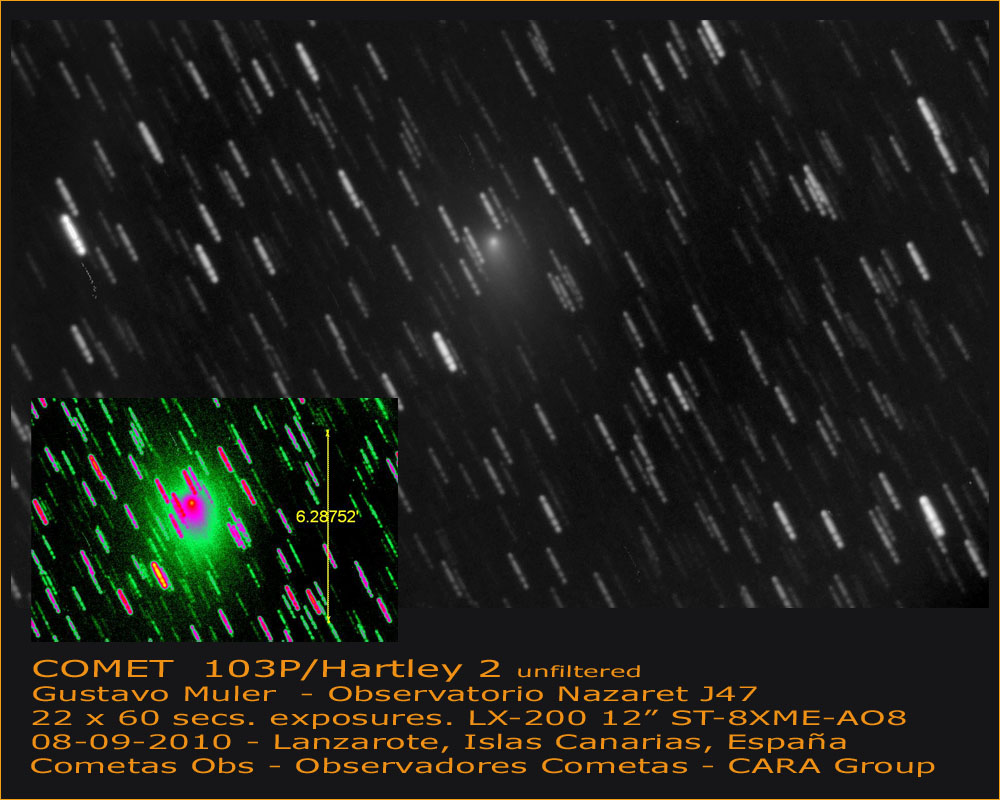


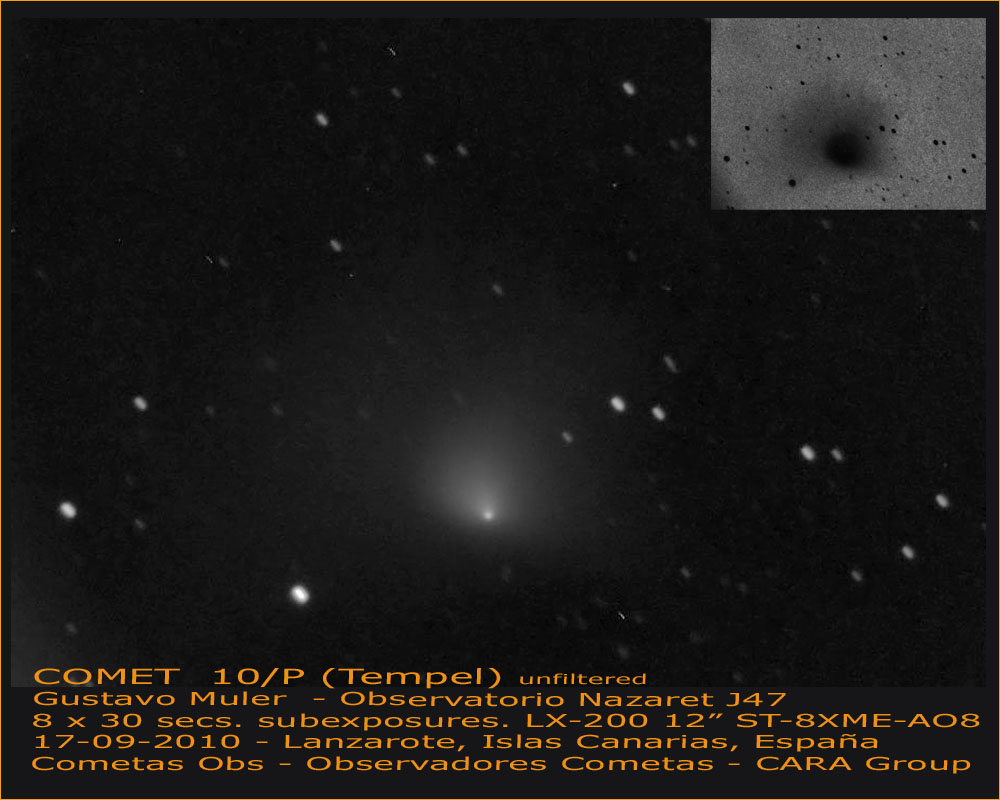
Two tiny asteroids - or space rocks perhaps? - came moderately close on the same day, Sep. 8: images of 2010 RF12 (more, more, more, more and more) and 2010 RX30, the respective MPECs 49 and 50 and various announcements and articles here, here, here, here, here, here, here, here, here (earlier), here, here, here (lousiest headline; see also the even worse URL!), hier, hier and hier - and there are discoveries all the time! • Did one crash in Colombia? Inconclusive reporting here (earlier, still earlier, even earlier), here, here and aqui - and yet more stories ...
Finally something to look at - the Astronomy Photographer of the Year winners of 2010, celebrated e.g. here, here, here, here, here and here. • And while we're at it, these extreme star trails and these Perseids drawings are also worth noting. • A closing note: While the preparations for and progress and aftermath of the International Year of Astronomy have been amply documented in a parallel blog (in German but covering the whole world, with most links to English sources), it's worth noting that both the international and the German final reports have come out this month and are freely available, the former also summarized here. There'll be a lot of obvious - and not so obvious - legacy of the IYA 2009, promised ...
Friday, September 3, 2010
Yet another impact flash on Jupiter, this time recorded - triple - in Japan
The events of June 3 have repeated on August 20, and again in the Far East: This time it were three Japanese amateur astronomers who recorded a brief flash above Jupiter's clouds from three different sites. And again no traces whatsoever are left on the planet - another airburst then, and one wonders how frequent these really are. The three reports (and pictures and videos) are collected here and here, the first video is here (YouTube version), and the 2nd observer reports here. Coverage in the mainstream media seems to be scarce, with samples from the UK, Japan and Russia; it was again bloggers who ruled the day. Like Gish Bar Times (earlier), Sky & Tel. (updated repeatedly) and the Planetary Society (earlier), also this, this, this, this, this, this, this, this, this and this story, plus SpaceWeather (earlier).
Even without traces of the impact Jupiter is very interesting right now: selected images of Jupiter from Sep. 2, Sep. 1 (more), Aug. 30 (extremely good; from this collection, also here and here), Aug. 22 (more, more), Aug. 21 (more, more) and Aug. 20; also 3 moons resolved. • A trio of Venus, Mars & Spica has turned into a line now, as images from Sep. 2, Sep. 1, Aug. 31, Aug. 29 (Austria vs. Australia) and Aug. 24 show. • Resolved amateur images of Uranus. • A gallery of images of comet 103P/Hartley 2 and a blog from the EPOXI mission that will meet it 2 months from now. The brightness still ain't great; some images of Sep. 2, Sep. 1, Aug. 31 (more), Aug. 30, Aug. 29, Aug. 27, Aug. 22, Aug. 20 (more) and Aug. 19. • Also 2P/Encke on Aug. 22 (explanation) and in STEREO's FOV; it was closest to Earth now. Plus C/2010 G2 (Hill) in outburst, yet another twist in the P/2010 A2 saga - and 30 years of asteroid discoveries visualized. • A sporadic meteor goes bang, and one megacryometeor case finds a likely solution in Germany.
In other news yet more interesting visuals from the July total eclipse: hi-res pics from Tatakoto (also a video from there), several reports from Polynesian islands and film vs. digital images from Rapa Nui. From Patagonia an image collection, featuring a Finnish observer (eclipse report, horizon analysis, source) and yours truly who also stitched TSE panoramas from 2008 from one pair of wide-angle images and another one. • Talking about the Sun, hi-res images from Big Bear (more, more and more), a new SDO video front, 10 years of Cluster (more), the physics and a visualization of the solar B field, a July prominence sequence, solar mosaics, SID data showing increasing activity (which can influence navigation, the upper atmosphere [mehr] and more - or maybe not). There is also speculation that the Sun's action influences the length of the day - and radioactive decay, but this widely reported story is almost certainly wrong.
• For the record: the aurora shown here was actually imaged on July 25th already, but the date generator on the ISS was wrong. And you can make your own aurora, too. • Turning to other stars now, CoRoT has seen asteroseismological evidence for an activity cycle just like the Sun's, only much faster in another star. • Epsilon Aurigae has been observed again with CHARA, but the interferometric images won't be seen anytime soon. Also a V-band light curve. • Tom Boles has, in rapid succession found his supernovae # 133 + 134 and 135.
• It's now one year after the fire that threatened Mt. Wilson. • A video report from a star party in the UK. • The Milky Way over Bryce Canyon. • And an old sun dog image has been sold to the BBC - as a daylight fireball! The beeb has killed the respective website, but here it is, from Google's cache ... • Finally a brief preview of September 2010 (more, more, mehr und mehr): There'll be a good Mercury morning visibility for the N. hemisphere, Sep. 18 has been declared as Observe the Moon Night - and on Sep. 21 we have, simultaneously, Uranus and Jupiter in Opposition, the latter coming closest since 1963.
Even without traces of the impact Jupiter is very interesting right now: selected images of Jupiter from Sep. 2, Sep. 1 (more), Aug. 30 (extremely good; from this collection, also here and here), Aug. 22 (more, more), Aug. 21 (more, more) and Aug. 20; also 3 moons resolved. • A trio of Venus, Mars & Spica has turned into a line now, as images from Sep. 2, Sep. 1, Aug. 31, Aug. 29 (Austria vs. Australia) and Aug. 24 show. • Resolved amateur images of Uranus. • A gallery of images of comet 103P/Hartley 2 and a blog from the EPOXI mission that will meet it 2 months from now. The brightness still ain't great; some images of Sep. 2, Sep. 1, Aug. 31 (more), Aug. 30, Aug. 29, Aug. 27, Aug. 22, Aug. 20 (more) and Aug. 19. • Also 2P/Encke on Aug. 22 (explanation) and in STEREO's FOV; it was closest to Earth now. Plus C/2010 G2 (Hill) in outburst, yet another twist in the P/2010 A2 saga - and 30 years of asteroid discoveries visualized. • A sporadic meteor goes bang, and one megacryometeor case finds a likely solution in Germany.
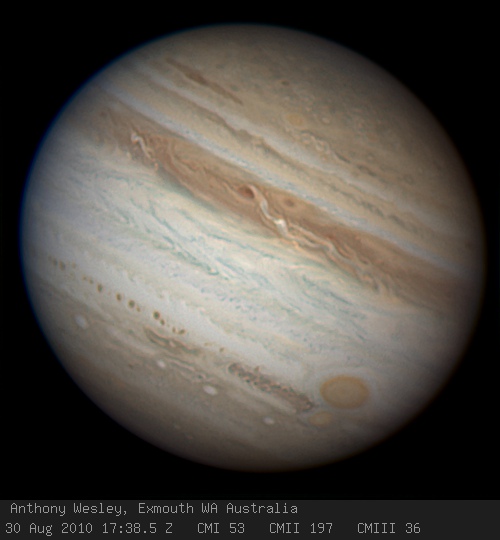
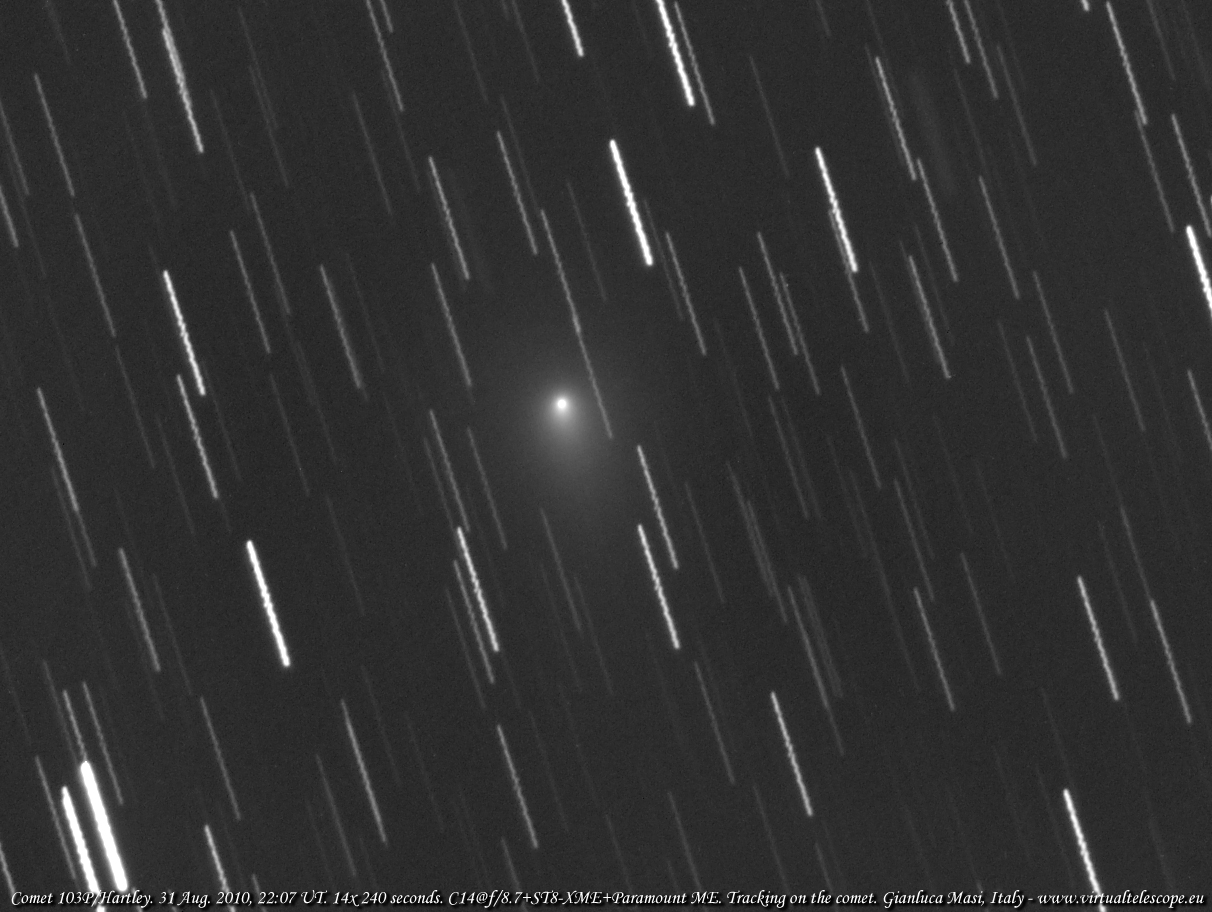
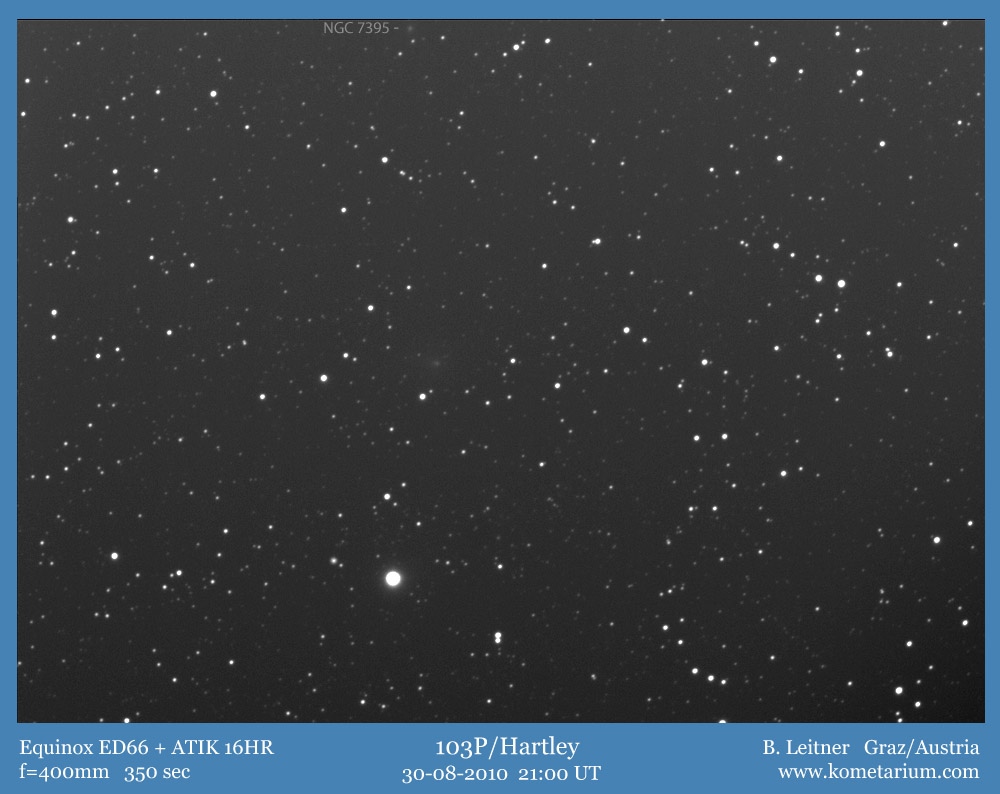


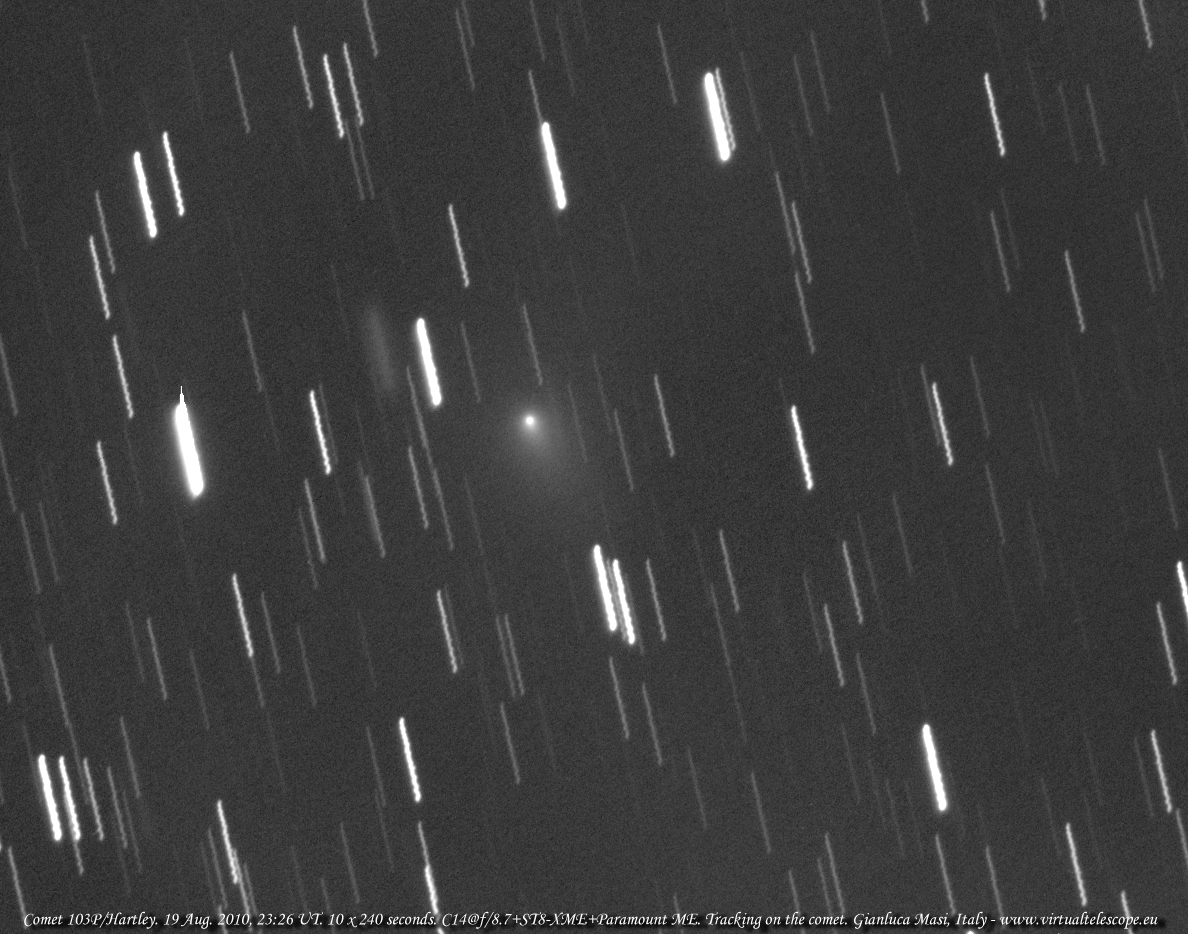
In other news yet more interesting visuals from the July total eclipse: hi-res pics from Tatakoto (also a video from there), several reports from Polynesian islands and film vs. digital images from Rapa Nui. From Patagonia an image collection, featuring a Finnish observer (eclipse report, horizon analysis, source) and yours truly who also stitched TSE panoramas from 2008 from one pair of wide-angle images and another one. • Talking about the Sun, hi-res images from Big Bear (more, more and more), a new SDO video front, 10 years of Cluster (more), the physics and a visualization of the solar B field, a July prominence sequence, solar mosaics, SID data showing increasing activity (which can influence navigation, the upper atmosphere [mehr] and more - or maybe not). There is also speculation that the Sun's action influences the length of the day - and radioactive decay, but this widely reported story is almost certainly wrong.
• For the record: the aurora shown here was actually imaged on July 25th already, but the date generator on the ISS was wrong. And you can make your own aurora, too. • Turning to other stars now, CoRoT has seen asteroseismological evidence for an activity cycle just like the Sun's, only much faster in another star. • Epsilon Aurigae has been observed again with CHARA, but the interferometric images won't be seen anytime soon. Also a V-band light curve. • Tom Boles has, in rapid succession found his supernovae # 133 + 134 and 135.

• It's now one year after the fire that threatened Mt. Wilson. • A video report from a star party in the UK. • The Milky Way over Bryce Canyon. • And an old sun dog image has been sold to the BBC - as a daylight fireball! The beeb has killed the respective website, but here it is, from Google's cache ... • Finally a brief preview of September 2010 (more, more, mehr und mehr): There'll be a good Mercury morning visibility for the N. hemisphere, Sep. 18 has been declared as Observe the Moon Night - and on Sep. 21 we have, simultaneously, Uranus and Jupiter in Opposition, the latter coming closest since 1963.
Saturday, August 21, 2010
Perseids remained modest - except for an early (dust trail-caused?) peak
Looking at the automatically generated ZHR plot from worldwide visual observations, the Perseids of 2010 managed to produce a prolonged plateau with a zenithal hourly rate around only 80, lasting for almost 24 hours from noon to noon UTC of Aug. 12 and 13 - but sitting on it is a sharp peak of ZHR ~130 at 17:00 UTC on August 12: This could be a dust trail produced by the parent comet in 1479, though - as CBET #2416 of 17 August warns - the peak is only "based on roughly ten visual observers located in China, Russia, Japan, and Israel." An encounter with that trail had been predicted by several modellers though perhaps not with such an amplitude. For those not encountering the extra peak and/or sitting under mediocre skies the 2010 Perseids were not the great show all too many overblown stories had promised once again - seen under good conditions it was fun, though, as early reports and analysis here (earlier), here, here, here, here, here, here, here and here (earlier, earlier, earlier and earlier) show. Picture collections can be found e.g. here, here (blog; more), here, here, here, here, here (lots of meteor-free pics, too - d'uh), here and here.
Individual pictures of note are e.g. this, this, this (again), this, this, this, this, this, this, this and this shot, with nice composites (not always well documented) here, here, here, here and here. There are is a map from double station observations here (earlier), we have these, these, these, these and these video still composites, a series of video stills and individual videos of various kinds here, here, here, here, here, here, here, here, here, here, here and here, a collection and a failed attempt with just airplanes. One could also detect Perseids through their ionization trails reflecting distant TV stations to the southern UK as this and this clip show! In advance of the peak there were also a few more scientific stories and press releases, from Nature on Perseids science, Scientific American on the shower itself, Meteoroids on their burn-up heights (also here), the U of A, RAS and S&T. Finally ample coverage of the Perseids 2010, after and before the show, here, here, here, here (earlier), here, here, here, here, here, here, here, here (earlier, still earlier, even earlier), here, here, here, here, here (now that's an idea!), hier, hier, hier and hier - accuracy varies ...
In other planetary news there is a new crater discovery (also mentioned here and here), but it's not confirmed yet and could also be volcanic or whatever. • For sure is the discovery of the 1st Neptune trojan in the L5 zone as documented here, here, here (also a list of all), here, here, here, here, here, here and hier. Neptune itself, by the way will complete its 1st orbit next year which caused some confused headlines (here, here and here) as it also returns to the discovery position in the sky already this year, dito for the non-precessing ecliptic longitude. Celebrate whenever you like ... • There is an observation of 2P/Encke (viewing conditions), more pictures came in from 10P/Tempel (also of Aug. 21, Aug. 19, Aug. 12 and Aug. 10), P/2003 S2 (NEAT) has been recovered and everyone hopes 103P/Hartley will perform (more): several pictures, also of Aug. 19 (more) and Aug. 15 - not really convincing yet ...
• The evening planet triangle has dissolved again, and the Moon came by Aug. 11 to 13: pictures of August 19 (more, more), August 15 (more), August 13 (more, more, more, more and more), August 12 (more, more, more, more, more and more), August 11 (more), August 10, August 9 (more), August 8, August 7 and August 6. Also on various days from South Africa and yet more stories here, here and here. Plus Venus close-up and not identified - how about some basic astronomy? • On Jupiter meanwhile two red spots are meeting as also seen in this sequence and this picture (but not this one) from today! Also an animation of August 6 - and Jupiter through a Galileoscope with a webcam. If Galilei could see that ...
Elsewhere in the Universe a few more impressions from the total solar eclipse last month: a panorama by yours truly from Argentina, I've been made aware of what may be the trashiest eclipse video ever shot in Chile (in the continuation the umbral cone is visible briefly in the sky, though), and stuff from Rapa Nui, Tatakoto and Hao - and the aftermath on Mangaia. • From the Sun itself vis. vs. H-alpha on Aug. 15, two spot groups, the Aug. 7 flare and more CMEs, the earlier aurora and some activity coverage here (earlier), here and here, also on invisible aurorae, flare warnings (and scares), the Sun's 'conveyor belt' changes (more and more), the role of the Cluster mission and an alleged role of the Sun in jetstream blocking. • The proper motion of 61 Cyg visualized, the status of Eps Aur, a 38-hour exposure of the Vela SNR, Herbig-Haro 32 and an ISS Sun transit. • The 'Star Hustler' Jack Horkheimer (more) has died yesterday (more). • A video about and some fun telescopes from Stellafane 2010, a photo prize for an Orion Nebula, the Wilson & other awards - and a cool VR picture of The Dish & the sky.
Individual pictures of note are e.g. this, this, this (again), this, this, this, this, this, this, this and this shot, with nice composites (not always well documented) here, here, here, here and here. There are is a map from double station observations here (earlier), we have these, these, these, these and these video still composites, a series of video stills and individual videos of various kinds here, here, here, here, here, here, here, here, here, here, here and here, a collection and a failed attempt with just airplanes. One could also detect Perseids through their ionization trails reflecting distant TV stations to the southern UK as this and this clip show! In advance of the peak there were also a few more scientific stories and press releases, from Nature on Perseids science, Scientific American on the shower itself, Meteoroids on their burn-up heights (also here), the U of A, RAS and S&T. Finally ample coverage of the Perseids 2010, after and before the show, here, here, here, here (earlier), here, here, here, here, here, here, here, here (earlier, still earlier, even earlier), here, here, here, here, here (now that's an idea!), hier, hier, hier and hier - accuracy varies ...
In other planetary news there is a new crater discovery (also mentioned here and here), but it's not confirmed yet and could also be volcanic or whatever. • For sure is the discovery of the 1st Neptune trojan in the L5 zone as documented here, here, here (also a list of all), here, here, here, here, here, here and hier. Neptune itself, by the way will complete its 1st orbit next year which caused some confused headlines (here, here and here) as it also returns to the discovery position in the sky already this year, dito for the non-precessing ecliptic longitude. Celebrate whenever you like ... • There is an observation of 2P/Encke (viewing conditions), more pictures came in from 10P/Tempel (also of Aug. 21, Aug. 19, Aug. 12 and Aug. 10), P/2003 S2 (NEAT) has been recovered and everyone hopes 103P/Hartley will perform (more): several pictures, also of Aug. 19 (more) and Aug. 15 - not really convincing yet ...
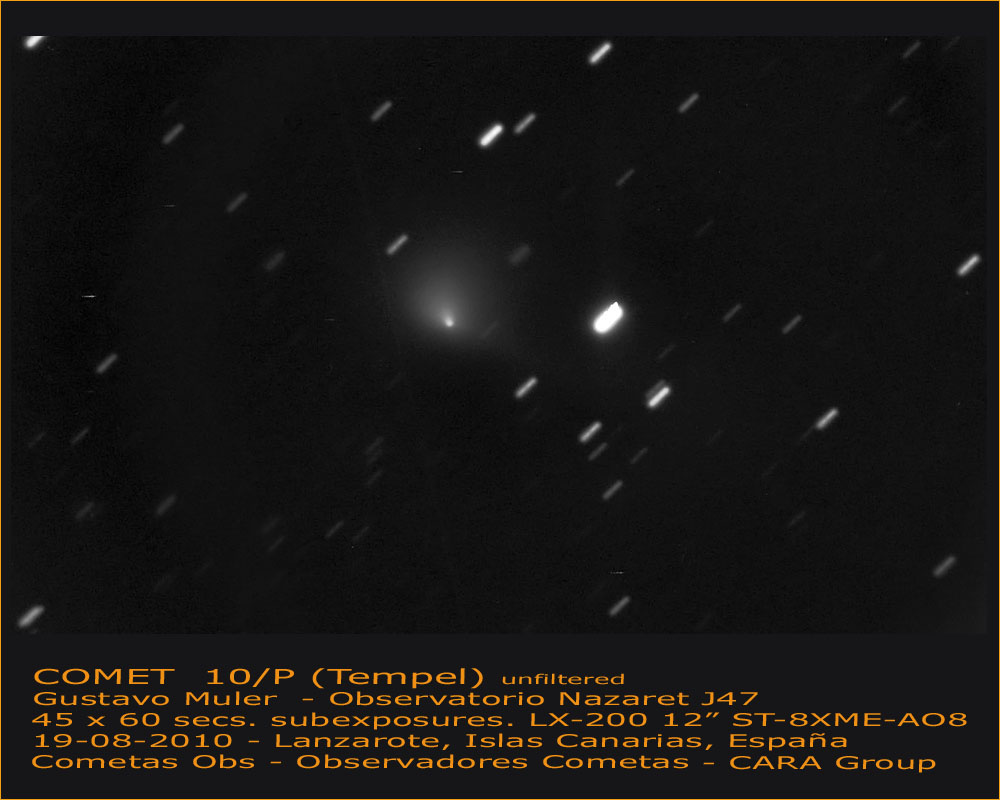

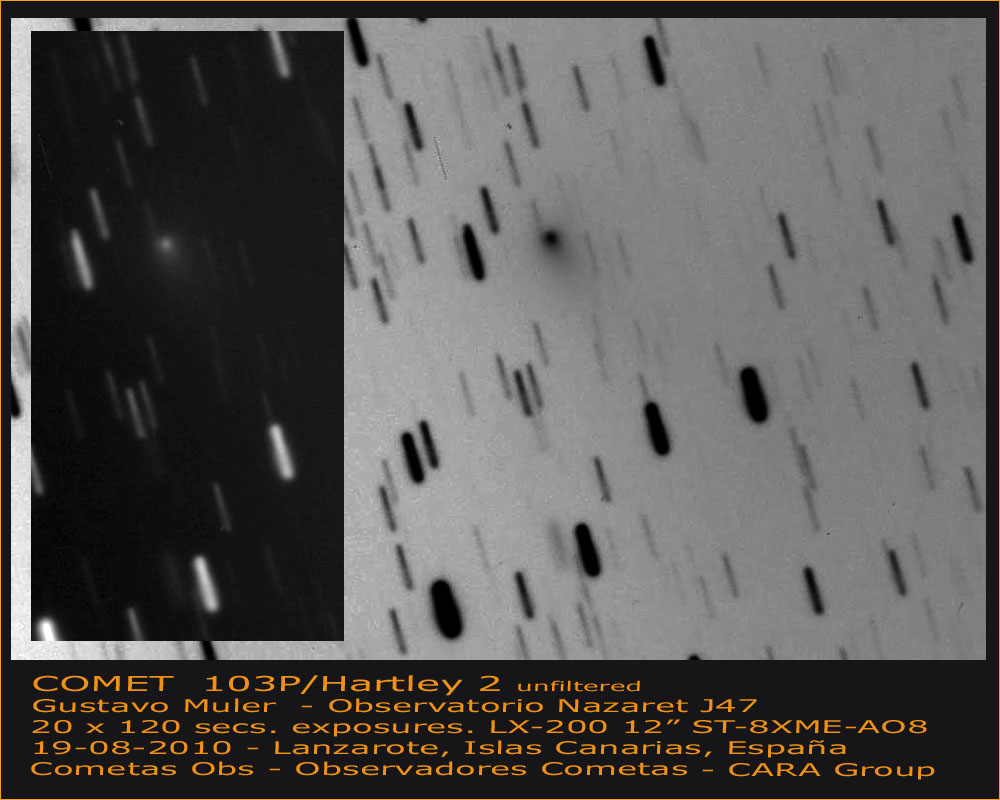
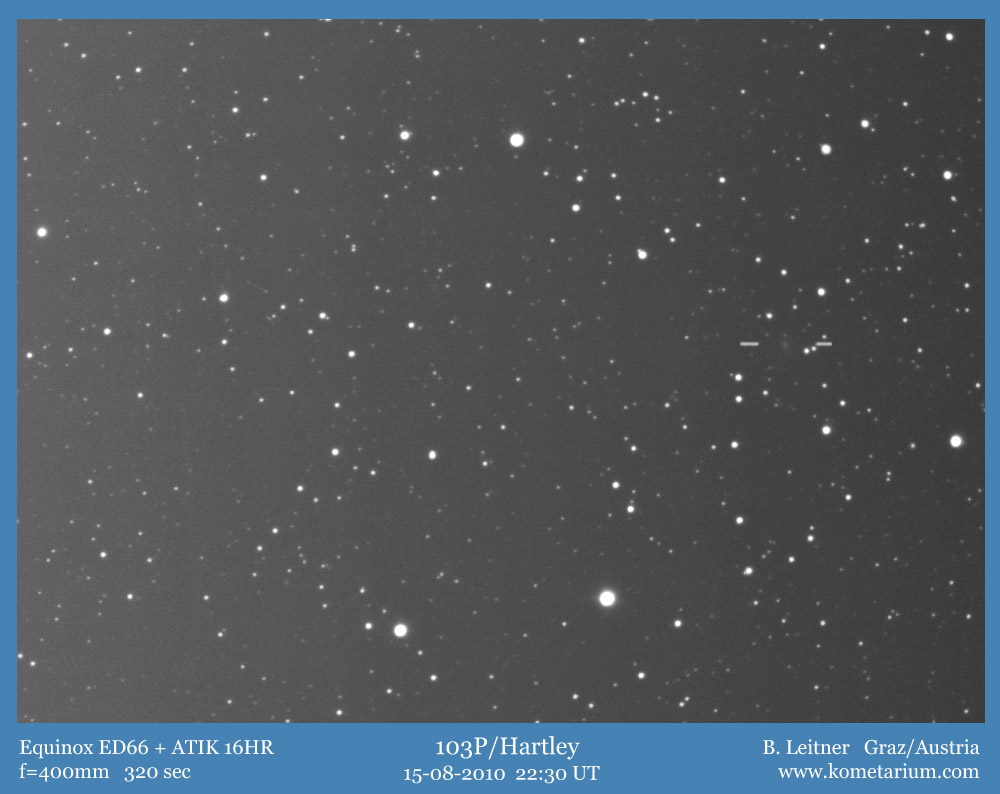
• The evening planet triangle has dissolved again, and the Moon came by Aug. 11 to 13: pictures of August 19 (more, more), August 15 (more), August 13 (more, more, more, more and more), August 12 (more, more, more, more, more and more), August 11 (more), August 10, August 9 (more), August 8, August 7 and August 6. Also on various days from South Africa and yet more stories here, here and here. Plus Venus close-up and not identified - how about some basic astronomy? • On Jupiter meanwhile two red spots are meeting as also seen in this sequence and this picture (but not this one) from today! Also an animation of August 6 - and Jupiter through a Galileoscope with a webcam. If Galilei could see that ...


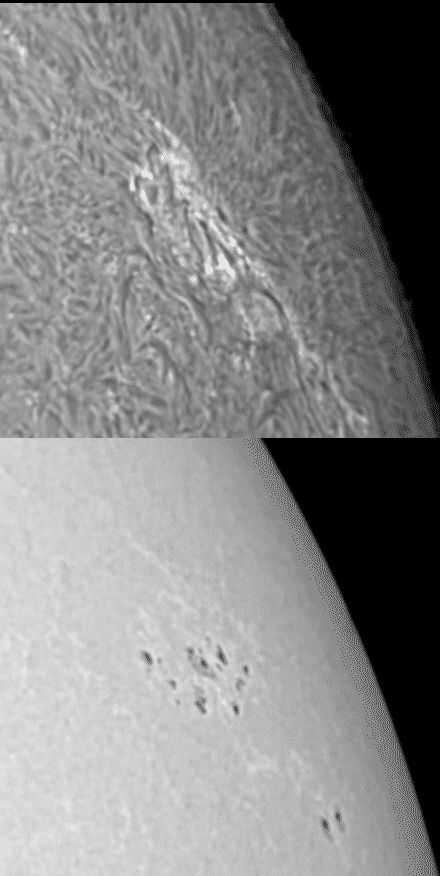
Elsewhere in the Universe a few more impressions from the total solar eclipse last month: a panorama by yours truly from Argentina, I've been made aware of what may be the trashiest eclipse video ever shot in Chile (in the continuation the umbral cone is visible briefly in the sky, though), and stuff from Rapa Nui, Tatakoto and Hao - and the aftermath on Mangaia. • From the Sun itself vis. vs. H-alpha on Aug. 15, two spot groups, the Aug. 7 flare and more CMEs, the earlier aurora and some activity coverage here (earlier), here and here, also on invisible aurorae, flare warnings (and scares), the Sun's 'conveyor belt' changes (more and more), the role of the Cluster mission and an alleged role of the Sun in jetstream blocking. • The proper motion of 61 Cyg visualized, the status of Eps Aur, a 38-hour exposure of the Vela SNR, Herbig-Haro 32 and an ISS Sun transit. • The 'Star Hustler' Jack Horkheimer (more) has died yesterday (more). • A video about and some fun telescopes from Stellafane 2010, a photo prize for an Orion Nebula, the Wilson & other awards - and a cool VR picture of The Dish & the sky.
Sunday, August 8, 2010
Solar action brings aurora even down to Germany - bye, bye, minimum!
The coronal mass ejection(s) of August 1 briefly mentioned last time have turned out to be surprisingly effective: They caused a geomagnetic storm lasting for half a day, leading e.g. to the first directly visible aurora over (Northern) Germany in some 5 years during the night 3/4 August. The best pics from Germany, esp. these, radio effects, Scandinavian views, a global gallery and more pictures and videos (alt., alt.). The best source - in German - when things 'turn on' was once again the AKM Forum. The solar activity and effects were also covered by NASA (apparently earlier wording and earlier release plus a hi-res SDO video from Aug. 1), the CfA (earlier) and the SPWC on Aug. 5, 4, 3, 2 and 1.
The solar & earthly events led to ample coverage in media, blogs and websites over almost a week, e.g. on SpaceWeather (on a later flare w/o likely terrestrial consequences; earlier, still earlier), BAA Blog, NASA FB, Nightsky Guy, Sky & Tel., BBC, Telegraph (earlier), Discovery, Daily Mail, Universe Today, Cosmic Log (earlier), Time, Space.com, New Scientist, Starts with a Bang, Bad Astronomy, Astronomy Now (earlier), CNet, Boston Globe, 3News, Science Journalism Tracker, Space Today, DLF, Spiegel (früher), n-tv, Astrodicticum. There is also a primer on aurora forecasting, a portrait of sunspot 1092 which caused it all, thoughts on spot 1093 and the cycle's rise, also covered in the Chandra Blog - and a huge review of solar magnetic field issues.
More interesting pics of the total solar eclipse of the 11 July have emerged (or been 'discovered') - including a view from Tahiti just outside the track of totality but the corona is seen! Or the eclipse from Hao as shot by one of the Google founders (another report), many views from Tatakoto or from the air or Rapa Nui (also a slide show and a report on Catalan TV). From Argentina's El Calafate a remarkably video of the corona sitting on the Andes (also here) and a wide-angle video from above the town. From the Cuesta de Miguez farther east your's truly is now on APOD (German version), and there is a great wide-angle video of the Moon's shadow in the sky, plus a hi-res video. The eclipse was also covered in a Catalan newspaper - and its live webcasts were screen-grabbed here.
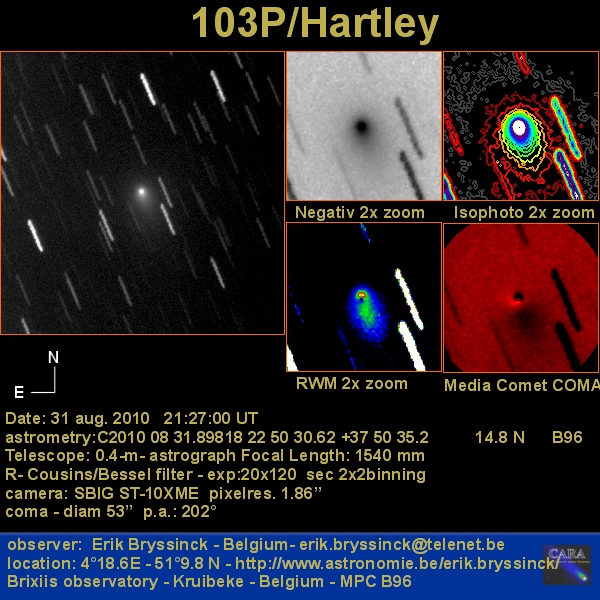
In other news images of soon-to-be-visited comet 103P/Hartley 2 of August 8 and August 1, a weak detection of 2P/Encke at perihelion in SOHO's FOV. • The Perseids - more previews here, here, here, here and hier - are already in the 20s ZHR-wise, and we have video of a -5 mag. PER from the night August 5/6 and a picture of a -10 from August 7/8 - plus a NASA Release on one. • Also a bolide spectrum and thoughts on meteorite prices ...
• Finally of the great planet triangle in the evening - mentioned here, here, here and here - pictures of Aug. 7 from the U.S. and India (w/Mercury, also earlier views), of Aug. 6 from the U.S. (again), Brazil (w/Mercury), Germany and Italy, from Aug. 5 from the U.S. (again) and Australia), from Aug. 4 from the UK and Australia (more), from Aug. 3 from Brazil, the U.S. and Australia, from Aug. 2 from Brazil (w/Vesta), the U.S. and the UK and from Aug. 1 from Austria - where all 7 planets were imaged in one night. Plus more from late July. Next show: The lunar crescent passes the trio Aug. 12-14!
The solar & earthly events led to ample coverage in media, blogs and websites over almost a week, e.g. on SpaceWeather (on a later flare w/o likely terrestrial consequences; earlier, still earlier), BAA Blog, NASA FB, Nightsky Guy, Sky & Tel., BBC, Telegraph (earlier), Discovery, Daily Mail, Universe Today, Cosmic Log (earlier), Time, Space.com, New Scientist, Starts with a Bang, Bad Astronomy, Astronomy Now (earlier), CNet, Boston Globe, 3News, Science Journalism Tracker, Space Today, DLF, Spiegel (früher), n-tv, Astrodicticum. There is also a primer on aurora forecasting, a portrait of sunspot 1092 which caused it all, thoughts on spot 1093 and the cycle's rise, also covered in the Chandra Blog - and a huge review of solar magnetic field issues.
More interesting pics of the total solar eclipse of the 11 July have emerged (or been 'discovered') - including a view from Tahiti just outside the track of totality but the corona is seen! Or the eclipse from Hao as shot by one of the Google founders (another report), many views from Tatakoto or from the air or Rapa Nui (also a slide show and a report on Catalan TV). From Argentina's El Calafate a remarkably video of the corona sitting on the Andes (also here) and a wide-angle video from above the town. From the Cuesta de Miguez farther east your's truly is now on APOD (German version), and there is a great wide-angle video of the Moon's shadow in the sky, plus a hi-res video. The eclipse was also covered in a Catalan newspaper - and its live webcasts were screen-grabbed here.
In other news images of soon-to-be-visited comet 103P/Hartley 2 of August 8 and August 1, a weak detection of 2P/Encke at perihelion in SOHO's FOV. • The Perseids - more previews here, here, here, here and hier - are already in the 20s ZHR-wise, and we have video of a -5 mag. PER from the night August 5/6 and a picture of a -10 from August 7/8 - plus a NASA Release on one. • Also a bolide spectrum and thoughts on meteorite prices ...
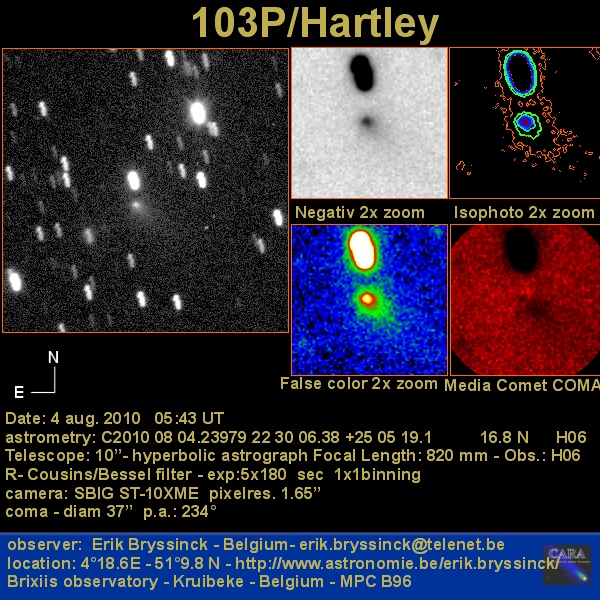


• Finally of the great planet triangle in the evening - mentioned here, here, here and here - pictures of Aug. 7 from the U.S. and India (w/Mercury, also earlier views), of Aug. 6 from the U.S. (again), Brazil (w/Mercury), Germany and Italy, from Aug. 5 from the U.S. (again) and Australia), from Aug. 4 from the UK and Australia (more), from Aug. 3 from Brazil, the U.S. and Australia, from Aug. 2 from Brazil (w/Vesta), the U.S. and the UK and from Aug. 1 from Austria - where all 7 planets were imaged in one night. Plus more from late July. Next show: The lunar crescent passes the trio Aug. 12-14!


Sunday, August 1, 2010
Evening planet triangle and Moon-free Perseids main sights in August
The planets Venus, easy even under adverse conditions, i.e. a high northern latitude plus haze, Saturn and Mars are moving closer together in the early evening sky this month, even forming an equilateral triangle at one point. Already in late July the latter two had been close together; before the three planets had formed a long line: pictures of July 31 (more, more), July 30 (more, more, more), July 29, July 21 (more) and July 5. The triangular show is also explained here, here and here while this, this, this, this and this page preview other August events.
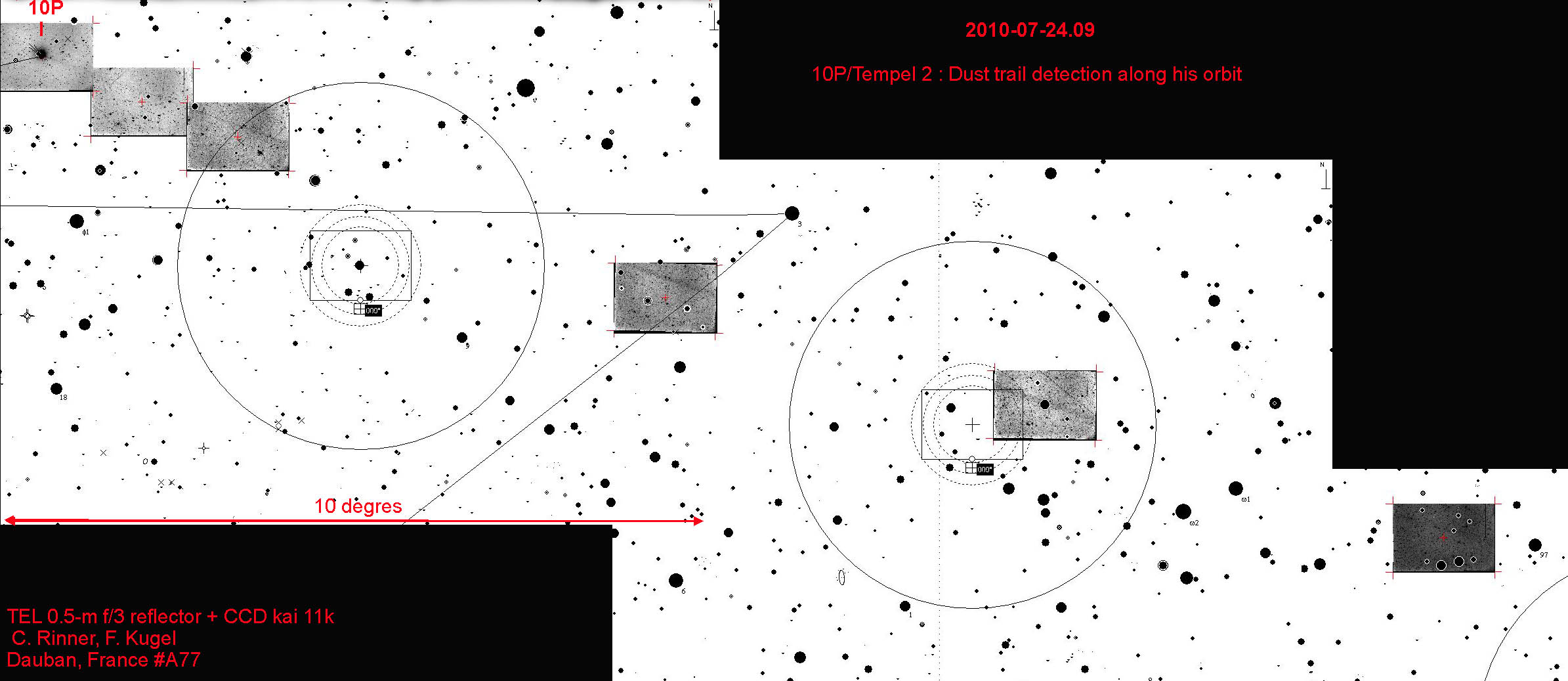
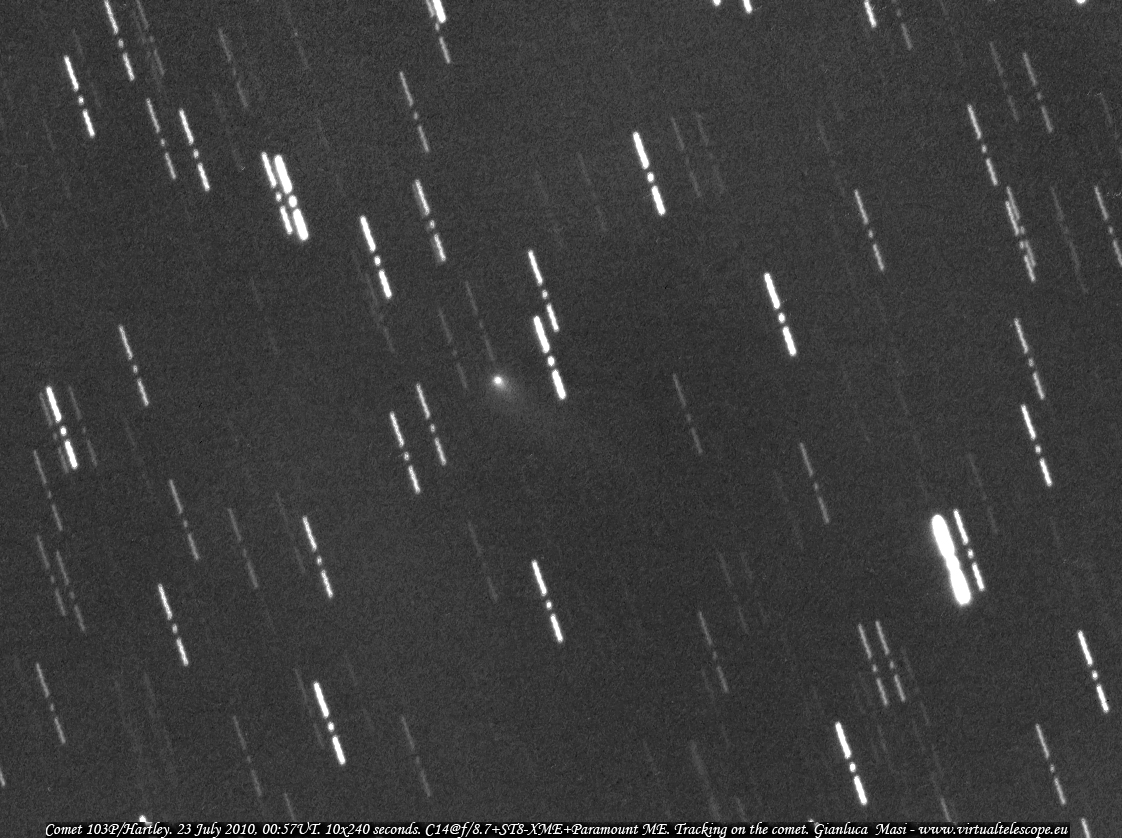
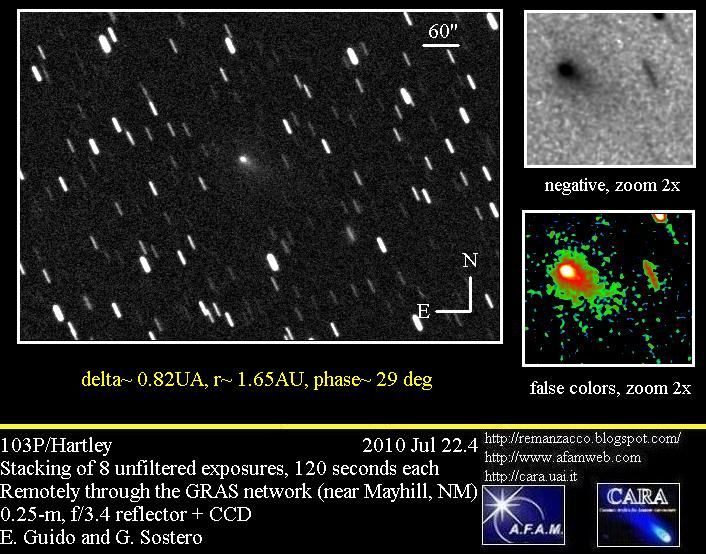
• The trail of comet 10P exceeded 20° (from here), and pictures of spacecraft target/fall sky show 103P/Hartley 2 from July 23, July 22 and July 4. • A Phoenix fireball, SDA over Singapur, and a meteorite fall during a cricket match (more). • More on the fresh Kamil crater & meteorites here, here, here, here, hier, hier und hier; also a press release on the C/2010 A2 mystery. • Observations of the stellar occultation by Roma with automated stations, and Keck AO observations of multiple asteroids. • this press release w/o new data but probably linked to this mission candidate caused lots of unnecessary headlines, as discussed here, here, here, here, here and hier. • Also speculations on Trojans & comets, it's mid-eclipse time for Eps Aur, and nice NLC pics come from Sweden and Finland.
- August 5: The three planets form a 'perfect triangle', fitting into a 10x50 binocular FOV if necessary.
- August 7: Mercury in greatest Eastern elongation at 27° - but still hardly visible from mid-Northern latitudes.
- August 8: Venus & Saturn just 3° apart.
- August 12/13: Maximum night of the Perseids, as previewed here, here, hier and here. The rate can be tracked here, and there'll be another "MeteorWatch", hopefully less noisy & more useful than last year.
- August 13: The young crescent Moon, 3 days old, joins the planet triangle.
- August 17: Venus at half phase.
- August 19: Venus & Mars 2° apart.
- August 20: Venus at greatest elongation, 46°.
• The trail of comet 10P exceeded 20° (from here), and pictures of spacecraft target/fall sky show 103P/Hartley 2 from July 23, July 22 and July 4. • A Phoenix fireball, SDA over Singapur, and a meteorite fall during a cricket match (more). • More on the fresh Kamil crater & meteorites here, here, here, here, hier, hier und hier; also a press release on the C/2010 A2 mystery. • Observations of the stellar occultation by Roma with automated stations, and Keck AO observations of multiple asteroids. • this press release w/o new data but probably linked to this mission candidate caused lots of unnecessary headlines, as discussed here, here, here, here, here and hier. • Also speculations on Trojans & comets, it's mid-eclipse time for Eps Aur, and nice NLC pics come from Sweden and Finland.

Subscribe to:
Posts (Atom)