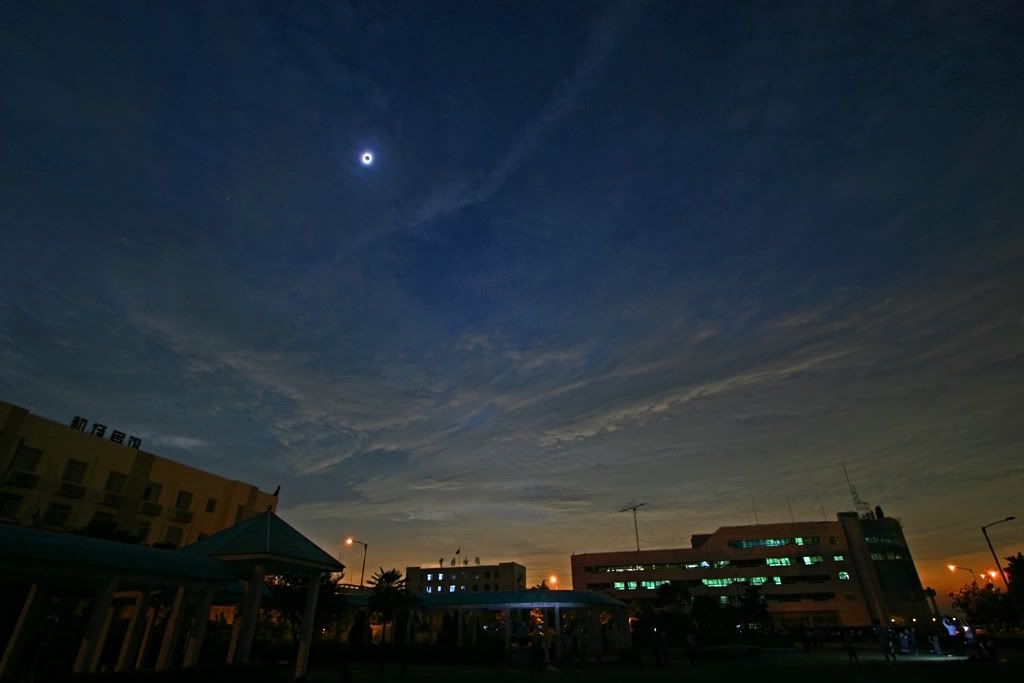
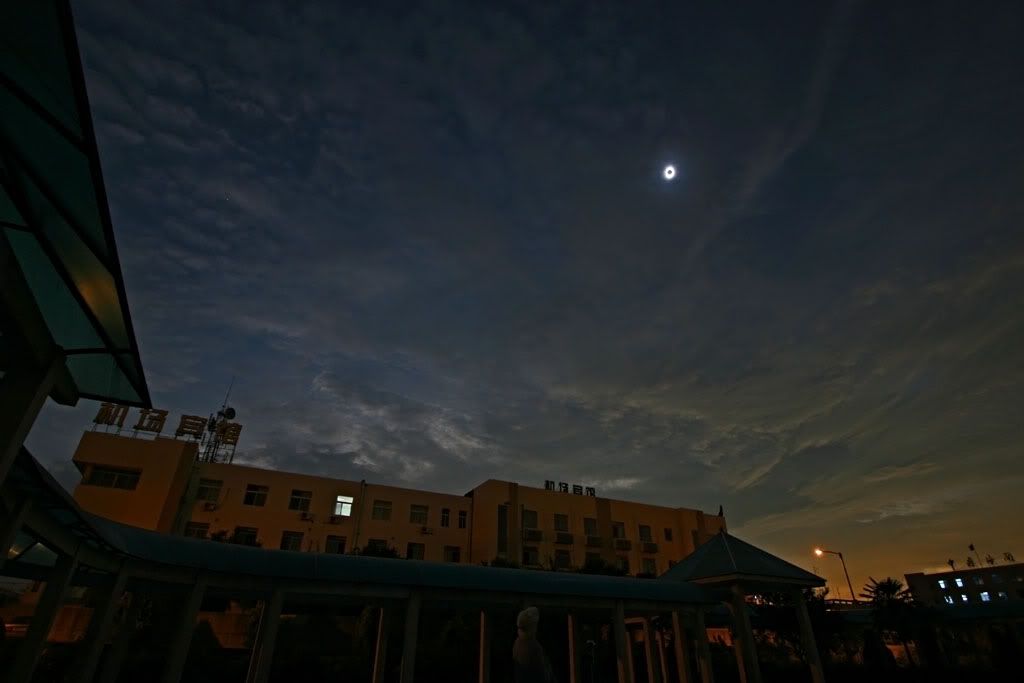
As had been widely expected, due to the southernness of the totality track and Asia's monsoon, only a fraction of the hundreds of millions living in the zone (or of the tens of thousands who came to visit) actually saw the total solar eclipse on 22 July 2009, though all got to experience often over five minutes of darkness. The deluge of pre-event stories can be found here - here is a first round-up of links five days after the event that won't be topped in length until 2132. As will be seen, clear views were abundant especially around Varanasi in India and between Chongqing and Wuhan in China, though isolated spots in Eastern China also had good views - with the notable exception of the mega-city of Shanghai where it rained during totality. Out in the Pacific there were also successes. Particularly recommended links in the following collection are in italics!
Picture collections in different styles were prepared e.g. by the Boston Globe and the Sacramento Bee (both extra large!), SpaceWeather, Flickr (more), Nat'l Geographic, the BBC, Novosti, the New York Times, the Economic Times (India), the Telegraph, German.china.org, MSN, IMAM, MSNBC and Discovery (Flash slide-show) - and there were some thoughts on eclipse photographs as such plus a sampling of Flickr goodies (more). Much more material, though, can be found in individual reports & pictures:
From Varanasi (where the clouds cleared just in time) we have a stunning multi sequence, the corona, a picture sequence, another and another one as well as an AFP pic (another and another one), a news story and early and later and detailled reports. From other Indian places come reports from Surat and from Bihar (also a long article and a picture). Also a news story from an eclipse flight (another, another, another, a report, a blog report and a press release) and another scientific two. And more coverage of the eclipse in India in general here, here, here, here.
From Nepal we have a a blog report, from Bhutan another a blog report and a totality pic and from Tibet some pictures & links. From Chongquing or nearby come a report w/pics, the diamond ring at 2nd contact, a wide-angle view during totality and a Xinhua pic. From or near Yichang we have a long story w/pics in Spanish, a report in English and a quoted tweet, while from Changsha a Reuters pic came.
From Wuhan we have a striking wide-angle view (another and another one), corona composite (another one) and more pics, a picture series, a Flickr Stream, another picture series (100 km SW of Wuhan) and more pictures of Baily's Beads at 2nd contact, a hazy and a pretty clear corona, a wide-angle and a fish-eye view during totality and the inner corona & prominences close to 3rd contact. Plus a 9-min video and CCTV on public reax. From Huangzhou come a blog report, from Anqing a picture series w/prominence detail and a report and from Huangshan a blog report and a corona.
From Tianhuangping - site of a major scientific expedition from the U.S. - we have a Williams College Press Release, a NYT blog (note the earlier posts linked there; also this and this one) and fine corona pictures. From Anji come a corona pic, more pics and a wire report on successful Indian experiments there, and from Hangzhou we have a nice contact picture and another picture plus a German radio report.
From Wuzhen - where yours truly was located - we have my pictures and reports and more from the same site by B. Brinkmann and K. Schulze-Frerichs as well as a video clip of 2nd contact. There are also some impressions from Water town west with a video clip, an i-report and a TwitPic. From Jiaxing come an Austrian media story, from Suzhou pictures and a German blog entry and from Sheshan a U.S. magazine's report (by a Shanghai blogger).
From rainy Shanghai little of substance was found other than a wide-angle view of the dreadful sky, a German newspaper's account and a confused blogger's (another one). From cloudy Yangshan a report. From large unsuccessful Jinshan on the coast we have a long, a short, another short and a German blog report, some some pictures without and some with the corona and a long slide show. From over the Hangzhou bridge come a report, from Ningbo a Univ. of Nottingham Press Release, a blog report and another one with a video and from Putuoshan island a picture series.
From Japan we have a blog report from Tanegashima and a picture collection. From the ill-fated Costa Allegra ship comes a blog report (and there's a comment on that cruise). From the Marshall Islands we have a report w/pics from Enewetak and a Radio NZ story, from the Northern Cook Islands a great picture of the low Sun (also see the others in the stream) and from Kiribati a report w/pics and another one.
From space come to us a dramatic shadow movie from MTSAT-1R at slow pace as well as pretty hectic, plus two still images of the shadow (also here, here, hier und hier). We also have a deep partial eclipse by Hinode in X-rays (more) and effects of the eclipse on the Koronas-Foton and Fermi satellites. From outside totality on Earth there are a video from Badaling on the Great Wall and reports from Shenzhen, Beijing (more), Xinjiang, Taiwan, Brunei, Malaysia, Bangladesh, Cambodia, Hawaii, Kagoshima and Tokyo. And from outside even partiality online impressions from Germany (earlier).
Further news coverage can be found in a China Daily package as well as here (more), here, here (with links to many other stories like this or this one), here, here, here, here, here, here, here, here, here, here, here, here, here, hier, hier, hier, hier, hier and hier (mehr, mehr und mehr). Specific articles deal with zoo animals in China (more, also from India; more and more), tidal effects, improvised filters, a magnet storm, the eclipse in a movie, the usual speculations from a certain magazine and an old eclipse inscription claim. And then there were a commentary and a satire ...
Monday, July 27, 2009




Tuesday, July 7, 2009
Best sunspot in years opens month with record-long solar eclipse
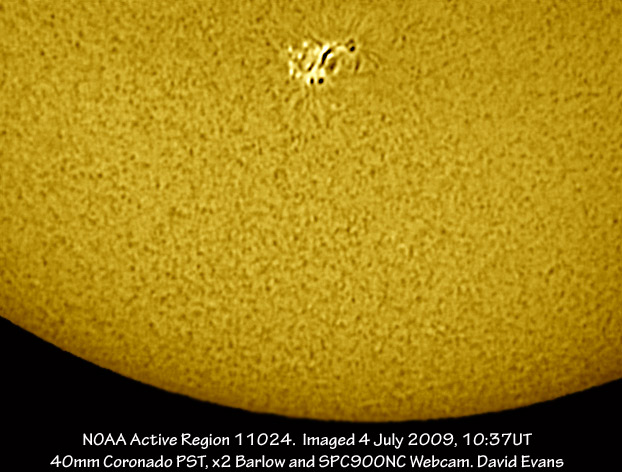
Just weeks after a detailled model predicted the return of sunspots the best one since about two years actually appeared and evolved for a few days before starting to decay: Here are pictures of AR 11024 from July 7 (more), July 6 (more), July 5 (more, more and many more) and July 4 (more, more, more and more); already in early June some activity was seen. Fittingly the Sun "idiots" book has recently become available online for free (also here). The pick-up in solar activity is a good start for a month that also featured the smallest full Moon today that came combined with a very partial lunar eclipse which probably went largely unobserved - but will be followed by the longest total solar eclipse of the 21st century. Previews of July 2009's sky events can be found here, hier and here, with the most notable being
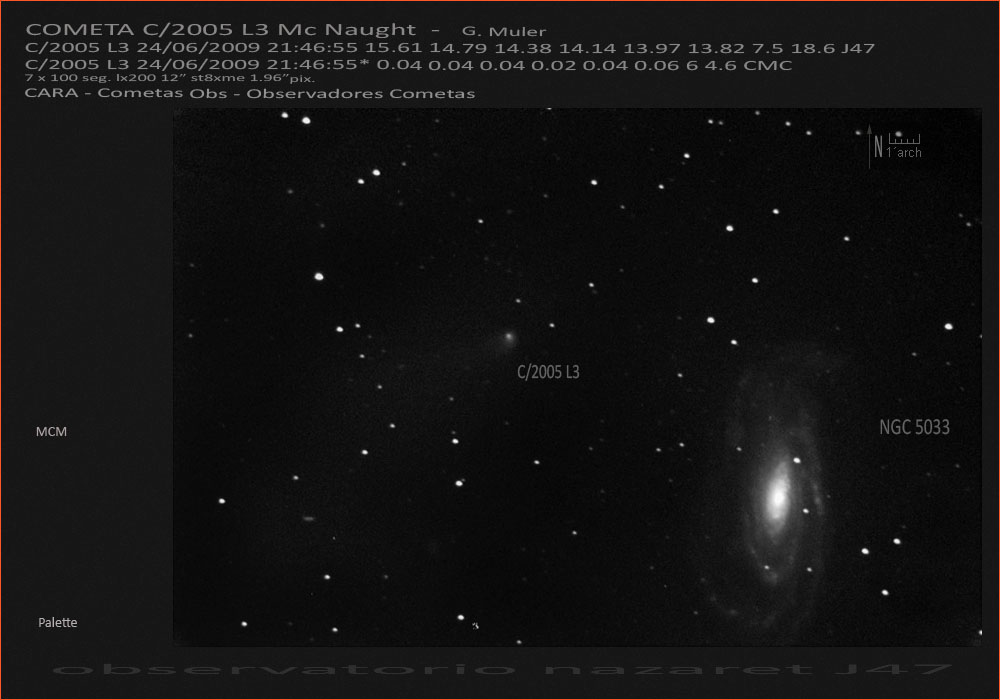
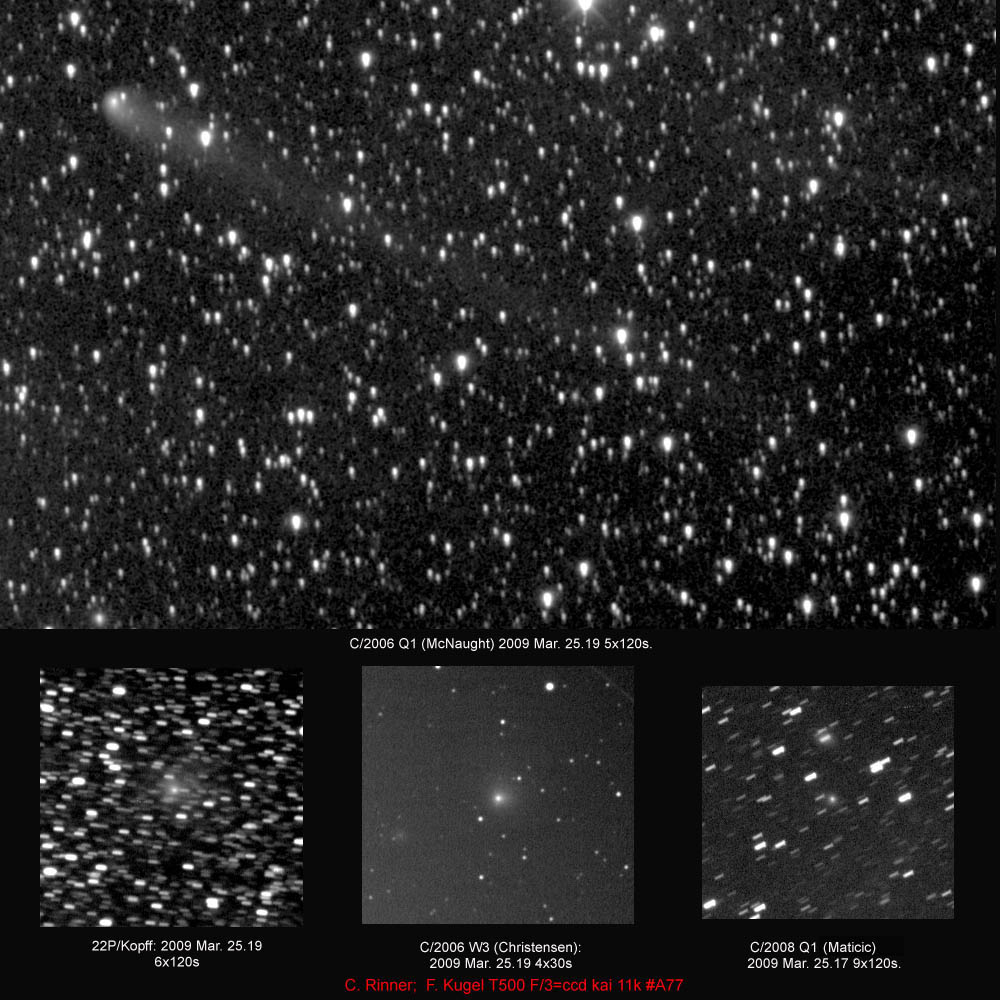
In other news the first meteorites from the Arizona fireball have been found! There are also updates about the bolide itself - what it looked and sounded like, plus video & pics - from June 29, 27 and 25 and another newspaper story. • New analysis has become available about the Steinheimer Becken impact crater in Germany, which was apparently an iron body and unrelated to the Ries impactor (another story) and the Vitim impact from 2002. • Nice comet pictures show C/2005 L3 (McNaught) very close to a galaxy (the scene 2 days earlier), 22P/Kopff with a long tail, C/2008 Q3 (Garradd) and C/2006 W3 (Christensen).
• Planet-wise the NEB action on Jupiter (this blog quoted!) as an animation, another "ad" for the mutual events of Jupiter's moons and the darkening of Saturn's rings documented while the Sun moves into the ring plane. • Three personal stories involving Alan Hale and a young SN discoverer and a weird "solargraph" picture. • Finally many have imaged the LCROSS spacecraft as results here, here, here and here show - the old Apollo missions, by the way, were also observed by telescopes on Earth.

- July 10: Jupiter and Neptune only 1/2 degree apart (with Jupiter 12,000 times brighter), an event that will be watched as Galilei once saw the same!
- July 18: Another Pleiades occultation by the Moon, visible from Europe.
- July 22: Total eclipse of the Sun, visible from India, China and the Pacific - this page has all the links you could possibly want about it! On the occasion of this extra-long eclipse we also have the winners of a logo contest, a big and a shorter review of science at eclipses, a portrait of an eclipse scientist and her adventures and the IAU eclipse dictionary.
- July 28: The Southern Delta-Aquarid meteors peak, should reach 10...20 meteors/hour. Alpha-Capricornids and early Perseids can also be seen.
- July 31: The Moon occults Antares in parts of the world.
In other news the first meteorites from the Arizona fireball have been found! There are also updates about the bolide itself - what it looked and sounded like, plus video & pics - from June 29, 27 and 25 and another newspaper story. • New analysis has become available about the Steinheimer Becken impact crater in Germany, which was apparently an iron body and unrelated to the Ries impactor (another story) and the Vitim impact from 2002. • Nice comet pictures show C/2005 L3 (McNaught) very close to a galaxy (the scene 2 days earlier), 22P/Kopff with a long tail, C/2008 Q3 (Garradd) and C/2006 W3 (Christensen).

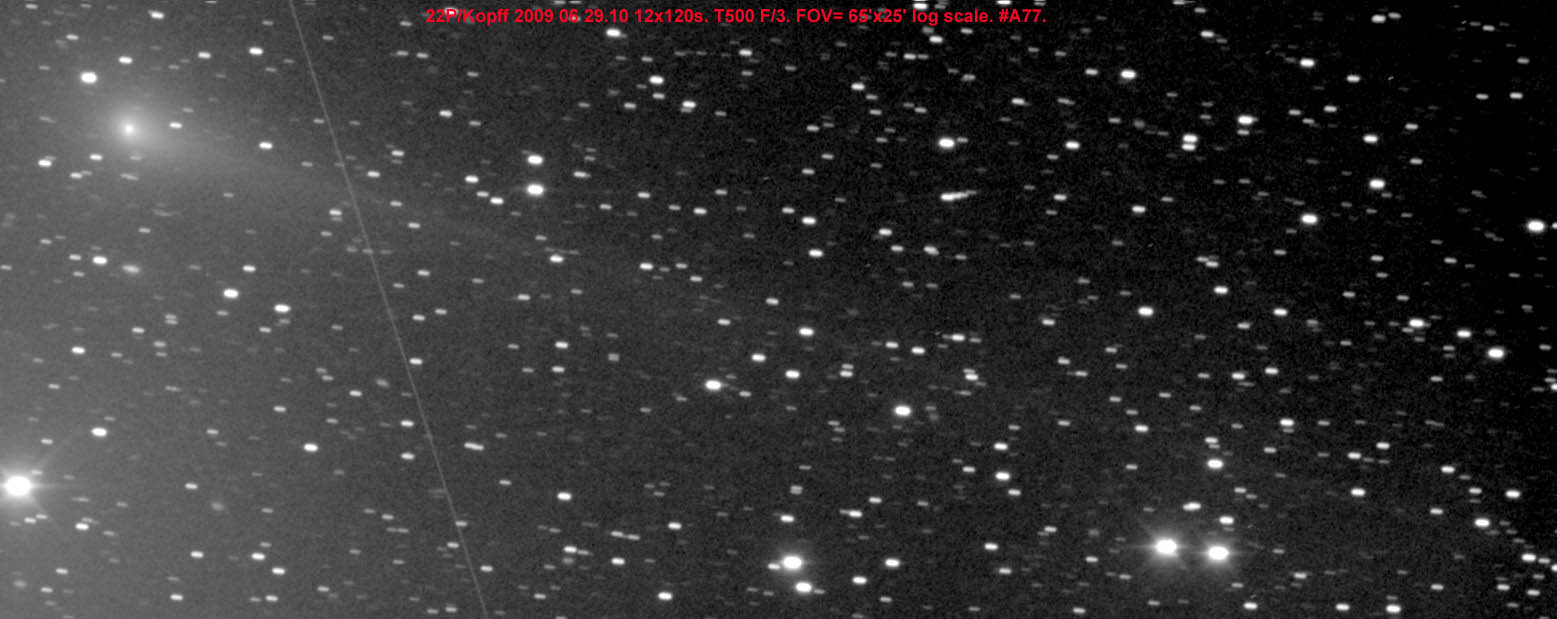
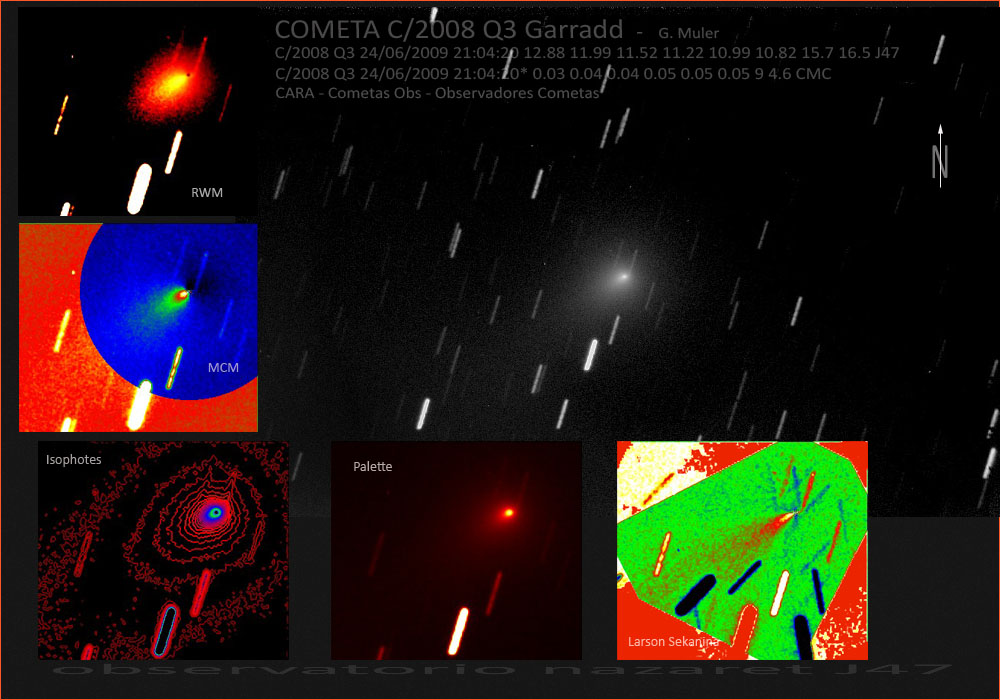

• Planet-wise the NEB action on Jupiter (this blog quoted!) as an animation, another "ad" for the mutual events of Jupiter's moons and the darkening of Saturn's rings documented while the Sun moves into the ring plane. • Three personal stories involving Alan Hale and a young SN discoverer and a weird "solargraph" picture. • Finally many have imaged the LCROSS spacecraft as results here, here, here and here show - the old Apollo missions, by the way, were also observed by telescopes on Earth.

Wednesday, June 24, 2009
A lot of noctilucent cloud activity over Europe in recent days
The top story for the past three weeks is not entirely cosmic but nearly so: it's noctilucent clouds (NLCs) at over 80 km altitude, just where space is about to begin. This phenomenon (also good for a headline :-) has made news and even today's APOD and is filling up numerous picture galleries. Here are some selected reports and pictures from the evening of June 23 in Germany (also see the following pages; more), June 20 onwards, the morning of June 18 in the UK (more), the evening of June 17 in the UK (more and more), the evening of June 16 in Germany (more, more and more), Austria and the UK (more) and the morning of June 16 in the UK (more).
In planetary news there is a possible new red spot on Jupiter (seen also on June 23), we have a hi-res pic of Ganymede in front of it and further mutual event observations of June 10 (video and lightcurve) and June 2. Meanwhile the rings of Saturn have faded quite dramatically. • Constellation-wise here are on June 21 the Moon on June 21 from the U.S., the Moon and Mercury from Oz and the Moon and Pleiades from NZ, on June 20 up to three planets and the Moon from the U.S., from Germany (more), India (more and more) and Oz and June 19 the view from Canada (great pic!) and Oz. Also a Moon/Antares conjunction and an occultation - though in 2005.
Meteor-, small-body- and impact-wise news came about a fireball in Arizona on June 23, one in New Mexico on June 19 (more) and probably another one over the UK on June 15 (though initial reports were rather confusing). Also a fine fireball picture - and a vague prediction of a meteor superstorm in 2022, caused by comet SW3 which is to be found on this site. • The UK will get a telescope to hunt for NEOs while early-warning satellite data of bolides are no longer available to astronomers (who not all say it's a major blow, by the way).
• Some real meteorite stories regarding Camp Verde and Barringer - and then there was an obvious hoax story about a German boy being hit by a meteorite which then caused a crater in a road: The newspaper responsible for breaking (pun intended) the story has since quietly deleted it from its website but it lives on here (as does a sidebar), but by then it was big international news. Some individual stories here (from a German tabloid), here, here, here and here and online discussion here, here, here, here and here. Staying on the fringe, here, here, here and here we have a discussion of the likelyhood that a meteorite hits a plane in mid-air.
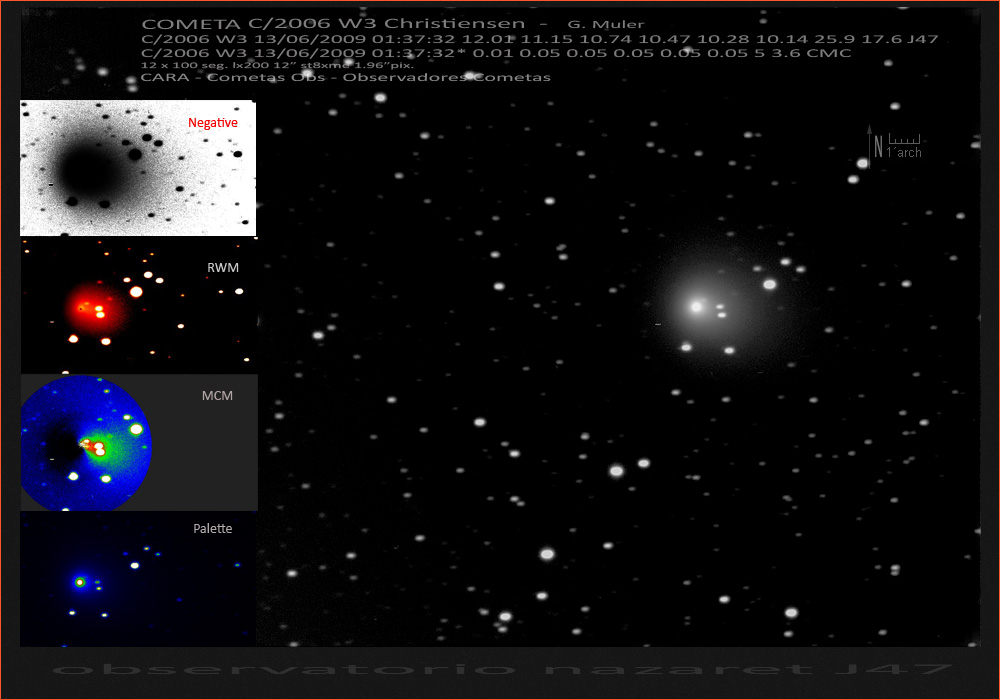
• A new comet named P/2009 L2 (Yang-Gao) is another Chinese amateur discovery: Here are a great pic of June 17 with a DSO and pics of June 21 and June 23. Just as in Feb. 2008 (see here and the preceding posts) the Chinese made the discovery public even before the comet was official - and the response from around the world was swift: Within hours picture after picture after picture after picture after picture after picture came in. • Other interesting current comets: Borrelly on June 12, Garradd on June 22 and June 16 and with a DSO and Christensen on June 21, June 20 (also an animation), June 18, June 15, June 14 and June 13.
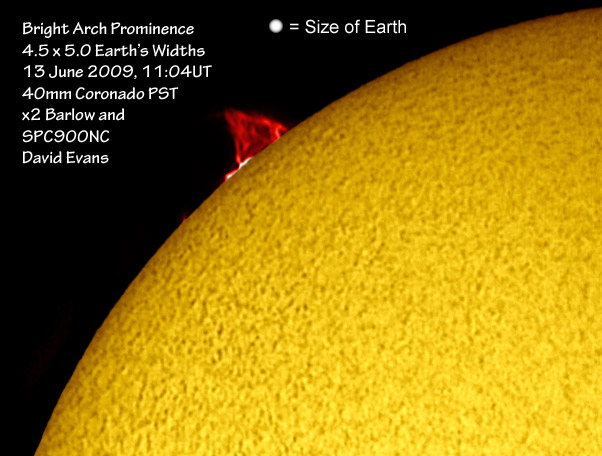
In other news it has come out that Spica is an eclipsing binary, the Epsilon Aurigae campaign is making news here, here, here and here, the proper motion of Barnard's Star has been imaged over just 3 years, and we have amateur photometry of exoplanets TrES-3b (more) and CoRoT-2b. • There are now two spots on the Sun (also a prominence on June 13 and more June Sun pics), here are 30 great aurora pics, the aurora from space, an amazing picture of a sprite and a nice green flash. • The AMA has (see p. 52-3) accepted light pollution as a medical problem! • And finally a record-size lunar mosaic, an interview with D. Malin the astrophoto genius, 5 great telescopes for amateurs, an amateur's journey of 5 years, observing with a 30" telescope - and how astronomy is like sailing ...
In planetary news there is a possible new red spot on Jupiter (seen also on June 23), we have a hi-res pic of Ganymede in front of it and further mutual event observations of June 10 (video and lightcurve) and June 2. Meanwhile the rings of Saturn have faded quite dramatically. • Constellation-wise here are on June 21 the Moon on June 21 from the U.S., the Moon and Mercury from Oz and the Moon and Pleiades from NZ, on June 20 up to three planets and the Moon from the U.S., from Germany (more), India (more and more) and Oz and June 19 the view from Canada (great pic!) and Oz. Also a Moon/Antares conjunction and an occultation - though in 2005.
Meteor-, small-body- and impact-wise news came about a fireball in Arizona on June 23, one in New Mexico on June 19 (more) and probably another one over the UK on June 15 (though initial reports were rather confusing). Also a fine fireball picture - and a vague prediction of a meteor superstorm in 2022, caused by comet SW3 which is to be found on this site. • The UK will get a telescope to hunt for NEOs while early-warning satellite data of bolides are no longer available to astronomers (who not all say it's a major blow, by the way).
• Some real meteorite stories regarding Camp Verde and Barringer - and then there was an obvious hoax story about a German boy being hit by a meteorite which then caused a crater in a road: The newspaper responsible for breaking (pun intended) the story has since quietly deleted it from its website but it lives on here (as does a sidebar), but by then it was big international news. Some individual stories here (from a German tabloid), here, here, here and here and online discussion here, here, here, here and here. Staying on the fringe, here, here, here and here we have a discussion of the likelyhood that a meteorite hits a plane in mid-air.
• A new comet named P/2009 L2 (Yang-Gao) is another Chinese amateur discovery: Here are a great pic of June 17 with a DSO and pics of June 21 and June 23. Just as in Feb. 2008 (see here and the preceding posts) the Chinese made the discovery public even before the comet was official - and the response from around the world was swift: Within hours picture after picture after picture after picture after picture after picture came in. • Other interesting current comets: Borrelly on June 12, Garradd on June 22 and June 16 and with a DSO and Christensen on June 21, June 20 (also an animation), June 18, June 15, June 14 and June 13.


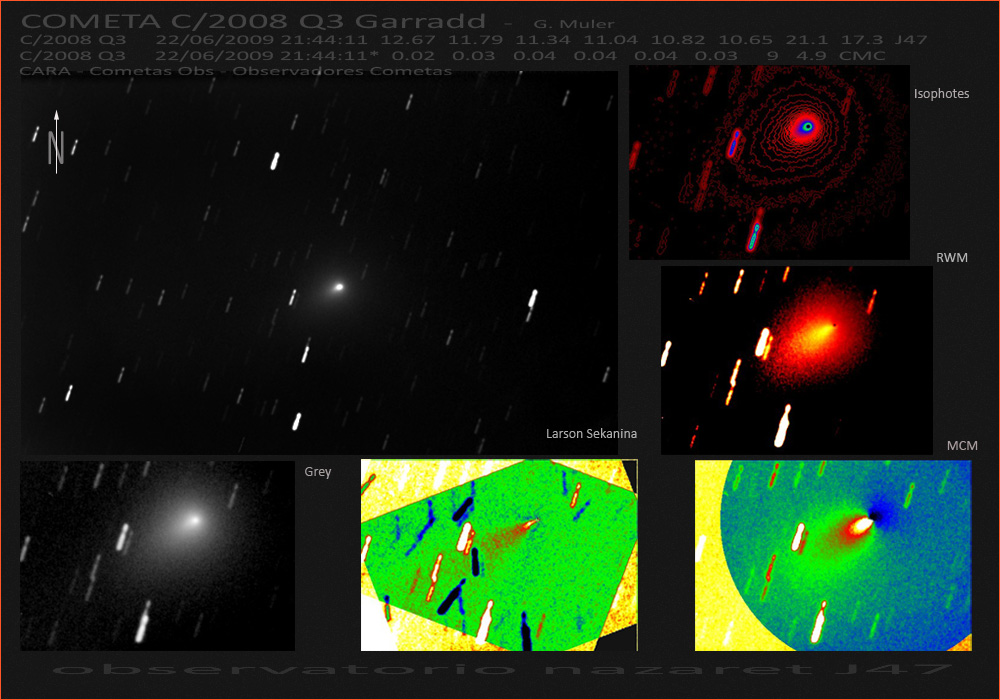
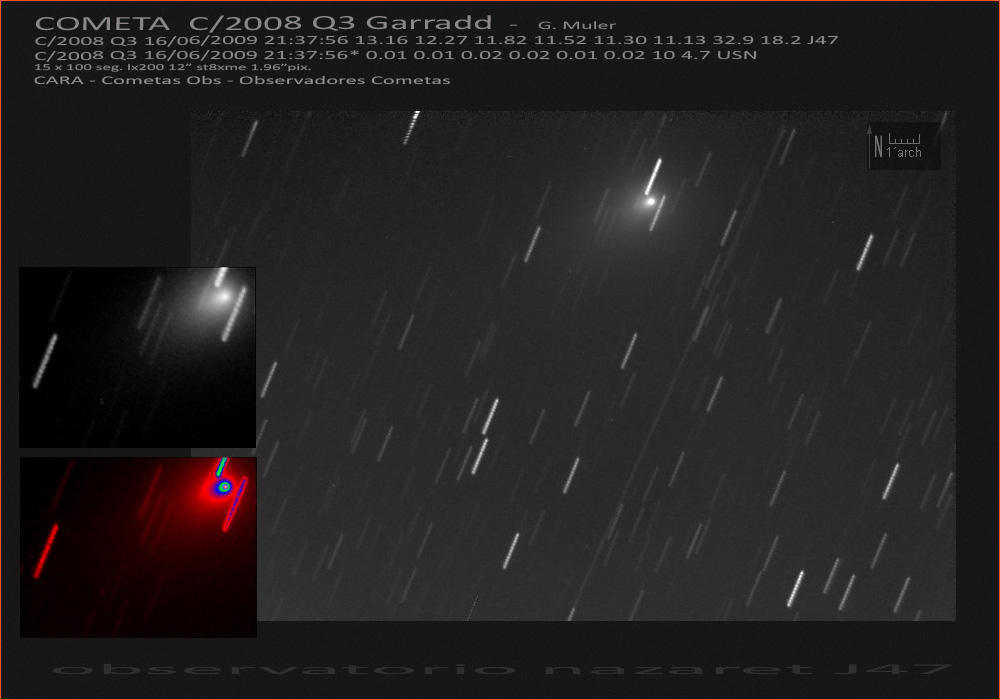

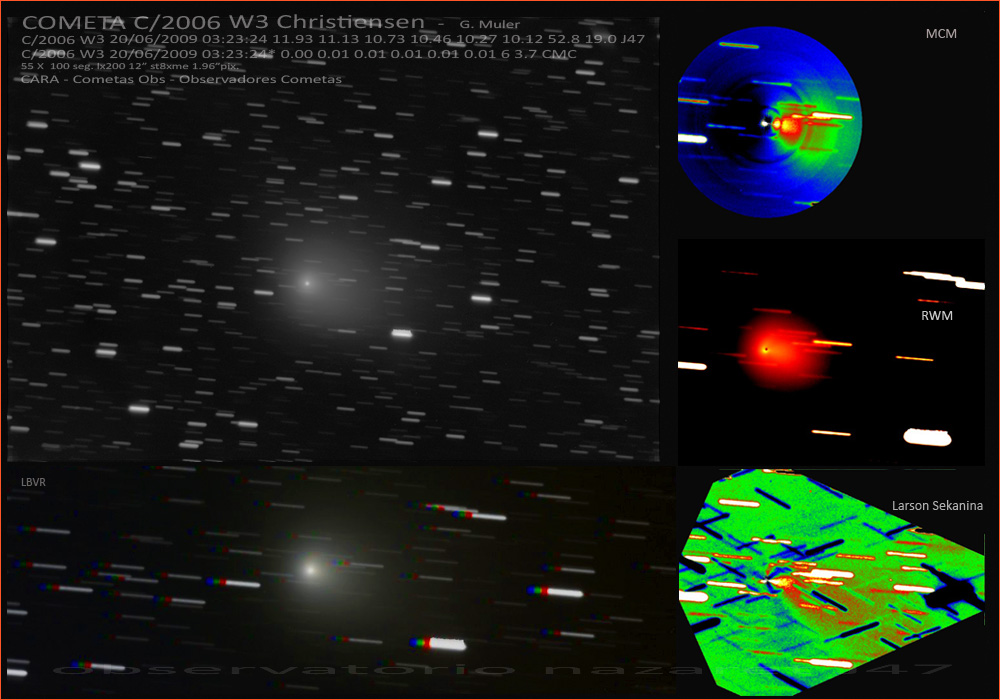
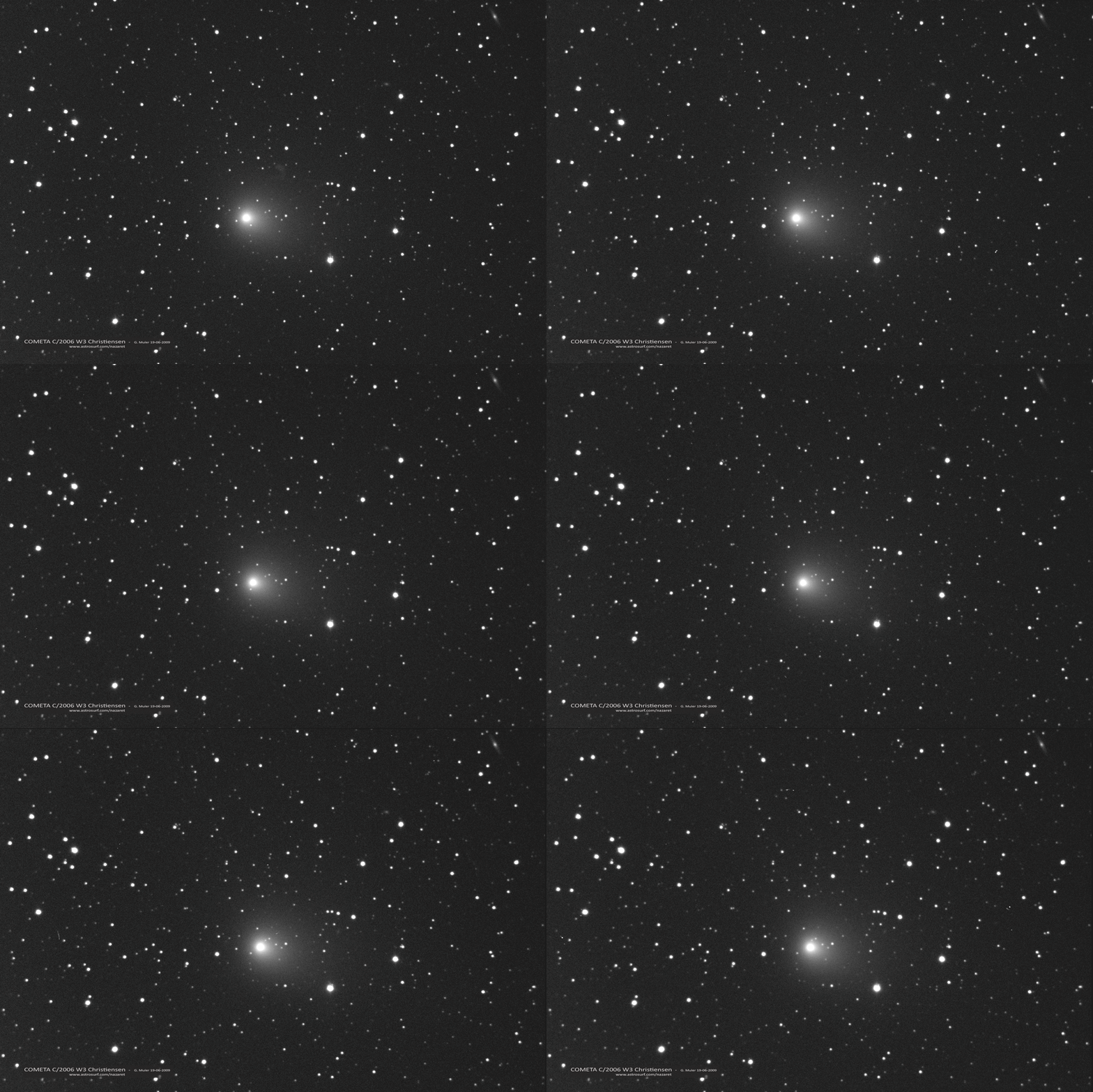
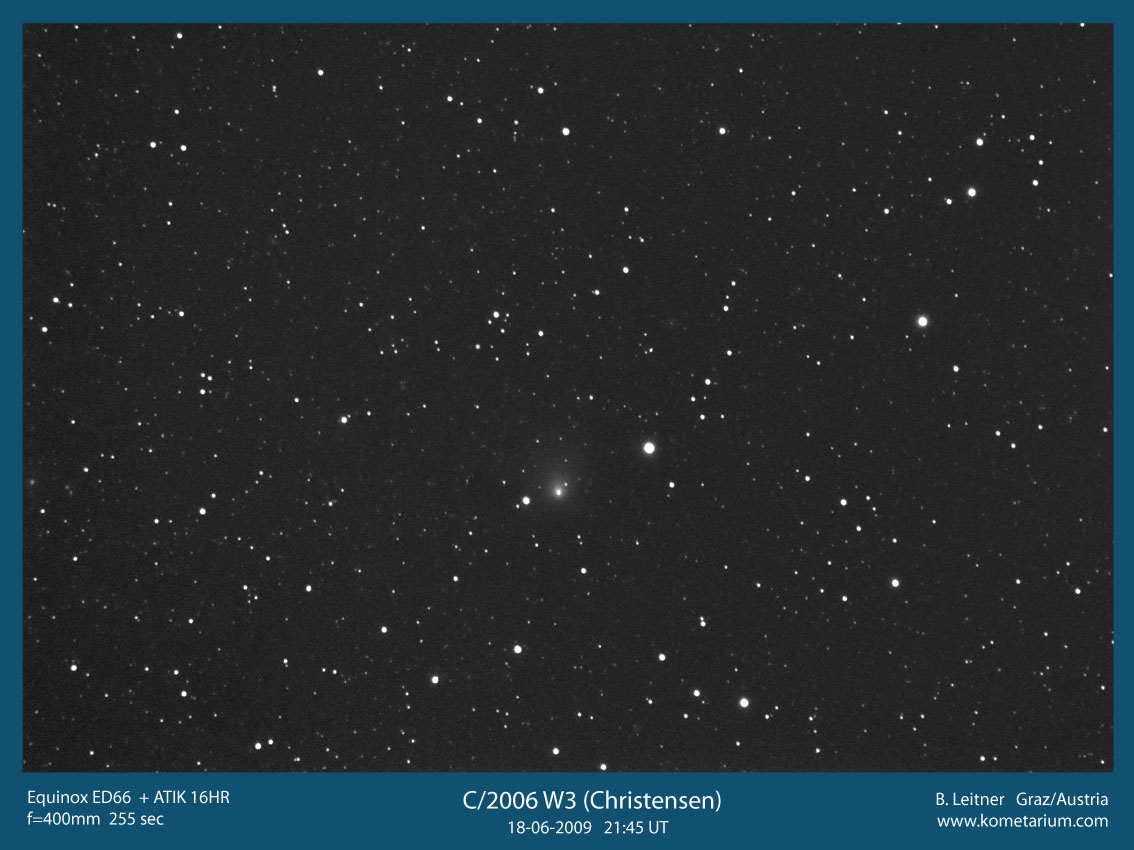
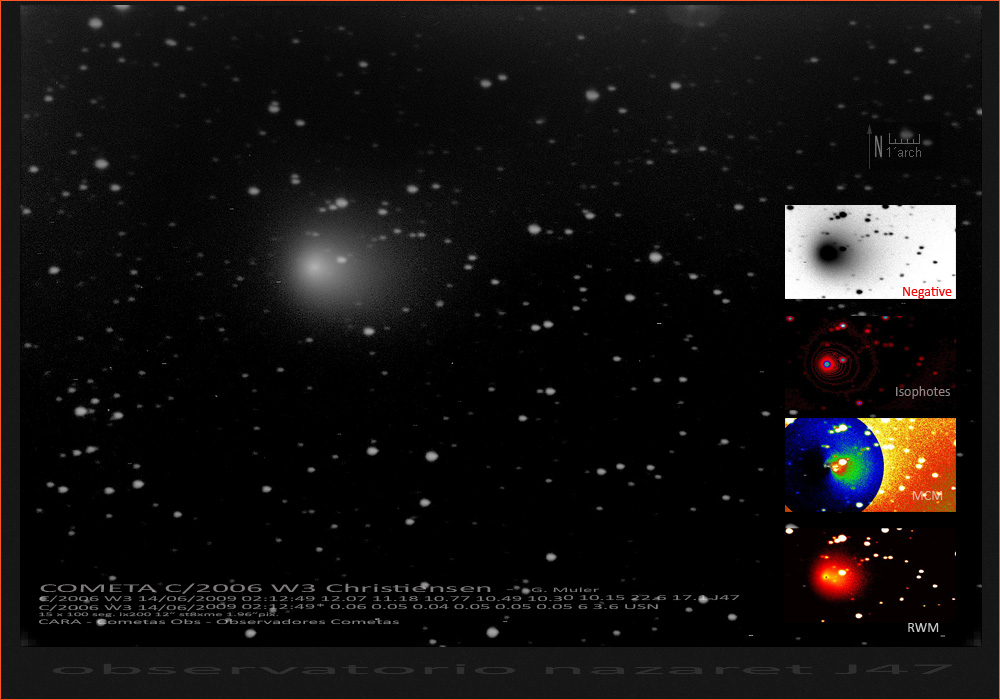
In other news it has come out that Spica is an eclipsing binary, the Epsilon Aurigae campaign is making news here, here, here and here, the proper motion of Barnard's Star has been imaged over just 3 years, and we have amateur photometry of exoplanets TrES-3b (more) and CoRoT-2b. • There are now two spots on the Sun (also a prominence on June 13 and more June Sun pics), here are 30 great aurora pics, the aurora from space, an amazing picture of a sprite and a nice green flash. • The AMA has (see p. 52-3) accepted light pollution as a medical problem! • And finally a record-size lunar mosaic, an interview with D. Malin the astrophoto genius, 5 great telescopes for amateurs, an amateur's journey of 5 years, observing with a 30" telescope - and how astronomy is like sailing ...
Friday, June 5, 2009
Venus/Mars conjunction main attraction in June - and yet another lunar orbiter bites the dust
There are not many "planned" sky highlights in June which sees Saturn retract from the evening skies and Jupiter slowly entering them: see these, these, these, these, these, these and these previews. Throughout the month be on the look-out for noctilucent clouds which have already been sighted in several places since late May. One may further highlight
In other news a substantial Potentially Hazardous Asteroid has been discovered by amateur astronomers: The uncertain initial orbit based on few data gave 2009 KD5 a size of about 1 km, as of today the PHA list has it at 18.2 absolute mag. which suggests a size of roughly 600 meters. • Asteroid-wise there are also a performance simulation of future sky surveys for NEO detection, a wire story with little merit about perfectly ordinary main-belt discoveries - and a strange company "selling" asteroid names which are of no merit whatsoever. • A meteorite that fell in India is now being investigated, other meteorites hit the auction block or yield new insights, namely the Tagish Lake specimens. • Two German TV stories on the Lolland fall are now also on YouTube, while a camera in Yuba, CA, is seeing many bolides.
• On the Sun the AR 1019 displayed a moderately complex sunspot group - which was gone on June 4th already. • Sun-related also some space storm physics and aurora prediction ideas, the benefits of the STEREO mission, ongoing daily solar drawing work on Mt. Wilson, a news collection on the upcoming July 22 TSE and a commentary on the solar minimum. • Finally some articles on amateur astronomers and CCDs vs. DSLRs, a nice photo demonstration of precession over 1/4 century, the constancy of Shedir, a veeery deep image of M 51 and another sighting of Herschel in deep space. And early impressions from the international lunar parallax project; this is what was needed.
- June 5: Venus in greatest Western elongation, 46° from the Sun.
- June 10, 18:26 UTC: Impact of Kaguya on the Moon, a prelude to the impact of LCROSS in early October.
- June 10, late UTC: Five moons of Saturn line up on the East of the planet.
- June 13: Mercury in greatest Western elongation, 23½° from the Sun. Will stay invisible for Northerners, others should have the best view around June 20. And on June 21 the near-by lunar crescent may help finding it.
- June 19: Venus 2° from Mars which slowly begins ins apparition; Moon nearby.
- June 23: Dwarf planet Pluto in opposition, at 13.9 mag. in Sgr.


In other news a substantial Potentially Hazardous Asteroid has been discovered by amateur astronomers: The uncertain initial orbit based on few data gave 2009 KD5 a size of about 1 km, as of today the PHA list has it at 18.2 absolute mag. which suggests a size of roughly 600 meters. • Asteroid-wise there are also a performance simulation of future sky surveys for NEO detection, a wire story with little merit about perfectly ordinary main-belt discoveries - and a strange company "selling" asteroid names which are of no merit whatsoever. • A meteorite that fell in India is now being investigated, other meteorites hit the auction block or yield new insights, namely the Tagish Lake specimens. • Two German TV stories on the Lolland fall are now also on YouTube, while a camera in Yuba, CA, is seeing many bolides.
• On the Sun the AR 1019 displayed a moderately complex sunspot group - which was gone on June 4th already. • Sun-related also some space storm physics and aurora prediction ideas, the benefits of the STEREO mission, ongoing daily solar drawing work on Mt. Wilson, a news collection on the upcoming July 22 TSE and a commentary on the solar minimum. • Finally some articles on amateur astronomers and CCDs vs. DSLRs, a nice photo demonstration of precession over 1/4 century, the constancy of Shedir, a veeery deep image of M 51 and another sighting of Herschel in deep space. And early impressions from the international lunar parallax project; this is what was needed.

Sunday, May 24, 2009
A solar cycle forecast, outer planet satellite mutual events and many meteorite stories
have amassed in the past three weeks. Firstly, after two years of confusion the Solar Cycle 24 Prediction Panel earlier this month has "reached a consensus decision on the prediction of the next solar cycle (Cycle 24). First, the panel has agreed that solar minimum occurred in December, 2008. This still qualifies as a prediction since the smoothed sunspot number is only valid through September, 2008. The panel has decided that the next solar cycle will be below average in intensity, with a maximum sunspot number of 90. Given the predicted date of solar minimum and the predicted maximum intensity, solar maximum is now expected to occur in May, 2013. Note, this is a consensus opinion, not a unanimous decision. A supermajority of the panel did agree to this prediction." More coverage (and occasional dissenting views, w/o actual arguments, though) here, here, here, here and here. Also why there won't be an ice age coming despite the low activity now, a flare causing some interest, if short-lived, and some media confusion about the situation documented. Plus no spots on May 11 (as also seen here) but faculae on May 10 and a prominence on May 3, a "stealth storm" from the Sun, a very detailled review of solar forcing of the terrestrial atmosphere, a well-prepared didactical video on the same topic - and details about the total solar eclipse of 2012 in Queensland, Australia.
Mutual events between the Jovian satellites have now begun, and observations have been many already - though mostly from Australia it seems: an Io/Europa event on May 17 (dito), Callisto/Io on May 16 (dito) and Europa/Ganymede on May 8 as a high resolution video (also discussed here) and lightcurves here and here. Less demanding are observation of satellite transits or the Neptune/Jupiter conjunction on May 27. Of Jupiter itself hi-res pictures of May 13, May 12 (with Ganymede resolved!), May 9, May 7 and earlier. • There are also pics of Saturn with a Rhea shadow transit (and the rings dimmed as the Sun hits them from the side - see also this comparision 2006 vs. 2009 or a May 23 pic), earlier pics, satellite mutual event on May 6. Finally a resolved Mars on May 17. • Scenic-wise here are Jupiter and Venus on the morning of May 24, the lunar crescent on May 23 (another hi-res view), the Moon/Jupiter/Venus chain on May 22 and the Moon/Venus/Jupiter triangle on May 21 (another one).
Meteor(ite)-wise there is now a prediction of a meteor storm in 2045, a "storm of slow fireballs" from the June Bootids this Russian astronomer - successful in the past - is forecasting. • A map of meteor stream radiants from a Japanese video network. • After the Canadian fireball last November hundreds of meteorites have now been collected but the biggest ones are still missing. A large chunck a farmer found has been donated to science. • More meteorite stories from Oman, Australia, the U.S. and Austria, also an expensive specimen and attempted fraud in Viet Nam. • Also more on the retrograde Apollo and three new NEO grants. • Comet-wise something has happened to 19P/Borrelly (earlier; see also here and earlier). • Plus C/2008 Q3 (Garrad) with a globular cluster, 107P recovered, a Lulin lightcurve, 33P/Daniel with a supernova, C/2006 W3 and comet origins questions.
In other news June 17 is now the launch date for LRO and LCROSS - which will impact the Moon on Oct. 8 if current plans hold. Amateur pictures of the lunar south pole are of interest in this context. • Ground-based observers tracking the satellites Herschel & Planck after their launch soon spotted several "UFOs" next to the Ariane's upper stage - by now it seems clear that there are only two unexplained bodies - and they are fading and changing orbits, both hinting at evaporating ice blocks. • An ISS flare in hi-res, an ISS trail with a flare, another one and another hi-res ISS of May 7. • Now amateur astronomers are actually hunting exoplanets with the transit method, not just following up professional discoveries. • An interview with A. Oksanen, a famous Finnish amateur, and hail to citizen astronomers (and other "citizen science"). • Hail also to Astrometry.net for everyone! • Finally a truly giant Milky Way Center mosaic (also hailed here), a lunar picture with 500 m/pxl resolution and a 5-hour timelapse movie recorded at the Winter Star Party.


Mutual events between the Jovian satellites have now begun, and observations have been many already - though mostly from Australia it seems: an Io/Europa event on May 17 (dito), Callisto/Io on May 16 (dito) and Europa/Ganymede on May 8 as a high resolution video (also discussed here) and lightcurves here and here. Less demanding are observation of satellite transits or the Neptune/Jupiter conjunction on May 27. Of Jupiter itself hi-res pictures of May 13, May 12 (with Ganymede resolved!), May 9, May 7 and earlier. • There are also pics of Saturn with a Rhea shadow transit (and the rings dimmed as the Sun hits them from the side - see also this comparision 2006 vs. 2009 or a May 23 pic), earlier pics, satellite mutual event on May 6. Finally a resolved Mars on May 17. • Scenic-wise here are Jupiter and Venus on the morning of May 24, the lunar crescent on May 23 (another hi-res view), the Moon/Jupiter/Venus chain on May 22 and the Moon/Venus/Jupiter triangle on May 21 (another one).


Meteor(ite)-wise there is now a prediction of a meteor storm in 2045, a "storm of slow fireballs" from the June Bootids this Russian astronomer - successful in the past - is forecasting. • A map of meteor stream radiants from a Japanese video network. • After the Canadian fireball last November hundreds of meteorites have now been collected but the biggest ones are still missing. A large chunck a farmer found has been donated to science. • More meteorite stories from Oman, Australia, the U.S. and Austria, also an expensive specimen and attempted fraud in Viet Nam. • Also more on the retrograde Apollo and three new NEO grants. • Comet-wise something has happened to 19P/Borrelly (earlier; see also here and earlier). • Plus C/2008 Q3 (Garrad) with a globular cluster, 107P recovered, a Lulin lightcurve, 33P/Daniel with a supernova, C/2006 W3 and comet origins questions.

In other news June 17 is now the launch date for LRO and LCROSS - which will impact the Moon on Oct. 8 if current plans hold. Amateur pictures of the lunar south pole are of interest in this context. • Ground-based observers tracking the satellites Herschel & Planck after their launch soon spotted several "UFOs" next to the Ariane's upper stage - by now it seems clear that there are only two unexplained bodies - and they are fading and changing orbits, both hinting at evaporating ice blocks. • An ISS flare in hi-res, an ISS trail with a flare, another one and another hi-res ISS of May 7. • Now amateur astronomers are actually hunting exoplanets with the transit method, not just following up professional discoveries. • An interview with A. Oksanen, a famous Finnish amateur, and hail to citizen astronomers (and other "citizen science"). • Hail also to Astrometry.net for everyone! • Finally a truly giant Milky Way Center mosaic (also hailed here), a lunar picture with 500 m/pxl resolution and a 5-hour timelapse movie recorded at the Winter Star Party.

Sunday, May 3, 2009
Various Jupiter conjunctions, bright Venus main events in May
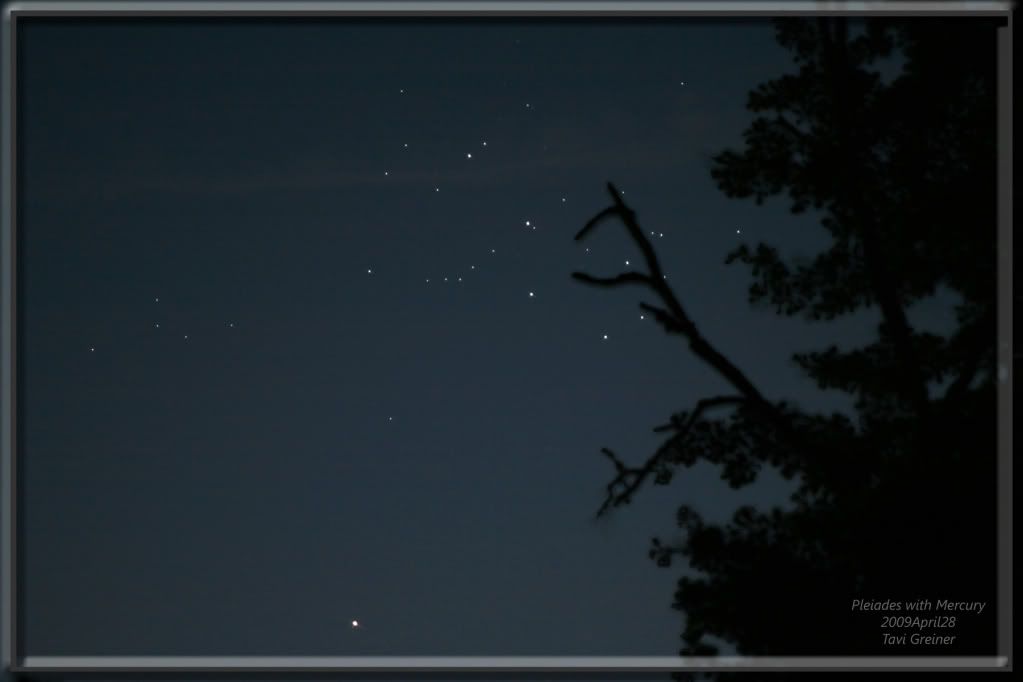
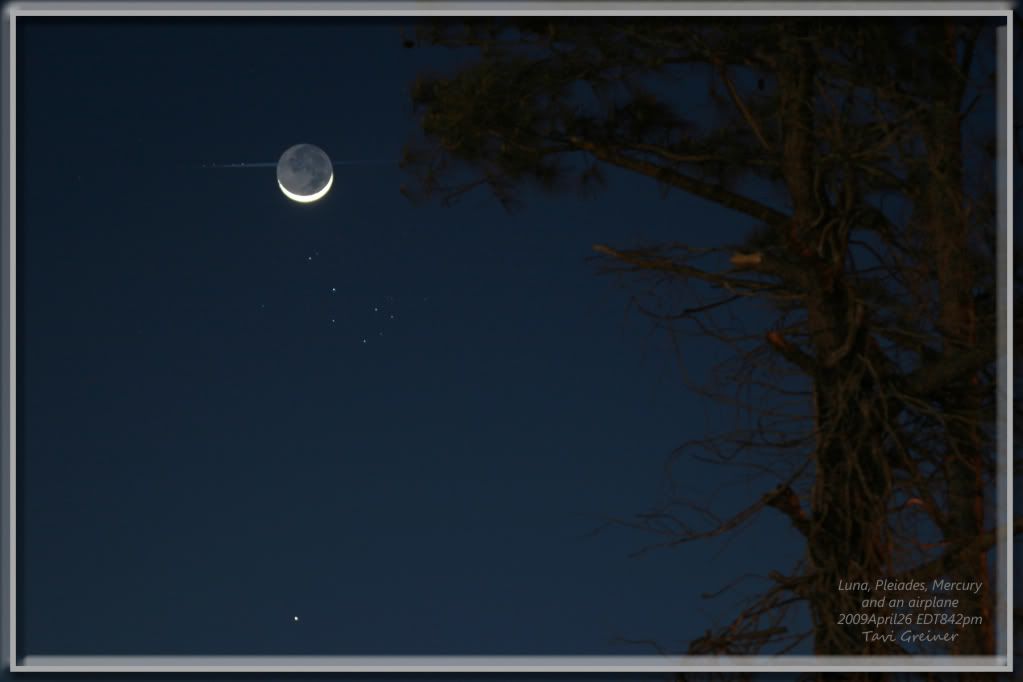
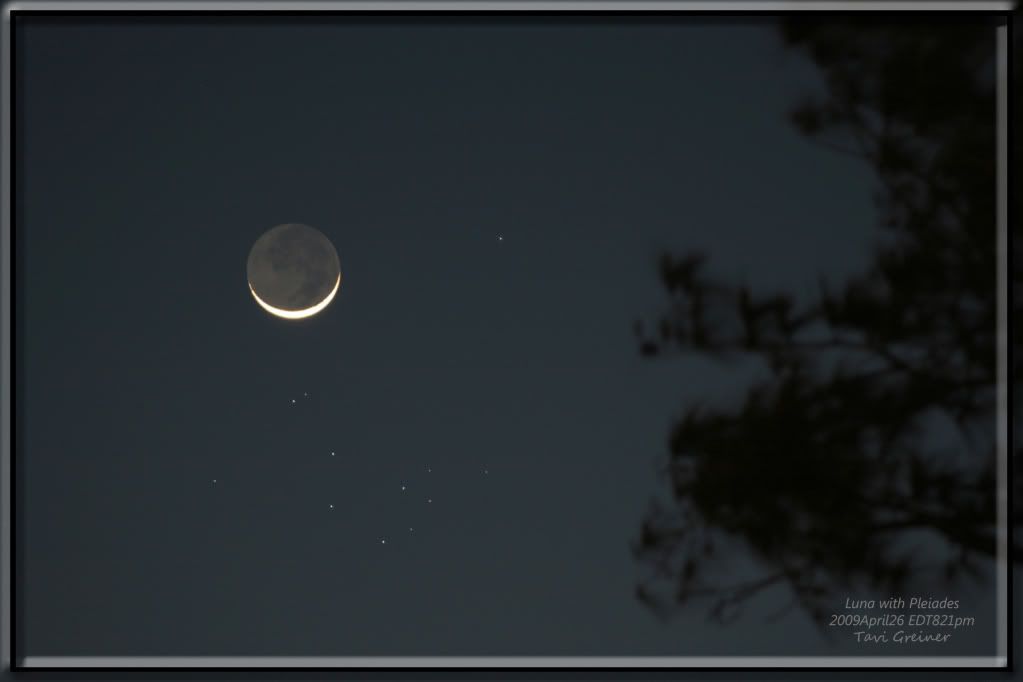
In the sky, that is - for space astronomy it promises to be a particularly exciting month with the launch of Atlantis to the HST on May 11 and the joint Ariane 5 launch of Herschel & Planck on May 14. Recent days brought a lot of action in the evening sky: Here are Mercury & the Pleiades, a lunar mosaic and another one from May 1, Mercury & the Pleiades (detail) and the Moon on April 28 and the Moon, the Pleiades and Mercury on April 26 in a stunning timelapse movie and still pictures (detail, detail, again, more, more, more, more and more) from the U.S. and the U.K., with simple tech. More pics of the constellation are also here and here. Mercury is now gone from the evening sky where now Saturn rules (great pictures galore from the Philippines and Saturn with Tethys and its shadow) while Venus - a stunning hi-res video of the lunar occultation on April 22, another report and another video - is now bright in the morning sky and Jupiter gets more interesting.
- May 2: Venus at greatest brilliance, shining at -4.5 mag.
- May 5: Peak of the Eta Aquarid meteor shower, nothing for Northerners
- May 17: Moon near Jupiter
- May 19: Jupiter only 5 arc minutes from Mu Cap
- May 21: The crescent Moon, Venus, and Mars make a little triangle in the east-southeast
- May 24/25: Chance to see a very slender crescent Moon in the evening in the Northern hemisphere
- May 27: Jupiter only 0.39 degrees from Neptune (which is only 1/12,000 as bright)


Sunday, April 26, 2009
Mercury, Moon & Pleiades line up after Moon occulted Venus
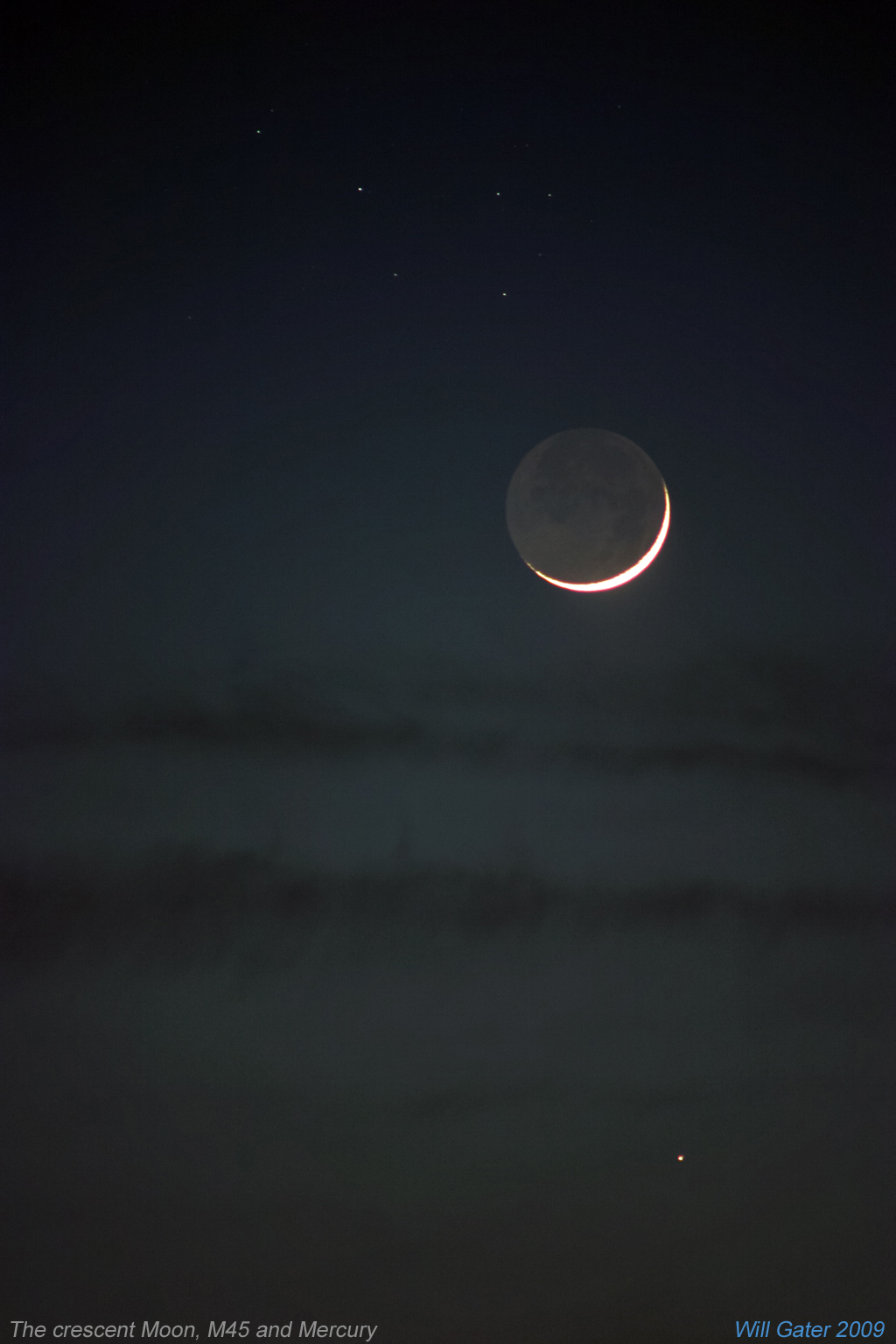
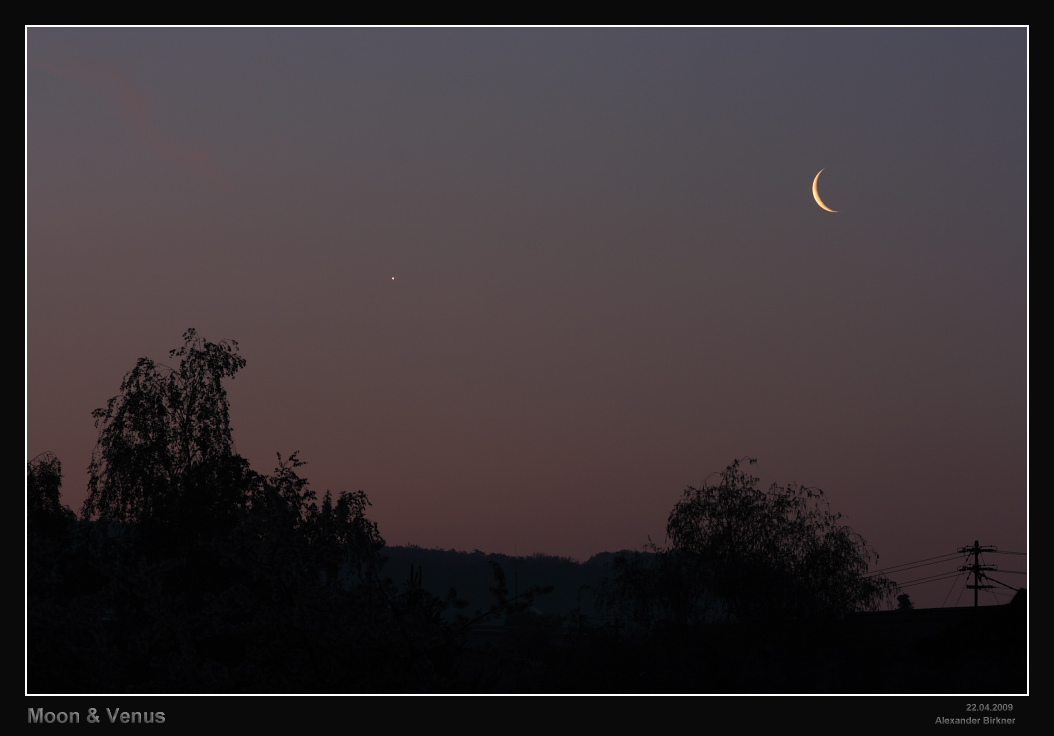
A lot was (and is, as I type!) going on in the skies conjunction-wise. At this very moment the Pleiades, the Moon and Mercury have lined up in the dusk as pictures taken in the past hours from Europe like quite a number here and also this one and this one document (when dusk reaches the Americas, the Moon will already be above the Pleiades). Also earlier pictures of Mercury with the Pleiades on the 25th from the U.S. and on the 22nd, 21st and 19th as well as with resolved detail on the surface on the 18th. Before the Moon came round the Sun it occulted Venus for the Americas, be it grazing or fully as in fine picture series here and here or in this video. More pictures here and here and in collections here and here and here. Also the Moon in hi-res on the 23rd, with Venus on the 22nd from Germany and with Jupiter, Venus & Mars on the 20th from Oz. Plus Jupiter in hi-res on the 23rd and 16th + 17th, old Jupiters from Namibia - and the question why Uranus' rings are to hard to image with amateur gear.
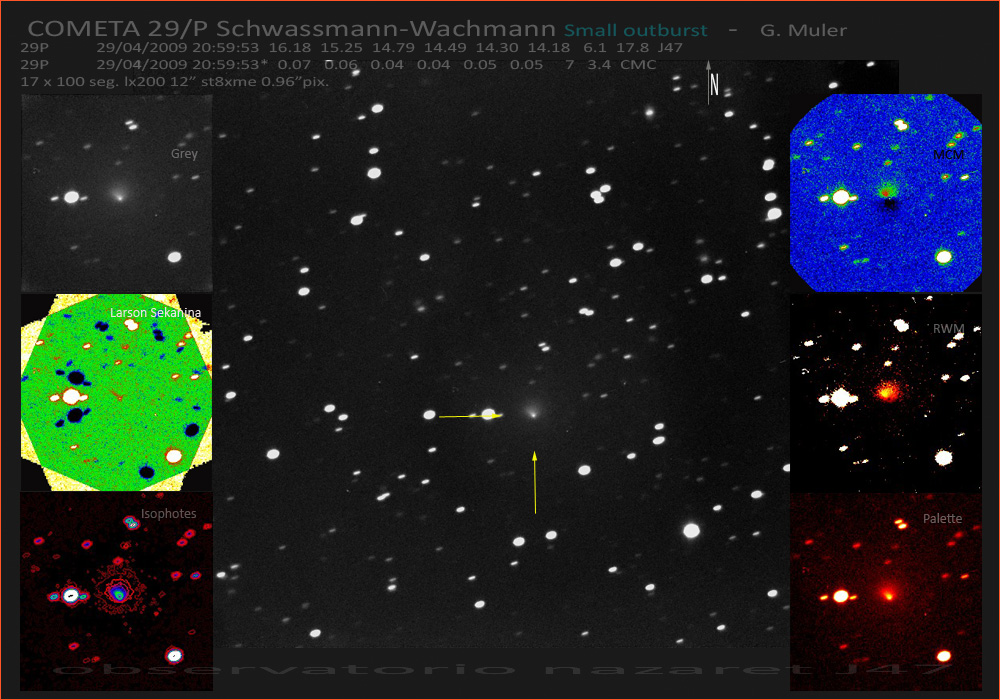
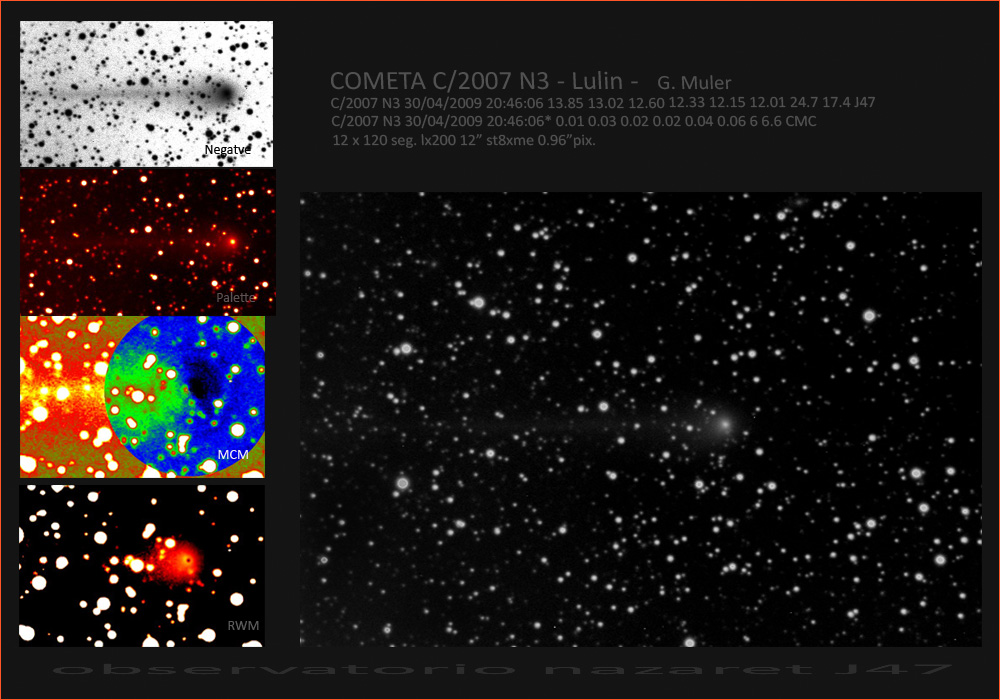
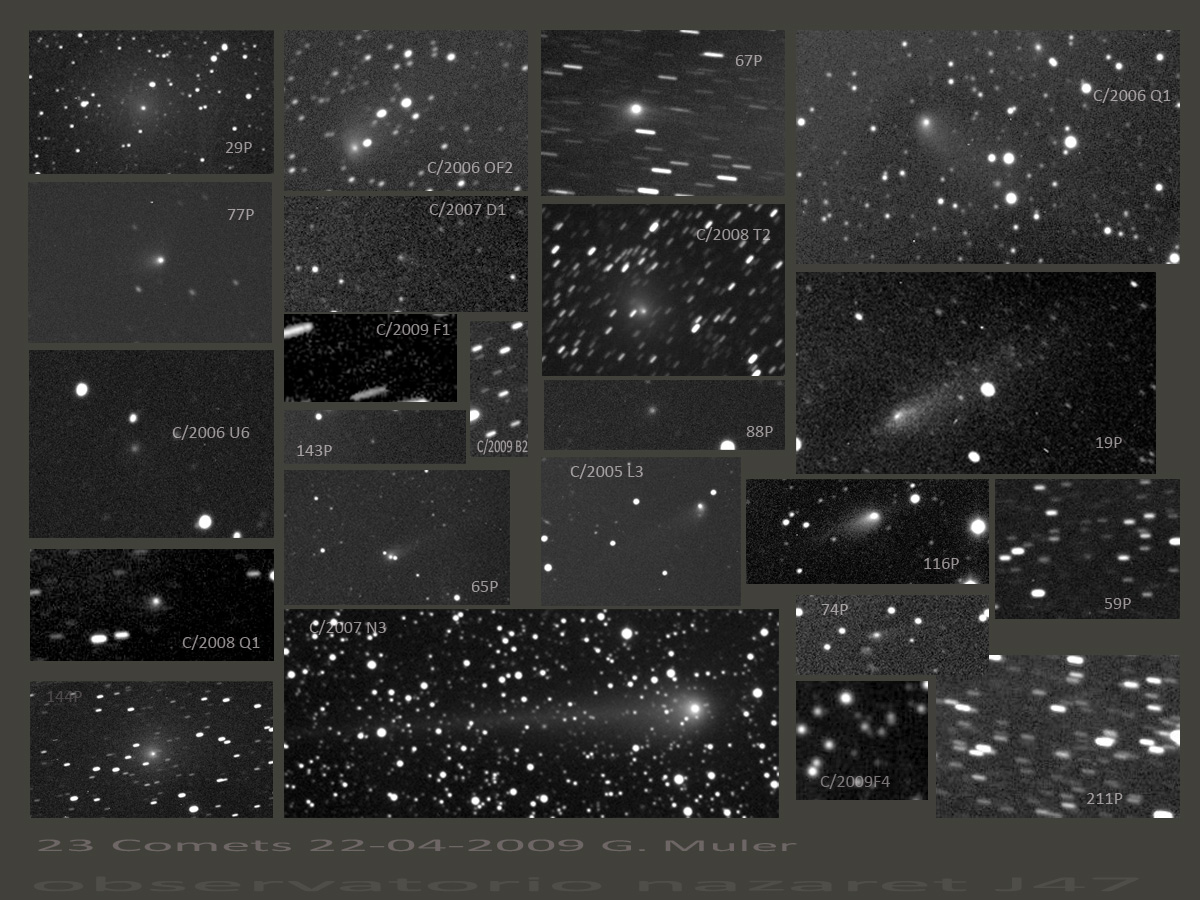
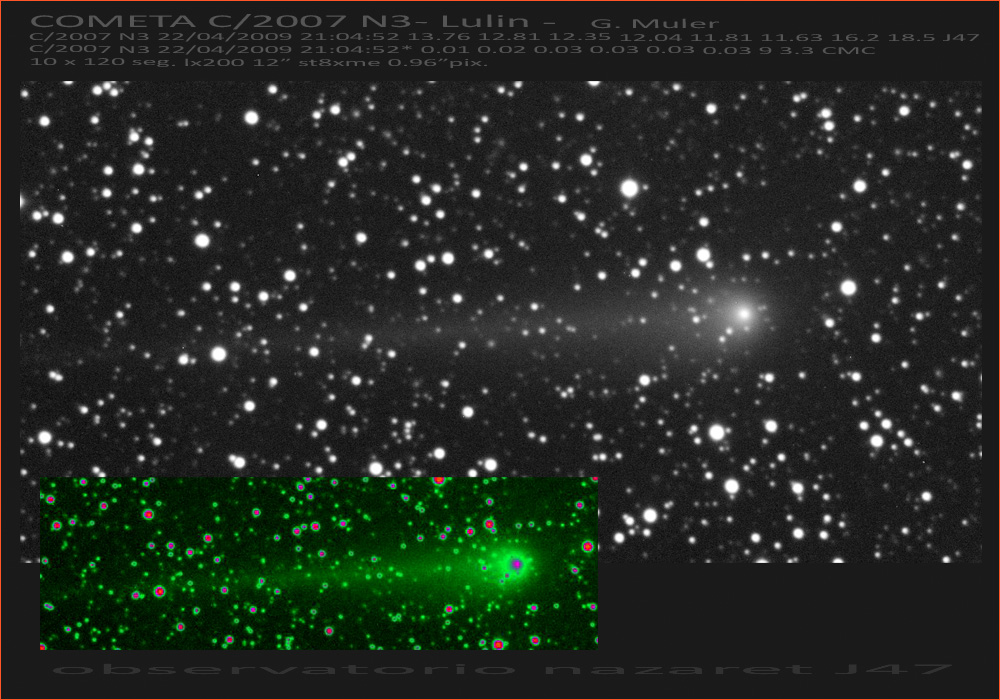
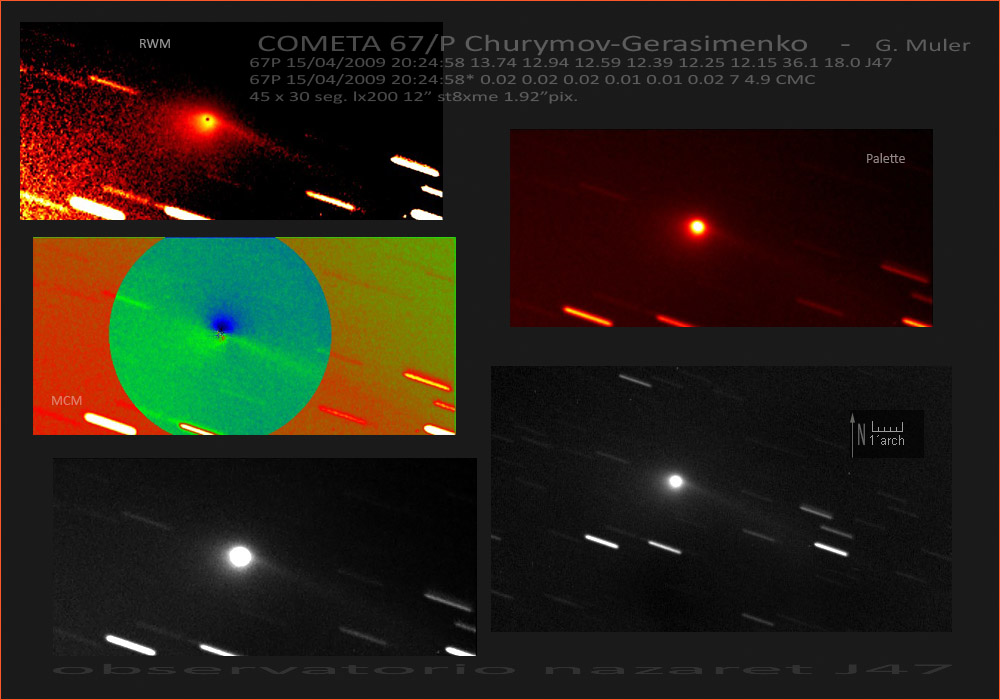
In other news avid cometographers managed to capture 23 comets in one night (of April 22) or 16 in another (of April 25)! Lulin is still around, e.g. on April 22, an old McNaught showed an interesting tail on April 19, and we have Borrelly on the 22nd, Chury on the 15th and Cardinal at M 36 on the 17th. • The Lyrids reached a maximum ZHR of around 15 - about typical - at the predicted time, though there's an other, later ZHR=30 peak in the automatic plot right now. There are now 11 new meteor showers in the Working List, most also confirmed by the IMO video network. Also of interest are fireballs on April 22 (not a Lyrid) and April 17 and a "mystery rock" which may or may not be a meteorite.
• There is increasing talk about the meaning of the ongoing deep minimum of solar activity (and the non-role of the Sun in Global Warming), also here, here, here, here, here, here, here and here (a video interview). • We have a better lightcurve of IY Uma, an eclipsing central star of a planetary nebula, the SN in NGC 4088 (and a nice picture of M 88). • Finally some light pollution calculations - and an overview of cameras in orbit looking at the Earth and delivering live image feeds.
In other news avid cometographers managed to capture 23 comets in one night (of April 22) or 16 in another (of April 25)! Lulin is still around, e.g. on April 22, an old McNaught showed an interesting tail on April 19, and we have Borrelly on the 22nd, Chury on the 15th and Cardinal at M 36 on the 17th. • The Lyrids reached a maximum ZHR of around 15 - about typical - at the predicted time, though there's an other, later ZHR=30 peak in the automatic plot right now. There are now 11 new meteor showers in the Working List, most also confirmed by the IMO video network. Also of interest are fireballs on April 22 (not a Lyrid) and April 17 and a "mystery rock" which may or may not be a meteorite.


• There is increasing talk about the meaning of the ongoing deep minimum of solar activity (and the non-role of the Sun in Global Warming), also here, here, here, here, here, here, here and here (a video interview). • We have a better lightcurve of IY Uma, an eclipsing central star of a planetary nebula, the SN in NGC 4088 (and a nice picture of M 88). • Finally some light pollution calculations - and an overview of cameras in orbit looking at the Earth and delivering live image feeds.
Friday, April 17, 2009
Supernova with 13 to 14 mag. in a galaxy in Ursa Major!
It's rare to have a supernova brighter than 15th or 16th magnitude, so SN 2009dd in NGC 4088 in UMa which has about 13.5 mag. is something special. Here are one of the discovery images (the SN was found independently by two Italian teams), a picture taken soon thereafter by a German amateur (before the SN even had a number) and a nice picture of the galaxy itself. SN 2009dd has the typical spectrum of a young type II supernova, a few days after its explosion - which took place some time between April 2 and 4 as Japanese images (found later) show. • In other variable star news, an outburst of IY UMa is underway and a variable in a planetary nebula and a transit of exoplanet XO-1b have been observed.
• In the current deep solar minimum even coronal mass ejections are slower than typical (while their 3D structure is clearer now thanks to STEREO). Also a prominence video, an asteroid named after the last total solar eclipse or rather a prime viewing spot in China, and why there will be no tsunami following the next TSE. • An unusually deep wide-field sky image with 40 hours of exposure time is causing attention.
• A fine Jupiter from down-under, a nice Saturn with Rhea's shadow on the disk and a table of Titan transits - of which not a single one will be visible in Europe. • Did Venus' atmosphere show a closed ring during inferior conjunction or at least arcs all around as this picture may indicate? The Japanese archive has nothing similar, though nearly closed rings were detected 2 days before the last transit of Venus (the exact time and a somewhat later image). Meanwhile here is Venus on April 11.
• More bolides, in Austria on April 9 and in California on April 7. • The Field Museum has received a lot of meteorites while the largest one in Texas has been found and the videographer honored who taped the bolide, a call for searchers in Canada is out w.r.t. last year's meteorite rain - and sometimes dogs make good hunters for meteorites! • There is another comet discovery with the STEREO spacecraft by an amateur, though the comet is less interesting per se than Yi-SWAN (more stories here and here and pics of April 12 and April 9 and more). • Also Cardinal at M 38 (more), the recovery of an old LINEAR and 19P on April 12.
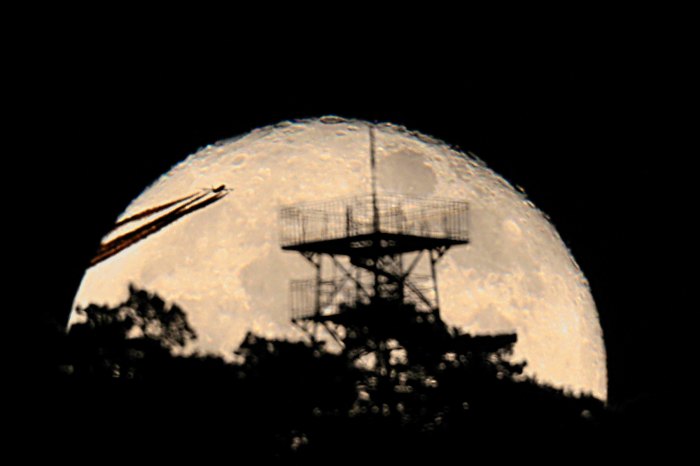
• The Lyrid meteors will peak on the morning of April 22 when - for some places - even more will happen when the Moon occults Venus. • Predictions of star occultations by the Moon can be greatly improved thanks to Kaguya and its laser altimeter. • A plane in front of the rising Moon (from this report), the ISS in front of the Sun (more) and the Moon in daylight, good pics from March and recent ones - and another claim of an astronaut 'detection' during an EVA. • Finally a pro-am session during a big conference in the U.K. (PDF pages 321-4), the LookUP! tool, good Aussie astrophotographers - and some stories (more, more and here) on the Birkat Hachamah non-astronomical but rare event. Of which now only a T-shirt is left ...

• In the current deep solar minimum even coronal mass ejections are slower than typical (while their 3D structure is clearer now thanks to STEREO). Also a prominence video, an asteroid named after the last total solar eclipse or rather a prime viewing spot in China, and why there will be no tsunami following the next TSE. • An unusually deep wide-field sky image with 40 hours of exposure time is causing attention.
• A fine Jupiter from down-under, a nice Saturn with Rhea's shadow on the disk and a table of Titan transits - of which not a single one will be visible in Europe. • Did Venus' atmosphere show a closed ring during inferior conjunction or at least arcs all around as this picture may indicate? The Japanese archive has nothing similar, though nearly closed rings were detected 2 days before the last transit of Venus (the exact time and a somewhat later image). Meanwhile here is Venus on April 11.
• More bolides, in Austria on April 9 and in California on April 7. • The Field Museum has received a lot of meteorites while the largest one in Texas has been found and the videographer honored who taped the bolide, a call for searchers in Canada is out w.r.t. last year's meteorite rain - and sometimes dogs make good hunters for meteorites! • There is another comet discovery with the STEREO spacecraft by an amateur, though the comet is less interesting per se than Yi-SWAN (more stories here and here and pics of April 12 and April 9 and more). • Also Cardinal at M 38 (more), the recovery of an old LINEAR and 19P on April 12.
• The Lyrid meteors will peak on the morning of April 22 when - for some places - even more will happen when the Moon occults Venus. • Predictions of star occultations by the Moon can be greatly improved thanks to Kaguya and its laser altimeter. • A plane in front of the rising Moon (from this report), the ISS in front of the Sun (more) and the Moon in daylight, good pics from March and recent ones - and another claim of an astronaut 'detection' during an EVA. • Finally a pro-am session during a big conference in the U.K. (PDF pages 321-4), the LookUP! tool, good Aussie astrophotographers - and some stories (more, more and here) on the Birkat Hachamah non-astronomical but rare event. Of which now only a T-shirt is left ...
Tuesday, April 7, 2009
Rare joint comet discovery by a spacecraft - and an amateur astronomer
The same says it all: C/2009 F6 (Yi-SWAN), pretty bright around 8th mag., was found simultaneously by a Korean amateur astronomer and the SWAN instrument on the SOHO spacecraft (which reported it first, but Yi's message came in before the first orbit was published, thus the double name). "On Apr. 4, R. D. Matson informed the Central Bureau that he had found a possible comet on ultraviolet SWAN images posted at the SOHO website," the story began on April 6 in IAUC #9034: " Numerous CCD astrometrists and one visual observer have reported confirmation of the object as a comet". And in #9035 we learn today that H. Yamaoka, Kyushu University, informs the Central Bureau that he received an e-mailed report on March 28 of the discovery by Dae-am Yi (Yeongwol-kun, Gangwon-do, Korea) of a possible comet with a noticeable greenish coma of diameter about 1' [...] on two 60-s CCD exposures taken about 80 seconds apart with a Canon 5D camera and a 90-mm f/2.8 camera lens. Orbital calculations suggest that this object is identical with C/2009 F6." Visual estimates put Yi-SWAN at 8.5 mag. right now, and the orbit suggests that this is about as bright as this comet will get; an ion tail has been detected. Another detection on March 25 was only made after the discovery announcement, thus it doesn't count.
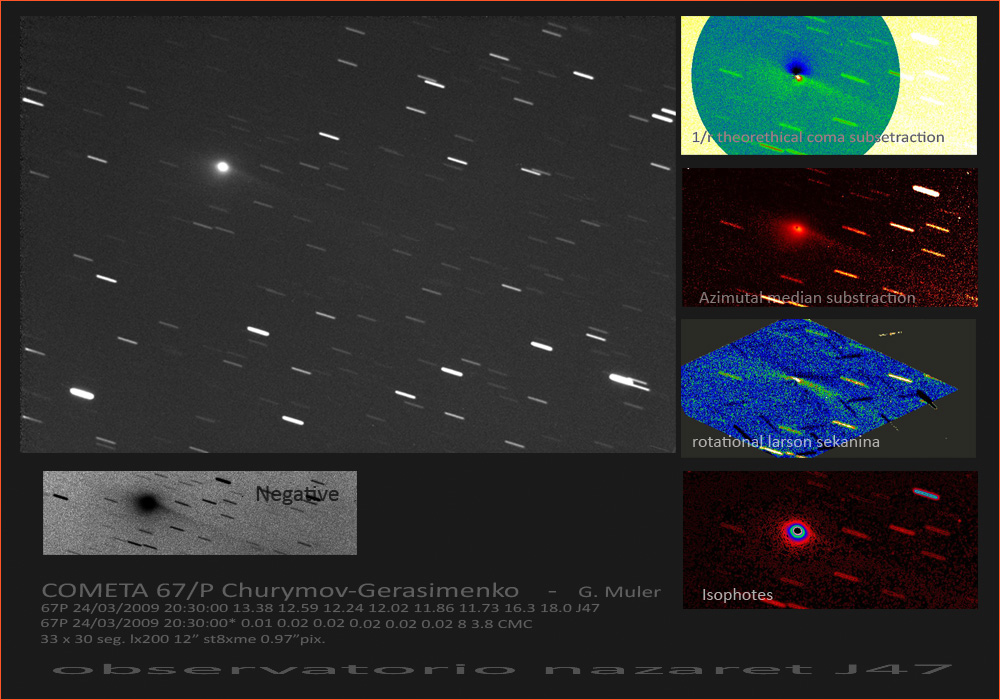
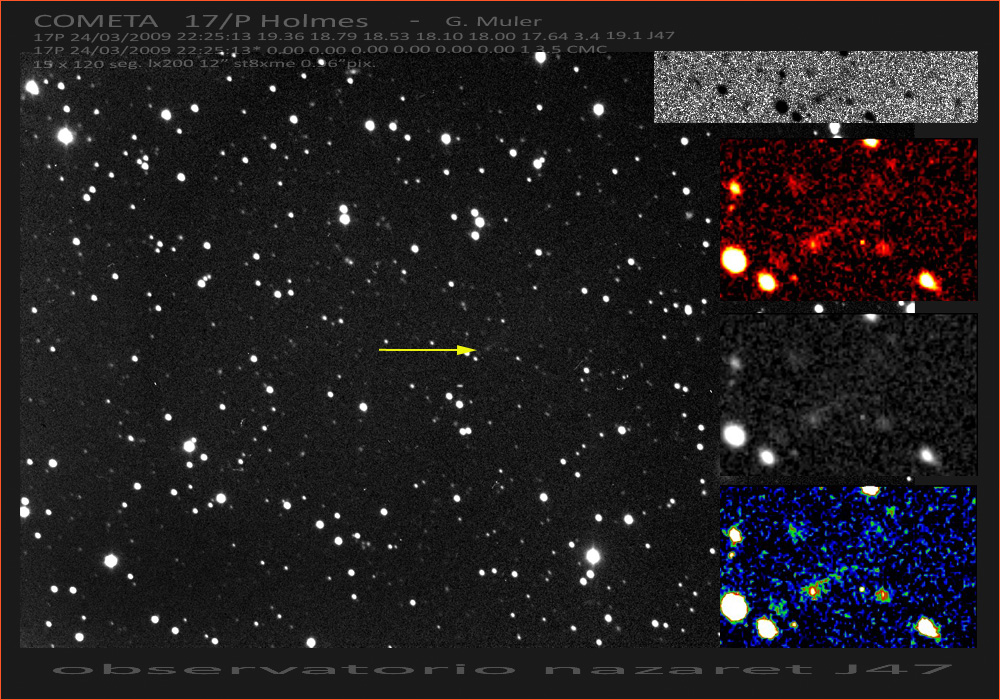
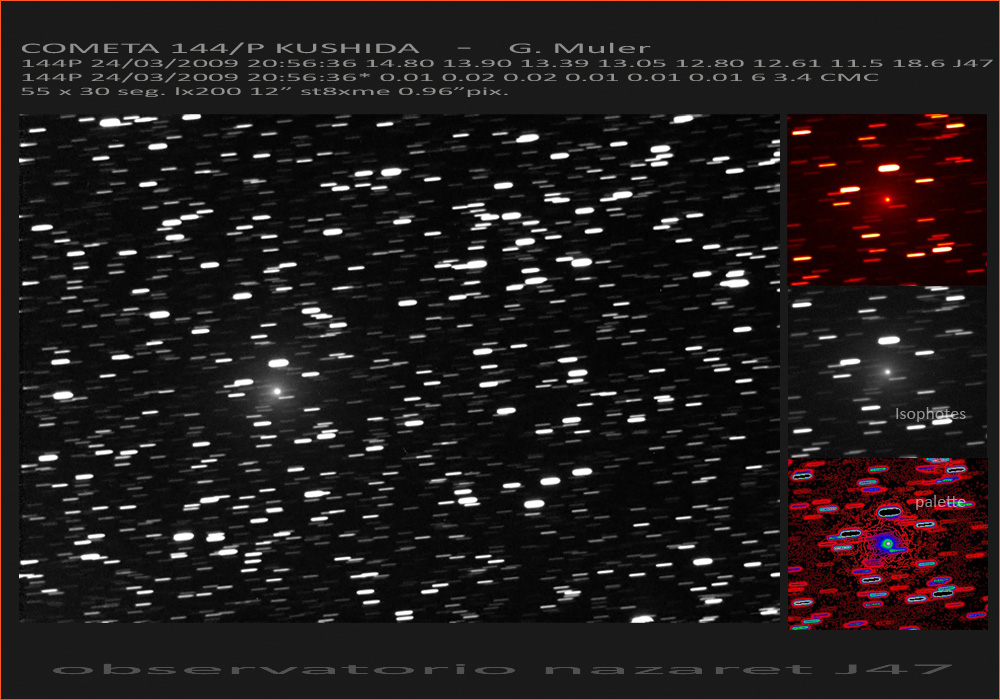
In other small bodies news we have scientific papers about Spitzer observations of 67P (a current picture and more) and ground-based data on 17P/Holmes' outburst (also a current view), interesting developments of 19P, the recovery of P/2001 MD7, an old - but nice - picture of Kushida in the Hyades (a current picture and more) and Lulin on March 28 and March 24 (another picture) as well as its changes. Plus 4 comets on March 25. • In the Kuiper Belt, the moon of Orcus has been named Vanth; more interesting than the name is the fact that over 1000 suggestions had come in after the discoverer asked for suggestions. • There was another big bolide in Northern Ireland (more, more and more coverage) and one in Virginia which caused a lot of confusion at first (more, more, more, more, more [earlier], more, more [earlier], more and more). • The recovery of the (only one!) meteorite from the baltic bolide is recounted by the discoverer himself who also explained at a German meteor meeting how he found the shattered specimen in the grass and what it was like. At the same meeting a microbarometric signal from the exploding bolide was also shown, recorded with a machine like this - which is enormously sensitive! Yet another "dimension" of amateur astronomy has thus opened up.
In other news The solar activity remains low, making the current minimum rather deep, with no end in sight. • By the way, some STEREO images from the time of the last total solar eclipse. • Here is the slender crescent of Venus on April 5, April 2, March 28 and March 26 - and the inferior conjunction was also used by radio hams to get echoes from the surface with a big dish in Bochum (as a demonstration experiment for a possible future use of the latter in controlling an amateur mars spacecraft, no kidding). • Here are Saturn & six moons and the small storm on March 21. • And here is Jupiter with Io's shadow.
• A Pleiades occultation by the Moon was observed well in India as these, these, these and these pictures show. • Plus the very slender crescent on March 27. • There may be atmospheric effects from the eruption of Mt. Redoubt which has been quite productive and impressive to watch. • Here is the ISS in front of the Moon and well resolved; more nice pictures here, here and here - but a space-walking astronaut was not caught. • A funny software determining "your star" at any given time. • And a paper, summary and story about an ingenious student experiment to get the distance to the Moon from old Apollo recordings! • It's now DST also in Europe - and the controversy continues. • Finally some April highlights in the sky (more, more, more, more and more stories):

In other small bodies news we have scientific papers about Spitzer observations of 67P (a current picture and more) and ground-based data on 17P/Holmes' outburst (also a current view), interesting developments of 19P, the recovery of P/2001 MD7, an old - but nice - picture of Kushida in the Hyades (a current picture and more) and Lulin on March 28 and March 24 (another picture) as well as its changes. Plus 4 comets on March 25. • In the Kuiper Belt, the moon of Orcus has been named Vanth; more interesting than the name is the fact that over 1000 suggestions had come in after the discoverer asked for suggestions. • There was another big bolide in Northern Ireland (more, more and more coverage) and one in Virginia which caused a lot of confusion at first (more, more, more, more, more [earlier], more, more [earlier], more and more). • The recovery of the (only one!) meteorite from the baltic bolide is recounted by the discoverer himself who also explained at a German meteor meeting how he found the shattered specimen in the grass and what it was like. At the same meeting a microbarometric signal from the exploding bolide was also shown, recorded with a machine like this - which is enormously sensitive! Yet another "dimension" of amateur astronomy has thus opened up.

In other news The solar activity remains low, making the current minimum rather deep, with no end in sight. • By the way, some STEREO images from the time of the last total solar eclipse. • Here is the slender crescent of Venus on April 5, April 2, March 28 and March 26 - and the inferior conjunction was also used by radio hams to get echoes from the surface with a big dish in Bochum (as a demonstration experiment for a possible future use of the latter in controlling an amateur mars spacecraft, no kidding). • Here are Saturn & six moons and the small storm on March 21. • And here is Jupiter with Io's shadow.

• A Pleiades occultation by the Moon was observed well in India as these, these, these and these pictures show. • Plus the very slender crescent on March 27. • There may be atmospheric effects from the eruption of Mt. Redoubt which has been quite productive and impressive to watch. • Here is the ISS in front of the Moon and well resolved; more nice pictures here, here and here - but a space-walking astronaut was not caught. • A funny software determining "your star" at any given time. • And a paper, summary and story about an ingenious student experiment to get the distance to the Moon from old Apollo recordings! • It's now DST also in Europe - and the controversy continues. • Finally some April highlights in the sky (more, more, more, more and more stories):
- April 8: Birkat Ha-Hammah or "Blessing of the Sun", a rare 'phenomenon' in some branches of Judaism where the alleged return of the Sun to its celestial position at creation time is marked only every 28 years.
- About April 9 til May 2: Best evening apparition of Mercury, now almost fully illuminated, with the half phase and greatest elongation on April 22 and 26, resp.
- April 15: Very close conjunction of Mars and Uranus, low over the Eastern horizon.
- April 21/22: In the morning peak of the Lyrid meteors.
- April 22: The Moon occults Venus for most of North America.
- April 24: "The position of the Sun and the shape of the Earth" - a worldwide didactical experiment employing elementary techniques. Join the party!
- April 26: Line-up of the lunar crescent, the Pleiades and Mercury in the evening.
Subscribe to:
Posts (Atom)